Electricity in Nigeria is unpredictable. Grid supply fluctuates, diesel prices continue to rise, and more homeowners are turning to solar inverters for stability. One of the most common and confusing questions people ask before installing a system is simple:
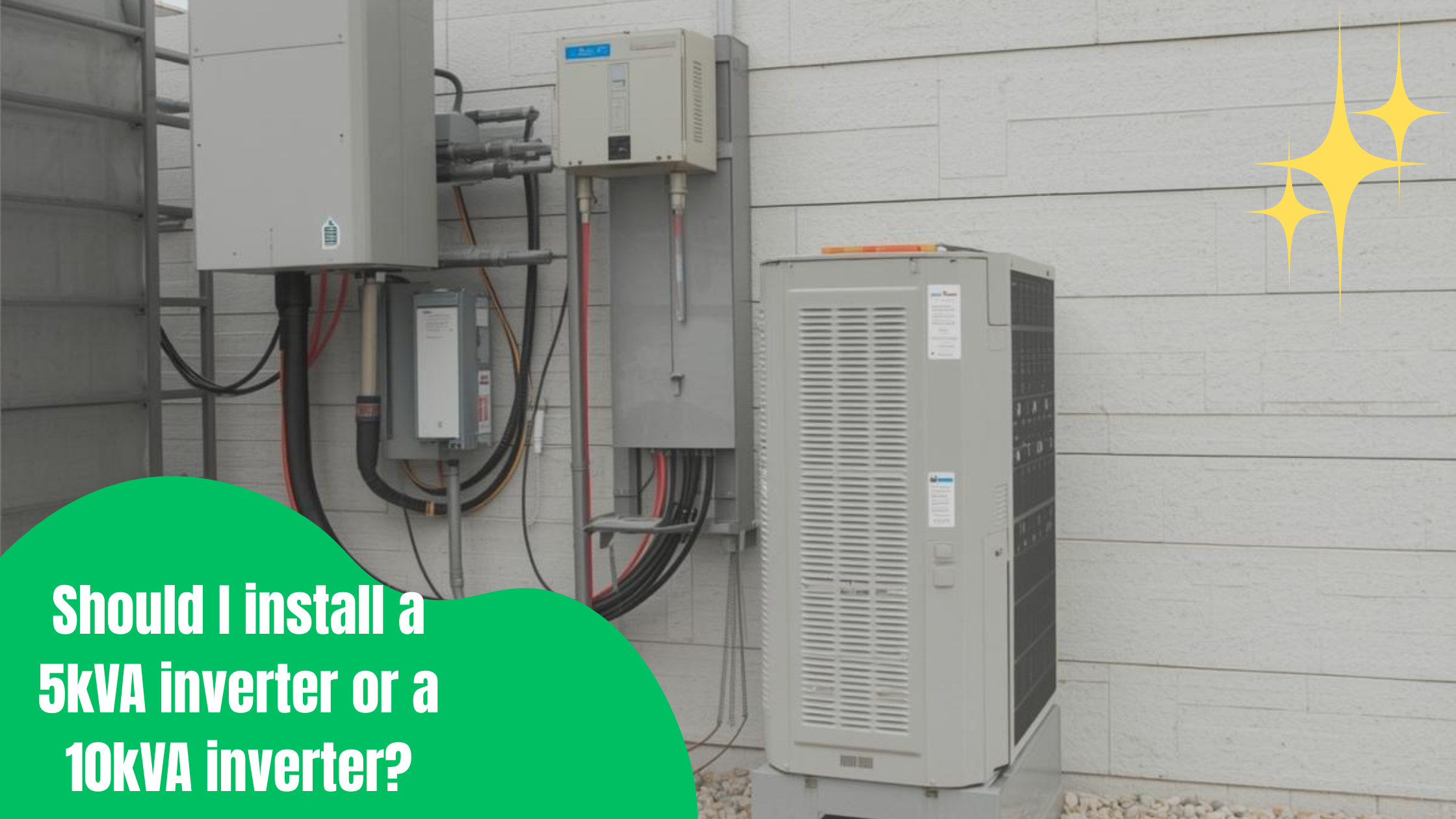
Should I install a 5kVA inverter or a 10kVA inverter?
At first glance, it seems like a matter of size. But in reality, the decision affects everything: your total installation cost, battery bank size, ability to run air conditioners, long-term savings, system lifespan, and overall satisfaction.
This detailed, WordPress-optimized guide explains the real difference between a 5kVA and 10kVA inverter for Nigerian homes. It includes practical load calculations, cost comparisons, embedded tables, visual diagrams, ROI projections, and SEO-optimized FAQs to help you rank and monetize effectively.
If you are building, renovating, or upgrading your home power system, this guide will help you make the right investment decision.
Understanding What kVA Actually Means
Before comparing 5kVA and 10kVA, we must clarify what kVA means.
kVA stands for kilovolt-ampere, which measures the apparent power capacity of an inverter. In simple terms, it tells you how much load the inverter can handle at once.
In Nigeria, most household appliances are rated in watts (W). Because of power factor considerations, a rough rule is:
1kVA ≈ 800 watts (for typical residential loads)
So in practical terms:
5kVA inverter ≈ 4,000 watts usable
10kVA inverter ≈ 8,000 watts usable
This conversion helps you understand how many appliances you can run simultaneously without overloading your system.
Visual Power Comparison
Below is a simple visual illustration of how much load each inverter can handle.
5kVA Inverter Capacity
[████████████ ] ≈ 4kW usable
10kVA Inverter Capacity
[████████████████████] ≈ 8kW usable
The difference is not small. A 10kVA inverter provides roughly double the power handling capacity.
What Can a 5kVA Inverter Run in a Nigerian Home?
A properly installed 5kVA inverter can comfortably power a modest household. It works well for apartments and small bungalows.
Below is a realistic appliance scenario.
| Appliance | Quantity | Approx Watts | Total Load |
| LED TV | 1 | 150W | 150W |
| Refrigerator | 1 | 200W | 200W |
| Ceiling Fans | 4 | 75W each | 300W |
| LED Lights | 10 | 15W each | 150W |
| Laptop | 1 | 100W | 100W |
| Washing Machine | 1 | 500W | 500W |
| 1HP AC (intermittent) | 1 | 1,000W | 1,000W |
Total Estimated Load ≈ 2,400W to 3,000W
A 5kVA inverter can manage this comfortably, but once you add multiple air conditioners or heavy cooking appliances, it becomes strained.
In Nigerian homes where energy demand is moderate and AC usage is limited, 5kVA often works efficiently.
What Can a 10kVA Inverter Run?
A 10kVA inverter is suitable for larger homes, duplexes, and households running multiple air conditioners.
Below is a typical load scenario.
| Appliance | Quantity | Approx Watts | Total Load |
| LED TVs | 2 | 150W each | 300W |
| Refrigerators | 2 | 200W each | 400W |
| Ceiling Fans | 6 | 75W each | 450W |
| LED Lights | 20 | 15W each | 300W |
| Washing Machine | 1 | 500W | 500W |
| Microwave | 1 | 1,200W | 1,200W |
| 1.5HP AC | 2 | 1,500W each | 3,000W |
Total Estimated Load ≈ 6,000W to 7,000W
A 10kVA inverter handles this smoothly, providing flexibility for simultaneous heavy loads.
Cost Comparison in Nigeria (2026 Estimates)
Prices vary by brand, but below is a realistic range for quality hybrid inverters in Nigeria.
| System Component | 5kVA System | 10kVA System |
| Inverter Cost | ₦900,000 – ₦1.5M | ₦1.8M – ₦3M |
| Battery Bank | ₦1.2M – ₦2M | ₦2.5M – ₦4M |
| Solar Panels | ₦800,000 – ₦1.5M | ₦1.5M – ₦3M |
| Total Estimated Setup | ₦3M – ₦5M | ₦6M – ₦10M |
The 10kVA system costs almost double. However, the decision should depend on energy demand, not just budget.
Battery Requirements Comparison
An inverter’s size affects battery bank requirements.
| Inverter Size | Recommended Battery Capacity |
| 5kVA | 10kWh – 15kWh |
| 10kVA | 20kWh – 30kWh |
A 10kVA inverter requires a larger battery bank to avoid underperformance.
Installing a 10kVA inverter with small batteries is a common mistake that leads to poor backup duration.
Solar Panel Sizing Comparison
To properly support these inverters with solar charging:
| Inverter | Recommended Solar Panel Size |
| 5kVA | 5kW – 6kW array |
| 10kVA | 10kW – 12kW array |
Oversizing inverter capacity without matching solar generation leads to inefficient investment.
Real-World Use Case Scenarios
Case One: A Three-Bedroom Flat in Lagos
The family uses one air conditioner at night, basic lighting, refrigerator, and TV. Their peak load rarely exceeds 3kW. A 5kVA inverter is sufficient and cost-effective.
Case Two: A Duplex in Abuja
The household runs two AC units, pumping machine, microwave, and multiple refrigerators. Peak load exceeds 6kW. A 10kVA inverter provides stability and avoids overload trips.
Financial ROI Analysis
Let’s assume a home spends ₦150,000 monthly on grid electricity and generator fuel combined.
Annual cost = ₦1.8M
If a 5kVA solar system offsets 70% of this cost:
Annual savings ≈ ₦1.26M
Payback period on ₦4M system ≈ 3 to 4 years
If a 10kVA system offsets 85%:
Annual savings ≈ ₦1.53M
Payback period on ₦8M system ≈ 5 years
Both provide savings, but system sizing must match consumption.
Common Mistakes Nigerians Make
Many homeowners oversize their inverter without upgrading batteries or solar panels. Others undersize the inverter to save cost and experience constant overload alarms.
Proper load audit is more important than inverter branding.
Long-Term Maintenance Considerations
Both 5kVA and 10kVA inverters have similar maintenance requirements. However, larger systems require more batteries, which increases replacement cost over time.
Lithium battery systems often provide better long-term reliability regardless of inverter size.
Frequently Asked Questions
Is 5kVA enough for a Nigerian home?
A 5kVA inverter is sufficient for small to medium homes with moderate appliance usage and limited air conditioner operation. It is ideal for apartments and bungalows with peak load under 4kW.
Can a 5kVA inverter run two air conditioners?
It depends on the AC size. A 5kVA inverter can run two 1HP inverter ACs if no heavy appliances operate simultaneously. However, it may struggle with two 1.5HP units.
Is 10kVA too big for a small house?
Yes, installing a 10kVA inverter in a small home with low power demand may result in unnecessary capital expense. System sizing should match actual load.
How many batteries does a 10kVA inverter need?
A 10kVA inverter typically requires 20kWh to 30kWh battery storage for reliable backup duration.
Which inverter size saves more money long term?
Savings depend on energy consumption. A properly sized inverter saves more than an oversized or undersized one. Matching system capacity to actual load is key.
Final Verdict: 5kVA vs 10kVA Inverter for Nigerian Homes
A 5kVA inverter is ideal for smaller homes with moderate consumption and limited air conditioning use. It provides a balance between affordability and performance.
A 10kVA inverter is suitable for larger households, duplexes, and homes running multiple heavy appliances simultaneously.
The best choice depends on load calculation, not guesswork.
Before installation, conduct a proper energy audit. Investing in the right size ensures long-term savings, stable performance, and improved return on investment.