
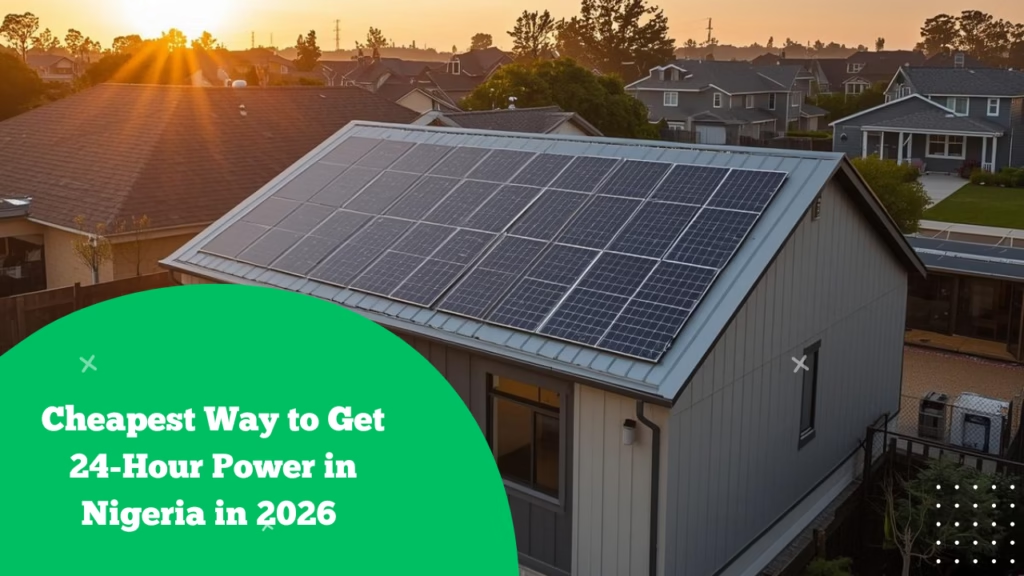
Nigeria’s electricity crisis remains one of the biggest challenges for households and small businesses. With national grid supply often below 4–6 hours daily in many areas (including Port Harcourt, Lagos, Abuja, and beyond), millions rely on expensive and noisy generators. But in 2026, with petrol prices hovering between ₦1,000–₦1,300 per litre and diesel up to ₦1,478 per litre, running a generator 24/7 has become financially unsustainable.
The good news? Solar hybrid systems have emerged as the undisputed cheapest way to achieve true 24-hour power. Solar now generates electricity at ₦85–140 per kWh—cheaper than Band A grid tariffs (₦220–270/kWh) and infinitely cheaper than diesel or petrol generators.
This comprehensive guide breaks down exactly why solar wins, real 2026 prices, step-by-step setup, cost comparisons, financing options, and maintenance tips. Whether you’re in a 2-bedroom apartment in Port Harcourt or running a small shop, you’ll walk away knowing the most affordable path to uninterrupted power.
Also Read:
Cost of Solar System for Small Business in Nigeria + Best Options
Cost of Solar Installation for Shop in Nigeria – Local City Guides
Cost of Solar Installation for Shop in Nigeria in 2026
Cost of Solar Power System for 3-Bedroom Flat in Nigeria (2026 Price Guide)
5kVA Inverter Price in Nigeria (2026 Updated Cost Breakdown)
Why Nigeria Needs 24-Hour Power Solutions Right Now
Nigeria’s power sector still struggles with transmission losses, vandalized infrastructure, and insufficient generation. The average urban household consumes 10–15 kWh per day (lighting, fans, fridge, TV, one AC, charging devices). In rural or semi-urban areas, it’s 5–8 kWh.
Without reliable power:
- Food spoils in fridges.
- Businesses lose productivity (estimated ₦500,000+ monthly fuel for some SMEs).
- Students study by torchlight.
- Health risks rise during heatwaves.
Traditional fixes (pure generators or grid-only) fail on cost and reliability. Solar + lithium batteries + hybrid inverter solves both—using free sunlight by day, stored energy at night, and grid as backup when available.
Option 1: Petrol/Diesel Generators – Why They’re No Longer Cheapest
Generators were once the go-to, but 2026 fuel prices have changed everything.
2026 Generator Prices (Lagos/Port Harcourt market averages):
- 2.5 kVA petrol (Honda or similar): ₦300,000 – ₦510,000
- 3.5–5.5 kVA petrol: ₦500,000 – ₦1,200,000
- 5.5 kVA diesel soundproof: ₦3.5M – ₦4.45M
Running Costs (for ~10–15 kWh daily load, realistic 8–12 hours runtime):
- Petrol consumption: ~0.8–1.2 litres per hour at average load.
- Daily fuel (12 hours): 10–14 litres × ₦1,200 = ₦12,000 – ₦16,800.
- Monthly fuel: ₦360,000 – ₦500,000+.
- Plus oil changes, filters, noise pollution, and frequent breakdowns.
Over 5 years, a basic petrol generator easily exceeds ₦20–25 million in total ownership cost—before counting health impacts from fumes.
Pros: Low upfront cost, instant power. Cons: Noisy, polluting, fuel skyrocketing, maintenance nightmare.
Option 2: Pure Grid + Inverter/Battery (No Solar)
This gives a few hours of backup but fails for true 24-hour power. Grid tariffs keep rising, and outages remain unpredictable. Monthly bills for 10 kWh/day: ₦75,000+ on Band A. Not reliable.
The Winner: Hybrid Solar Systems – Cheapest Long-Term Solution
A hybrid solar system combines:
- Solar panels (generate free power during 4–6 peak sun hours daily in Nigeria).
- Lithium batteries (store excess for night/rainy days).
- Hybrid inverter (automatically switches between solar, battery, grid, and optional generator).
Why it delivers 24-hour power:
- Daytime: Panels power loads directly + charge batteries.
- Night/cloudy: Batteries discharge silently.
- Grid available: Supplements or charges batteries cheaply.
- Result: Zero or minimal fuel use.
Lithium batteries (LiFePO4) last 6,000+ cycles (10–15 years), far outperforming cheap tubular batteries.
Real 2026 Prices for Complete Hybrid Solar Systems (Lagos/Port Harcourt, including professional installation)
| System Size | Ideal For | Components (Typical) | Total Price (₦) | Daily Output Capacity |
| 2.5 kVA | 1–2 bedroom apartment | 2.5 kVA hybrid inverter + 2–3 kW panels + 2.5–5 kWh lithium | 2,100,000 | 8–12 kWh |
| 3.5 kVA Lithium | 3-bedroom home + basic AC | 3.5 kVA hybrid + 3.3 kW panels + 5 kWh lithium | 3,750,000 | 12–18 kWh |
| 5 kVA Lithium | 4–5 bedroom + 1–2 ACs + freezer | 5 kVA hybrid + 4–5 kW panels + 8–10 kWh lithium | 5,850,000 | 20–30 kWh |
| 10 kVA Lithium | Small business/shop | 10 kVA hybrid + 8–10 kW panels + 15+ kWh lithium | 8,000,000 | 40+ kWh |
Prices from reputable installers (Kasot Power, similar vendors in PH). Add 5–10% outside Lagos for transport.
Breakdown of a 3.5 kVA Lithium System (~₦3.75M):
- Hybrid inverter (3.5 kVA MPPT): ₦400,000–₦650,000
- Lithium battery (5 kWh): ₦1.2M–₦1.8M
- Solar panels (3.3 kW, 6×550W monocrystalline): ₦500,000–₦700,000
- Racks, cables, protection devices + install: ₦300,000–₦400,000
Step-by-Step: How to Get Your 24-Hour Solar System Installed (Cheapest Route)
- Calculate Your Load (Free & Essential) List appliances and hours used. Example for typical 3-bedroom home:
| Appliance | Quantity | Wattage | Hours/Day | Daily kWh |
| LED Bulbs | 12 | 15W | 8 | 1.44 |
| Ceiling Fans | 6 | 60W | 12 | 4.32 |
| Fridge/Freezer | 1 | 150W | 24 | 2.5–3.5 |
| 1HP AC | 1 | 800W | 6 | 4.8 |
| TV + Decoder | 2 | 100W | 6 | 1.2 |
| Phones/Laptops | 4 | 20W | 5 | 0.4 |
| Total | – | – | – | ~15 kWh |
- Use free online calculators or call an installer for a site audit (many offer free in Port Harcourt/Lagos).
- Choose Lithium Over Tubular Batteries Lithium costs more upfront but saves ₦1M+ over 5 years (no water top-up, 2–3× longer life, faster charging).
- Buy from Reputable Installers
- Check for 5-year inverter + 10-year battery warranties.
- Demand Tier-1 panels (Jinko, Canadian Solar – 25-year output guarantee).
- Get full load test before payment.
- Installation (1–2 Days) Professional teams handle roof mounting, wiring, and app setup (monitor via phone from anywhere).
- Optional Add-Ons for Maximum Savings
- Extra panels for expansion (cheap later).
- Small generator as rare backup (only 1–2 days/year in rainy season).
- WiFi monitoring (included in most hybrids).
Financing Makes Solar Affordable in 2026
Many companies offer 30% upfront + balance over 6–18 months (e.g., Utopie Pay or bank partnerships). Example for 3.5 kVA Lithium (₦3.75M total):
- Upfront: ₦1.125M
- 12-month plan: ~₦305,000/month
Return on investment? You stop paying ₦300,000–500,000 monthly fuel bills immediately.
Maintenance & Longevity Tips (Almost Zero Cost)
- Clean panels every 3–6 months (rain does most work).
- Check connections annually (₦10,000–20,000 service).
- Batteries need no maintenance (unlike tubular).
- System lifespan: Panels 25+ years, inverter 10 years, lithium 10–15 years.
Real users report 95%+ uptime and fuel savings of 80–100%.
Case Study
A 3-bedroom home in Port Harcourt previously spent ₦400,000/month on generator fuel + ₦80,000 grid bills. After installing a 3.5 kVA lithium hybrid for ₦3.75M (financed), monthly costs dropped to <₦5,000 (minor maintenance). Payback in 9 months. Silent, clean, and 24-hour power—even during NEPA outages.
Also Read:
Cost of Solar System for Small Business in Nigeria + Best Options
Cost of Solar Installation for Shop in Nigeria – Local City Guides
Cost of Solar Installation for Shop in Nigeria in 2026
Cost of Solar Power System for 3-Bedroom Flat in Nigeria (2026 Price Guide)
5kVA Inverter Price in Nigeria (2026 Updated Cost Breakdown)
Common Myths Debunked
- “Solar is too expensive” → Pays back faster than ever with 2026 fuel prices.
- “Not enough sun in rainy season” → Nigeria still gets 3–4 hours effective sun; batteries bridge gaps.
- “Batteries die quickly” → Lithium lasts 10+ years with proper sizing.
FAQs About the Cheapest Way to Get 24-Hour Power in Nigeria
1. What is the cheapest way to get 24-hour electricity in Nigeria?
The cheapest method is a hybrid system combining solar panels, inverter, batteries, and grid power, with a generator used only as backup. This setup minimizes fuel costs while ensuring continuous electricity supply day and night.
2. Is solar power cheaper than using a generator in Nigeria?
Yes—solar power is significantly cheaper in the long run. While generators have a lower upfront cost, their fuel and maintenance expenses make them far more expensive over time. A solar system can pay for itself within 1.5 to 3 years.
3. How much does it cost to install a 24-hour solar power system in Nigeria?
The cost depends on your energy needs:
| System Size | Estimated Cost | What It Powers |
| Small (1kVA) | ₦300k – ₦700k | Lights, fans, phones |
| Medium (2–3kVA) | ₦800k – ₦2M | TV, fridge, basic home use |
| Large (5kVA+) | ₦2M – ₦6M+ | Full household, AC (limited use) |
4. Can solar power run a house 24 hours in Nigeria?
Yes, a properly sized solar system with battery storage can power your home 24/7. The key is having enough batteries to store energy for nighttime use and cloudy days.
5. How many solar panels do I need for 24-hour power?
It depends on your load:
- Small home: 2–4 panels
- Medium home: 4–8 panels
- Large home: 8–16+ panels
A professional load calculation is recommended for accuracy.
6. What size inverter is best for a Nigerian home?
- 1kVA → Basic use (lights, charging)
- 2–3kVA → Average home
- 5kVA+ → Full household
Most homes in Nigeria find 3kVA–5kVA to be the best balance between cost and performance.
7. How long do inverter batteries last?
- Lead-acid batteries: 3–5 years
- Lithium batteries: 8–12 years
Lithium batteries are more expensive but cheaper in the long run due to longer lifespan and better efficiency.
8. Can I start with a small solar system and upgrade later?
Yes, and this is actually the smartest approach. You can begin with an inverter and batteries, then gradually add solar panels and upgrade your system over time.
9. Do I still need a generator if I install solar?
It’s recommended to keep a small generator as backup, especially during extended cloudy periods or if your system is not fully sized for your energy demand.
10. How much can I save monthly with solar power?
Most households save between:
- ₦50,000 – ₦300,000 per month
This depends on how much you currently spend on fuel and electricity bills
11. What appliances can solar power run?
Depending on your system size, solar can power:
- Lights
- Fans
- TVs
- Refrigerators
- Laptops and phones
- Washing machines
- Air conditioners (with larger systems)
12. Is inverter without solar a good option?
Yes, but only as a temporary or budget solution. It still depends on grid electricity for charging and may not provide full 24-hour power if outages are frequent.
13. How long does installation take?
Most residential solar systems are installed within:
- 1–3 days for small systems
- 3–7 days for larger setups
14. What are the maintenance requirements for solar systems?
Solar systems require minimal maintenance:
- Clean panels occasionally
- Check battery health
- Ensure proper wiring
Compared to generators, maintenance costs are very low.
15. Is solar power reliable during the rainy season in Nigeria?
Yes, but performance may reduce slightly due to lower sunlight. This is why battery capacity and hybrid systems (grid + generator backup) are important for uninterrupted power.
16. What is the lifespan of a solar power system?
- Solar panels: 20–25 years
- Inverter: 5–10 years
- Batteries: 3–12 years (depending on type)
17. Can solar eliminate electricity bills completely?
Yes, in many cases. If your system is properly sized, you may:
- Reduce bills drastically
- Or eliminate them entirel
18. Is solar worth it in Nigeria in 2026?
Absolutely. With rising fuel prices and unstable grid supply, solar remains the most cost-effective and reliable long-term power solution.
19. What factors affect the cost of a solar system?
- Energy consumption
- Battery type
- Inverter capacity
- Number of solar panels
- Installation complexity
20. Should I install solar myself or hire a professional?
You should always hire a qualified solar installer. Poor installation can damage equipment and reduce system efficiency.
Final Tip
If you want the cheapest 24-hour power:
👉 Don’t rely on one system
👉 Combine solar + inverter + grid
👉 Use generator only as backup
In 2026, with fuel prices at record highs, a properly sized hybrid solar system with lithium batteries is the clear winner for reliable, 24-hour electricity. Initial investment pays for itself in under 2 years, then delivers free power for over a decade.
Stop pouring money into fuel tanks. Take control today.
Ready to calculate your exact system? Contact a certified installer for a free load audit. Or start with the 2.5–3.5 kVA packages listed above.

Interesting