

Electricity prices across the United States have been rising steadily over the past decade, and for many homeowners, monthly utility bills are becoming one of the most unpredictable household expenses. This growing pressure has pushed solar energy into the mainstream, not just as an environmentally friendly option, but as a strategic financial decision.
In 2026, solar is no longer a luxury upgrade—it is increasingly seen as a practical investment that can reduce long-term costs, provide energy stability, and even increase property value. Yet despite its popularity, one question continues to dominate search engines:
How much does solar actually cost, and is it truly worth it?
The answer is more nuanced than a single number. Solar pricing depends on system size, equipment quality, location, incentives, and long-term energy usage. This comprehensive guide walks you through everything you need to know, combining real-world cost data, savings projections, structured tables to help you make an informed decision.
Understanding the True Cost of Solar in 2026
When people first look into solar, they often encounter a wide range of prices, which can feel confusing or even misleading. In reality, the cost of solar has become more standardized in recent years, making it easier to estimate what a typical homeowner will pay.
In 2026, the average residential solar installation in the United States costs between $15,000 and $21,000 for a 6-kilowatt system before incentives. On a per-watt basis, this translates to approximately $2.50 to $3.50.
However, this is not the final price most homeowners pay. The federal government provides a significant incentive known as the Investment Tax Credit, which reduces the effective cost by 30 percent. Once applied, the net cost drops to roughly $10,500 to $14,700.
This difference is crucial because it dramatically improves the return on investment and shortens the time it takes for the system to pay for itself.
Detailed Solar Cost Breakdown Table (USA 2026)
| System Size | Estimated Cost Before Incentives | Cost After 30% Tax Credit | Annual Electricity Savings | Estimated Payback Period |
| 4 kW | $10,000 – $14,000 | $7,000 – $9,800 | $800 – $1,200 | 7–10 years |
| 6 kW | $15,000 – $21,000 | $10,500 – $14,700 | $1,200 – $1,800 | 6–9 years |
| 8 kW | $20,000 – $28,000 | $14,000 – $19,600 | $1,600 – $2,400 | 5–8 years |
| 10 kW | $25,000 – $35,000 | $17,500 – $24,500 | $2,000 – $3,000 | 5–7 years |
This table illustrates a key principle of solar economics: while larger systems require higher upfront investment, they often deliver stronger financial returns due to increased energy production.
Why Solar Costs Are Different for Every Home
Although national averages are helpful, your actual cost will depend on several important variables. The most influential factor is system size, which is determined by your household’s electricity consumption. Homes with higher energy usage, such as those running air conditioning year-round or charging electric vehicles, require larger systems to offset their consumption.
Equipment quality is another major factor. Premium manufacturers like Tesla and SunPower produce high-efficiency panels that generate more electricity in limited space. These systems are more expensive upfront but can produce greater long-term savings due to their higher output and durability.
Installation conditions also affect cost. A roof that is angled correctly, free from shading, and structurally sound will be easier and cheaper to install solar panels on. In contrast, complex roofs or older electrical systems may require upgrades, increasing the overall price.
Location plays a significant role as well. States with higher labor costs or stricter regulations tend to have higher installation prices. However, these areas often also have higher electricity rates, which can improve the financial return of solar over time.
The Power of the Federal Solar Tax Credit
One of the most important factors making solar affordable in 2026 is the federal Investment Tax Credit. This program allows homeowners to deduct 30 percent of their solar installation costs from their federal taxes, making it one of the most valuable energy incentives available today.
For example, if your solar system costs $18,000, the tax credit reduces your effective cost by $5,400. This is not a loan or rebate—it is a direct reduction in your tax liability.
The credit applies to the entire system, including panels, inverters, batteries, and installation labor. This comprehensive coverage significantly lowers the barrier to entry and makes solar accessible to a wider range of homeowners.
How Much Can You Save With Solar?
The financial benefit of solar becomes clear when you look beyond the upfront cost and consider long-term savings. The average household in the United States spends between $1,500 and $2,500 annually on electricity. By installing solar, a homeowner can reduce this expense by up to 90 percent.
Lifetime Savings Table
| Duration | Estimated Savings (6kW System) |
| 5 Years | $6,000 – $9,000 |
| 10 Years | $12,000 – $18,000 |
| 15 Years | $20,000 – $35,000 |
| 20 Years | $30,000 – $50,000 |
| 25 Years | $40,000 – $80,000 |
Over the lifespan of a solar system, these savings can far exceed the initial investment, making solar one of the most reliable long-term financial upgrades for homeowners.
How Solar Pays for Itself Over Time
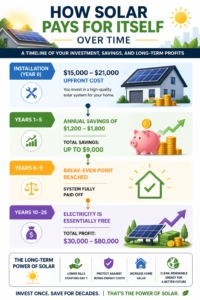
This timeline highlights the transition from initial investment to long-term profit, which is the core appeal of solar energy.
Solar Batteries and Energy Independence
While solar panels generate electricity during the day, battery storage allows homeowners to use that energy at night or during power outages. This is where systems like the Tesla Powerwall become valuable.
A battery system stores excess electricity produced during the day and makes it available when needed. This reduces reliance on the grid and provides backup power during outages, which is especially useful in areas with unstable electricity supply.
Although batteries increase the initial cost of a solar system, they offer additional benefits such as energy security and greater control over electricity usage.
Solar vs Traditional Electricity: A Cost Comparison
To fully understand the value of solar, it helps to compare it with traditional electricity over time.
| Energy Source | Monthly Cost | 10-Year Cost | 25-Year Cost |
| Grid Electricity | $150 – $250 | $18,000 – $30,000 | $45,000 – $75,000 |
| Solar (After Payback) | Near $0 | Minimal maintenance | Minimal maintenance |
This comparison shows why many homeowners see solar as a hedge against rising electricity prices.
Is Solar Worth It in 2026?
For most homeowners in the United States, solar is no longer just an option—it is a financially sound decision. The combination of falling installation costs, generous incentives, and rising utility rates has created a favorable environment for solar adoption.
However, solar is best suited for homeowners who plan to stay in their property for several years, as the financial benefits accumulate over time. Those who prioritize long-term savings and energy independence are likely to benefit the most.
Frequently Asked Questions (FAQs)
What is the average cost of solar panels in the USA in 2026?
The typical cost of a solar system in the USA ranges from about $15,000 to $21,000 before incentives, and drops to roughly $10,500 to $14,700 after the federal tax credit is applied.
How long does it take for solar panels to pay for themselves?
Most solar installations break even in about 6 to 10 years, depending on factors such as electricity rates, system size, and energy consumption.
Do solar panels work during cloudy or rainy days?
Yes. Solar panels still produce electricity in cloudy or rainy conditions, although their output is lower compared to bright sunny days.
Can solar completely eliminate my electricity bill?
In many cases, yes. When properly sized and paired with net metering, a solar system can significantly reduce or even eliminate monthly electricity bills.
Are solar batteries necessary?
No, batteries are optional. However, they provide benefits like backup power during outages and greater energy independence from the grid.
Will installing solar increase my home’s value?
Yes. Homes with solar installations often attract higher resale values and may sell faster than comparable homes without solar systems.
What happens if I generate more electricity than I use?
Excess electricity is usually exported to the grid, and homeowners may receive credits through net metering programs, which can offset future energy bills.
Final Thoughts
Solar energy in 2026 represents a powerful combination of technology and financial opportunity. While the upfront investment may seem significant, the long-term savings, government incentives, and increased property value often make it a smart decision for homeowners.
For those living in the United States, the shift toward solar is not just about sustainability—it is about gaining control over energy costs and securing long-term financial benefits.
The real question is no longer whether solar works, but whether you are ready to take advantage of it.