
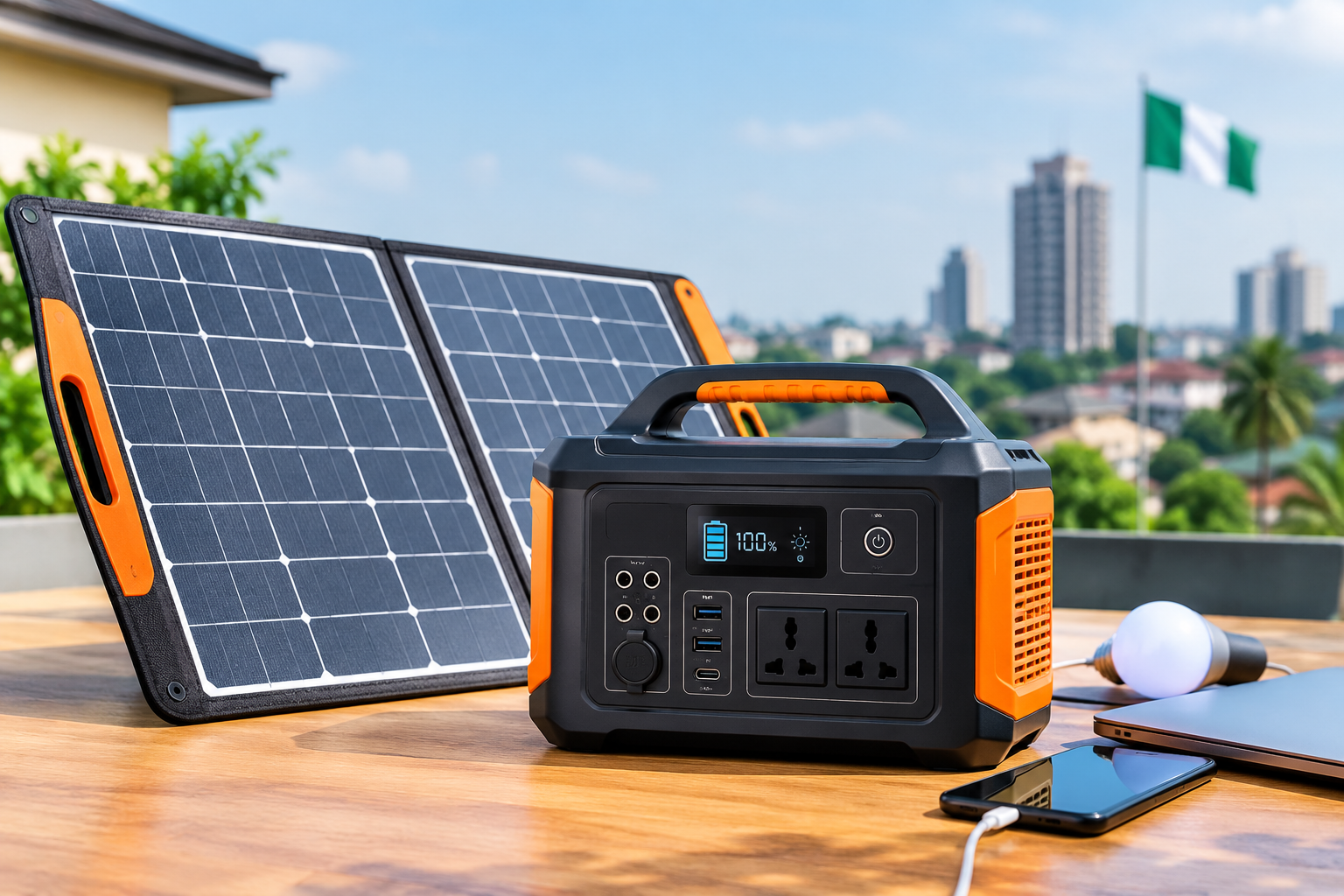
A portable solar generator is a battery, a small inverter, and a charger built into one box. You fill it with electricity from a wall socket when there is light, or from a folding solar panel in the sun, then plug in a fan, a television, a laptop, or phone chargers when the grid goes off. It does not burn petrol. It does not need installation. You carry it from room to room.
That is the whole product. The price in Nigeria depends on how much electricity the box can store, how many appliances it can run at once, and whether the battery is built to last.
What it is, and what it is not
People use three names for the same thing: portable solar generator, solar generator, and portable power station. The useful part is the battery inside, measured in watt-hours (Wh). The number printed large on the box, such as 500W or 1000W, is the inverter. That number only tells you the heaviest load the unit can power at one moment. It does not tell you how long anything will run.
A simple split helps:
- A petrol generator makes electricity by burning fuel. It is loud, needs oil and petrol, and can run for as long as you keep feeding it.
- A home solar system is panels on the roof, a wall inverter, and batteries fixed in one place. It can cover a whole flat, but it needs installation and a larger budget.
- A portable solar generator sits between the two. It is silent, has no fumes, and works the day you buy it. It will not run an air conditioner or an electric cooker. Sized properly, it will keep lights, a router, a fan, and a TV on through an ordinary evening outage.
Nigerian shops also sell two quality levels under the same label. International brands such as EcoFlow and Bluetti use lithium iron phosphate (LiFePO4) cells, pure sine wave output, and a stated cycle life of several thousand charges. Local and mid-market boxes from itel, Qasa, Bee Bright, and market brands can be good value, but some cheaper units still use lead-acid batteries. Lead-acid is heavier and wears out faster if you drain it often. Ask which battery is inside before you pay.
Who it is for
It fits a student, a remote worker, a small shop, or a renter who cannot mount panels. The job is backup for a few important loads, not whole-house power.
A typical evening set in a Nigerian flat looks like this: one standing fan at 60–80W, a 32-inch TV at 40–70W, a Wi-Fi router at 10–15W, and a few LED bulbs at 5–10W each. That is roughly 120–180W. A unit with about 1,000Wh of storage can hold that load for several hours. A unit with 256Wh cannot, no matter what the inverter sticker says.
A portable solar generator in Nigeria currently costs about ₦130,000 for a basic 150–300W box, ₦280,000–₦550,000 for a useful 500–1,000Wh lithium unit, and ₦750,000–₦2.4 million once you step into EcoFlow DELTA-class home backup. The number on the sticker is only half the decision. Battery chemistry, real watt-hours, and whether a panel is included change what you actually get.
Prices below are market snapshots from retailer and marketplace listings through October 2026. The naira moves, so treat them as a buying band, not a fixed quote.
What you are actually buying
A portable solar generator is a battery, an inverter, and a charge controller in one case. You charge it from the grid when there is light, from a folding solar panel, or from a car socket, then run appliances from AC outlets and USB ports. No fuel, no fumes, no pull-start.
Nigerian sellers use the same name for two different products:
- Portable power stations (EcoFlow, Bluetti, Jackery). LiFePO4 cells, pure sine wave, app control, 2,500–6,000 cycles. Built for daily blackout use.
- All-in-one solar boxes (Qasa, itel Power Tank, Bee Bright, Oraimo, and market brands). Cheaper, widely stocked in Alaba and on Jumia. Some are genuine LiFePO4. Many older Qasa-style units still use lead-acid, which is heavier and dies faster.
Match the product to the job. A 300W lead-acid box will charge phones and run LED bulbs. It will not keep a standing fan and a TV through a long evening.
Price bands in Nigeria (October 2026)
| Band | Typical size | What it runs | Street price |
|---|---|---|---|
| Starter | 150–300W, often under 300Wh | Phones, router, 2–4 LED bulbs, small DC fan | ₦130,000–₦230,000 |
| Everyday backup | 500–800W, 500–1,000Wh | Laptop, Wi-Fi, 32-inch TV, one standing fan for several hours | ₦280,000–₦550,000 |
| Small home | 1,000–1,800W, 1–2kWh | TV, decoder, two fans, lights, short fridge cycles | ₦650,000–₦1.4 million |
| Heavy backup | 2,400–4,000W, 2–4kWh | Most home essentials except AC and electric cooker | ₦1.3 million–₦3.6 million |
Budget “300W–1,000W” listings sometimes sit lower, around ₦80,000–₦280,000, because the battery is small or lead-acid. Always ask for watt-hours (Wh), not just inverter watts.
Models worth comparing
itel Power Tank 500W / 1,000Wh — best naira-per-hour under ₦400,000
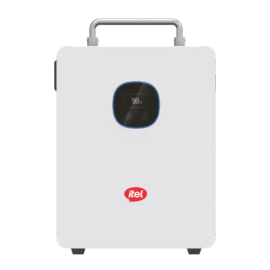
Recent dealer listings put this unit at about ₦279,000–₦390,000, with Kara showing a similar 500W + 1,000Wh pack near ₦370,000. Specs that matter: 500W pure sine wave, 1,000Wh LiFePO4, built-in MPPT, AC and solar charging.
On a 120W load (laptop, router, a few bulbs, one efficient fan), usable energy is roughly 850Wh after inverter loss, so about seven hours. A 70W standing fan alone can run most of the night. It will not start a freezer compressor reliably. Buy this if the job is lights, work, and a fan, and you want local parts support rather than a foreign app.
Bluetti EB3A — 600W / 268Wh, the compact premium pick
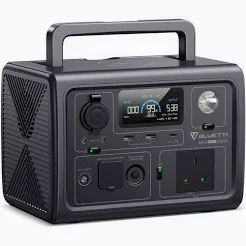
Lagos listings cluster around ₦300,000–₦345,000 (Jiji around ₦315,000; one electronics shop at ₦299,999). Output is 600W pure sine wave with 1,200W surge, LiFePO4 rated past 2,500 cycles, solar input up to 200W, and UPS-style switching.
The catch is storage, not power. At 268Wh it is a desk and travel unit: phones, a laptop, a router, and a small fan for a short outage. Paying ₦315,000 for 268Wh only makes sense if you value the cycle life, the app, and the surge headroom. For overnight home use, the itel 1,000Wh wins on runtime.
EcoFlow RIVER 2 series — fastest recharge, fair mid-tier price
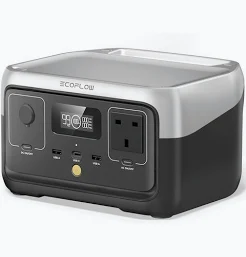
EcoFlow’s Nigeria store listings, as tracked in September 2026, sit near:
- RIVER 2: 256Wh, 300W — about ₦318,000
- RIVER 2 Max: 512Wh, 500W (X-Boost to 1,000W) — about ₦489,000
- RIVER 2 Pro: 768Wh, 800W — about ₦616,000
Jumia flash deals have pushed a RIVER 2 Max bundled with a 160W panel to about ₦544,000, and a RIVER 2 Pro near ₦526,000. AC recharge to full in about an hour is the real advantage on Nigeria’s short “up NEPA” windows. LiFePO4 and a multi-year warranty are standard on this line. Buy the Pro if you work from home. Skip the base RIVER 2 unless you only need a laptop and lights.
EcoFlow DELTA 2 and DELTA 2 Max — apartment backup
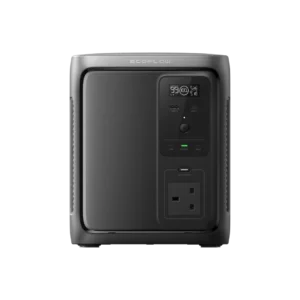
DELTA 2 (1,024Wh, 1,800W) lists near ₦762,000. DELTA 2 Max (2,048Wh, 2,400W) lists near ₦1.29 million. A 150W evening load on the Max is an all-night run with margin. A small fridge (about 100–150W running, higher at start) is realistic on the Max, tight on the base DELTA 2. These are the first sizes that replace a small petrol generator for a one- or two-bedroom flat, without fuel queues.
EcoFlow DELTA Pro — when the brief is the whole flat
Jumia has listed the 3,600Wh / 3,600W DELTA Pro around ₦2.29 million; the Nigeria store figure is near ₦2.35 million. It handles most appliances short of air conditioning. Only buy it if you have checked the running watts, not the marketing watts, of the freezer, pump, or microwave you intend to run.
Budget boxes (Bee Bright, Qasa, market 300W)
Bee Bright 150W units have listed near ₦135,000 and 300W units near ₦232,000. Qasa portables are everywhere from under ₦200,000 to past ₦500,000 depending on whether the battery is lead-acid or lithium. Fine as a first step for bulbs and phones. Poor value if the seller cannot state battery type, cycle life, and watt-hours in writing.
What actually moves the price
Watt-hours, not watts. A 1,000W inverter with a 300Wh battery is a short-burst tool. A 500W inverter with 1,000Wh is the better evening backup. Price follows the cells.
Chemistry. LiFePO4 costs more upfront and usually lasts 8–10 years of daily cycling. Lead-acid is cheaper and often tired within two to three years of deep discharge.
Panel included or not. A decent 100–200W folding panel adds ₦40,000–₦120,000. Without it you are only a battery box waiting for grid power.
Pure sine wave. Modified sine wave is cheaper and can heat laptop chargers, sound systems, and some fridge boards. Pay for pure sine if the load is electronics.
Warranty and who honours it. EcoFlow and Bluetti have Nigeria stores and authorised sellers. A grey import at 15% off is a bad trade if the serial number is not covered locally.
FX and bundle games. The same RIVER 2 Max can be ₦489,000 bare on the brand store and ₦544,000 with a panel on Jumia during a flash sale. Compare like for like.
Runtime you can expect
Use this rule: usable watt-hours ≈ battery Wh × 0.85. Hours = usable Wh ÷ load watts.
- 40W (router + 4 LED bulbs) on a 1,000Wh unit: about 21 hours
- 80W standing fan on 512Wh: about 5.5 hours
- 120W (fan + TV + router) on 1,000Wh: about 7 hours
- 150W fridge running, 30% duty cycle, on 2,048Wh: most of a day if nothing else is on
Startup surge is separate. A blender or pump can demand two to three times its running watts for a second. If the inverter is not rated for that surge, it trips even when the battery is full.
How to buy without wasting money
- Write the load list with watts, not appliance names. Phone chargers are 10–20W. A laptop is 45–90W. A standing fan is 50–80W. A 32-inch LED TV is 40–70W.
- Demand Wh, battery type, continuous watts, and surge watts on the invoice.
- Prefer LiFePO4 once the budget clears ₦250,000. Below that, accept a smaller job, not a fake “2,000W” sticker.
- Buy the panel if outages last past sunset. Grid charging only helps when PHCN shows up.
- Use official stores or sellers who will show a warranty card: EcoFlow Nigeria, Bluetti dealers, itel solar outlets, or established Alaba importers you can revisit. Jumia is fine for fulfilled listings with a return window.
- Ignore “5,000W” portable boxes under ₦200,000. That rating is either peak, or fiction.
Quick picks
- Under ₦300,000, lights and phones only: a named 150–300W lithium box, panel included if possible.
- Work-from-home, best hours per naira: itel Power Tank 500W / 1,000Wh around ₦280,000–₦390,000.
- Fast recharge and better build: EcoFlow RIVER 2 Pro near ₦530,000–₦620,000.
- Replace a small “I better pass my neighbour” for evening use: EcoFlow DELTA 2 Max near ₦1.3 million, or a Bluetti in the 1.4kWh class if the local price is lower.
- Skip: lead-acid units sold as lithium, and any station whose seller cannot state watt-hours.
A portable solar generator pays for itself against petrol only if you use it most days and size it to the real load. A ₦350,000 lithium unit that covers fan, router, and lights is a rational swap for a noisy 0.8kVA generator. A ₦2.3 million DELTA Pro is rational only if the alternative is running a larger fuel generator for hours every evening.