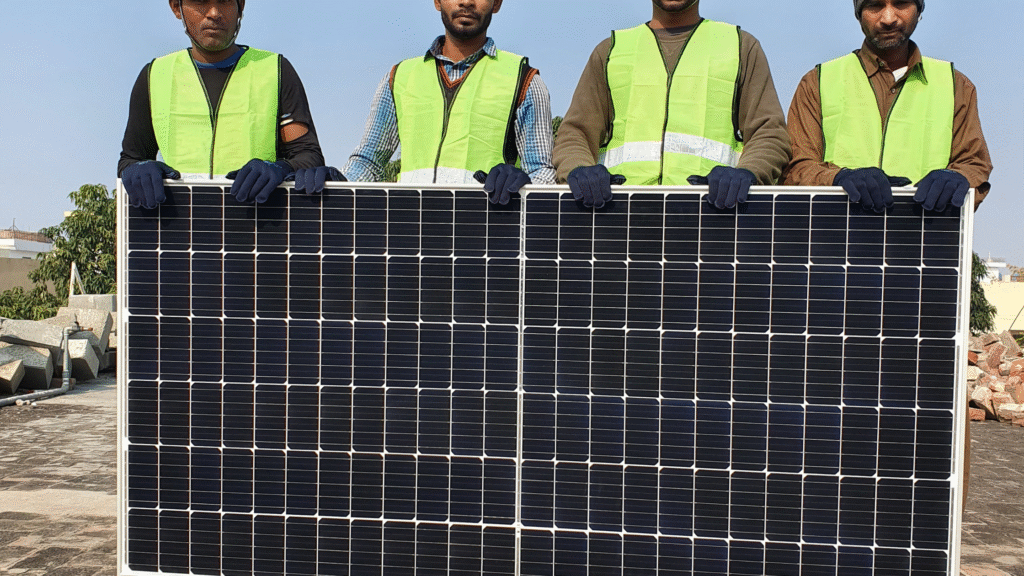
Burkina Faso’s planned 40 MWp solar photovoltaic project in Koudougou will combine large-scale solar generation with battery energy storage, forming part of the country’s efforts to strengthen electricity supply and grid infrastructure.
Burkina Faso is advancing another utility-scale solar energy development with the planned 40 MWp Koudougou Solar and Energy Storage Power Plant. The project combines solar photovoltaic (PV) generation with a 30 MWh battery energy storage system (BESS), together with transmission and grid-interconnection infrastructure.
On 7 October 2026, RelyEZ announced that a consortium involving RelyEZ and Weihai International had secured the engineering, procurement and construction (EPC) contract for the project. The development is planned in two phases, with the first phase comprising 20 MWp of solar PV and the second adding another 20 MWp alongside the battery storage system.
The announcement identifies Koudougou, Burkina Faso, as the project location and describes a turnkey delivery scope covering engineering, procurement, construction, grid interconnection and technical training. The project is intended to strengthen the country’s electricity infrastructure by combining renewable generation with energy storage.
Project overview
| Project detail | Reported information |
|---|---|
| Project name | Koudougou Solar and Energy Storage Power Plant |
| Location | Koudougou, Burkina Faso |
| Planned solar PV capacity | 40 MWp |
| Battery energy storage capacity | 30 MWh |
| Reported battery power rating | 10 MW |
| Project delivery | Two phases |
| Phase 1 solar capacity | 20 MWp |
| Phase 2 additional solar capacity | 20 MWp |
| Grid connection | Dedicated transmission line and connection to the 90/33 kV Koudougou substation in Phase 1 |
| EPC consortium | RelyEZ and Weihai International |
| Delivery model | Full EPC turnkey |
| Planned Phase 1 construction period | 12 months |
| Planned Phase 2 construction period | 16 months |
Source: RelyEZ project announcement, 7 October 2026.
A two-phase solar development
The project is structured in two phases. This approach separates the initial solar installation and grid connection from the subsequent expansion and integration of battery storage.
Phase 1: 20 MWp solar PV plant and grid connection
The first phase covers the construction of a 20 MWp solar photovoltaic plant. The scope also includes a dedicated transmission line connecting the plant to the 90/33 kV Koudougou substation.
The grid connection is a central part of the development. Generating electricity at a solar farm is only one part of delivering usable power: the facility must also connect to the electricity network through infrastructure designed to meet the applicable technical and operational requirements.
According to the published EPC announcement, the planned construction period for Phase 1 is 12 months.
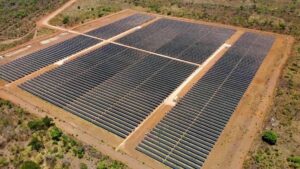
Phase 2: An additional 20 MWp and battery storage
The second phase adds another 20 MWp of solar PV capacity and integrates a battery energy storage system rated at 10 MW / 30 MWh. Additional transmission and interconnection facilities are also included.
Once both solar phases are completed, the planned PV capacity will total 40 MWp. The battery system will add an energy-storage component to the development, allowing electricity to be stored and discharged according to the system’s operating strategy and technical constraints.
The announced construction period for Phase 2 is 16 months.
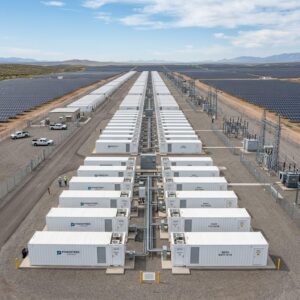
Understanding the 10 MW / 30 MWh battery system
The battery component is specified at 10 MW of power and 30 MWh of energy. These figures describe two different characteristics of the storage system.
- 10 MW is the stated power rating. It describes the rate at which the system can charge or discharge, subject to its operating limits.
- 30 MWh is the stated energy capacity. It describes the quantity of electrical energy the battery can store.
Dividing the nominal energy capacity by the stated power rating gives a simple duration estimate:
30 MWh ÷ 10 MW = 3 hours
This means the battery has a nominal three-hour duration at a constant 10 MW discharge rate, based on the stated ratings. It is not a guarantee that 30 MWh will be delivered to the grid during every discharge cycle. Actual usable energy and delivery depend on operating limits, state of charge, conversion losses, auxiliary consumption, degradation and the system’s control settings.
Battery storage can help solar-plus-storage facilities manage differences between the timing of solar generation and the timing of electricity demand. However, the available project announcement does not publish a detailed dispatch schedule or specify the exact services the Koudougou battery will provide.
Why battery storage matters for solar power
Solar PV output varies with sunlight, cloud cover, time of day and other environmental conditions. A battery can absorb electricity when charging conditions permit and release stored energy later, subject to its power rating, state of charge and operating strategy.
For an electricity network, solar generation combined with storage can provide more flexibility than a PV-only installation. Depending on its design and controls, a battery system may support energy shifting, scheduled power delivery and selected grid-support functions.
Those capabilities should not be confused with a guarantee of uninterrupted electricity. Storage duration is finite, and system performance depends on battery availability, plant controls, network conditions and the operating requirements agreed with the grid operator.
The Koudougou announcement confirms the planned integration of the 10 MW / 30 MWh battery system. It does not provide independently verified operational data showing how the battery will be dispatched or how much it will improve grid reliability.
EPC delivery and technical scope
The project is being delivered under a full engineering, procurement and construction arrangement. RelyEZ’s announcement identifies the consortium as responsible for a turnkey scope covering engineering, procurement, construction, grid interconnection and technical training.
The announced scope matters because a grid-connected solar project involves more than installing PV modules. The facility must integrate generation equipment, electrical conversion and protection systems, monitoring and control arrangements, and the infrastructure required to export power to the grid.
The battery installation also requires integration with its power conversion equipment and the plant’s control and protection systems. Grid-interconnection works must be coordinated with the receiving substation and relevant network requirements.
The announcement includes technical training for local operators within the turnkey package. Training is an important part of preparing personnel to operate and maintain complex energy infrastructure, although the specific training programme and its duration have not been published in the announcement.
Grid connection to the Koudougou substation
The first phase includes a dedicated transmission line to the 90/33 kV Koudougou substation. The second phase includes additional transmission and interconnection facilities.
This infrastructure is necessary to connect the planned generation capacity to the electricity network. Successful grid integration typically requires coordinated engineering, protection and control arrangements, testing, and compliance with the applicable requirements of the network operator.
The published announcement does not provide the transmission line length, conductor specification, substation bay configuration, protection settings or detailed single-line diagram. These details should therefore not be assumed.
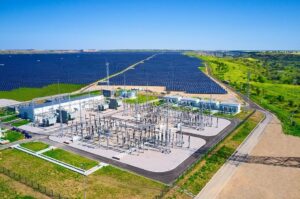
What the project could mean for Burkina Faso
The Koudougou development adds another planned solar-plus-storage project to Burkina Faso’s broader effort to expand electricity infrastructure and renewable energy generation.
Solar PV can generate electricity without burning fuel during operation. Pairing solar generation with battery storage can also provide additional flexibility in when some of that electricity is delivered, depending on system design and operating conditions.
The project’s eventual contribution to electricity supply will depend on completion, commissioning, grid acceptance and operational performance. The available announcement does not publish a verified annual energy forecast, capacity factor, electricity tariff, project cost or quantified greenhouse-gas reduction for this specific development.
It is therefore too early to state a measured annual generation figure or confirmed emissions savings based solely on the published project specifications.
Project timeline and current status
The public announcement provides planned construction periods of 12 months for Phase 1 and 16 months for Phase 2. These are phase-specific durations; the announcement does not establish whether the phases will run sequentially or overlap in practice.
A definitive completion date for the full facility should not be inferred from these durations alone. The project’s actual schedule will depend on implementation progress and other project-specific milestones.
As of the available announcement, the confirmed information is that the EPC contract has been secured and the project is planned as a two-phase 40 MWp solar development with 30 MWh of battery storage. A verified commissioning date and operational performance figures were not included in the source announcement.
Frequently asked questions
1. What is the planned capacity of Burkina Faso’s Koudougou solar project?
The Koudougou solar project is planned to deliver 40 MWp of solar photovoltaic (PV) capacity, developed in two phases of 20 MWp each.
2. Will the project include battery energy storage?
Yes. The second phase includes a battery energy storage system (BESS) rated at 10 MW / 30 MWh, designed to support energy storage and improve the integration of solar power into the electricity network.
3. How long can the battery supply power at its rated output?
Based on the announced specifications, the battery could theoretically deliver 10 MW for three hours, calculated by dividing its 30 MWh energy capacity by its 10 MW power rating. The actual discharge duration will depend on usable battery capacity, conversion losses, operating limits and system conditions.
4. How will the solar plant connect to Burkina Faso’s electricity grid?
Phase 1 includes a dedicated transmission line linking the solar facility to the 90/33 kV Koudougou substation. Further grid-interconnection infrastructure is planned as part of Phase 2 to accommodate the project’s development.
5. Which companies secured the EPC contract for the project?
According to RelyEZ’s announcement, an EPC consortium involving RelyEZ and Weihai International secured the contract. EPC stands for engineering, procurement and construction, covering the key activities required to deliver the project.
Conclusion
Burkina Faso’s planned 40 MWp Koudougou solar project combines two phases of solar PV development with a 10 MW / 30 MWh battery energy storage system and associated grid-interconnection infrastructure.
The EPC arrangement covers engineering, procurement, construction, grid connection and technical training. These elements are essential to delivering a grid-connected renewable energy facility, but the project’s eventual impact will depend on successful construction, commissioning and operation.
For now, the key confirmed details are the planned 40 MWp solar capacity, the 30 MWh battery system, the two-phase delivery structure and the announced EPC contract. Verified operational data will be needed before the project’s actual generation, reliability benefits and emissions reductions can be assessed.
Sources
- RelyEZ, “RelyEZ–Weihai Consortium Secures EPC Contract for 40MW Solar + 30MWh Energy Storage Project in West Africa,” 7 October 2026.
https://www.relyez.com/about-us/news/relyez-news/54 - Weihai International Economic & Technical Cooperative Co., Ltd., “Delegation of the Employer, Supervision Consultant and Partners of the Koudougou Solar and Energy Storage Power Plant Project in Burkina Faso Visits WIETC,” 9 October 2026.
https://www.wietc.com/en/news/1717382444400271