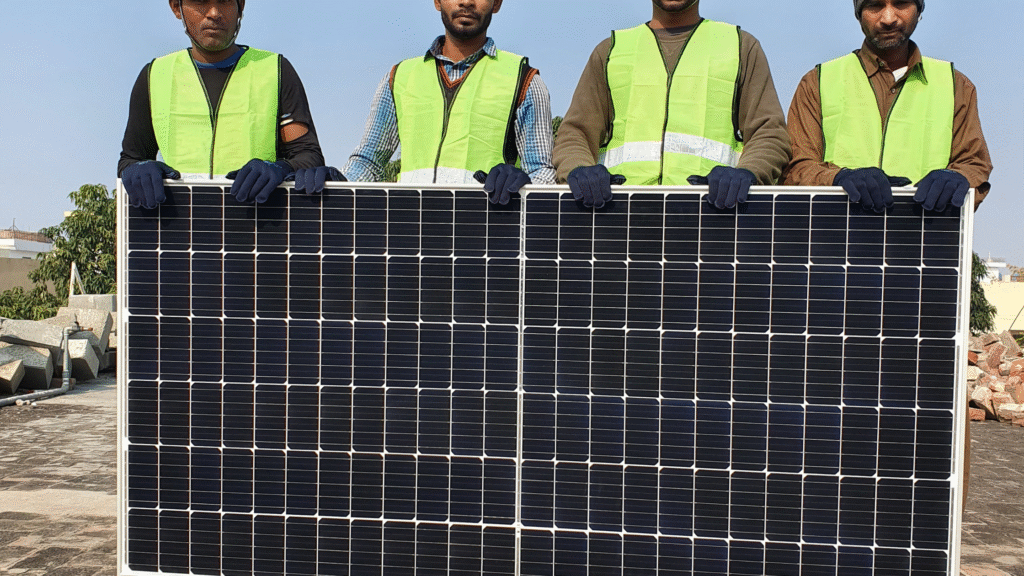
Mali is moving ahead with plans for a major solar power project in Gongasso, in the Sikasso region, combining 100 MWp of solar photovoltaic capacity with 100 MWh of battery energy storage. The project was referenced in the Council of Ministers communiqué of 23 October 2026, which approved the allocation of land to the Ministry of Energy and Water for the planned facility.
The announcement is significant for Mali’s efforts to expand domestic renewable electricity generation. However, the official information confirms a land-allocation decision for a planned project; it does not, by itself, confirm that construction has begun.
Key facts about the planned Gongasso solar project
| Item | What has been reported |
|---|---|
| Location | Gongasso, Sikasso region, Mali |
| Solar PV capacity | 100 MWp |
| Battery storage capacity | 100 MWh |
| Land allocated | Approximately 211.93 hectares |
| Grid connection | Planned connection to the national interconnected grid |
| Official reference | Council of Ministers communiqué dated 23 October 2026 |
| Project status | Planned project; land allocation reported |
Note: MWp describes the peak rated output of the solar modules under standard test conditions. MWh describes the amount of energy a battery can store. The project’s battery power rating in MW has not been stated in the cited announcement.
What does 100 MWp of solar capacity mean?
A 100 MWp solar photovoltaic plant would be a utility-scale facility designed to convert sunlight into electricity. Its actual output would vary with solar irradiance, temperature, module performance, system losses, plant availability and the operating strategy used by the grid operator.
The 100 MWp figure is the plant’s peak DC module capacity—not a promise that it will continuously deliver 100 MW at every hour of the day. To estimate annual electricity generation reliably, more information is needed, including the site’s solar resource, expected performance ratio, degradation assumptions and curtailment outlook.
Why pair the solar plant with 100 MWh of battery storage?
The proposed project also includes 100 MWh of battery energy storage. A battery energy storage system (BESS) can absorb electricity when solar production exceeds immediate demand or grid requirements, then discharge stored energy later when it is useful.
Depending on the final design and operating rules, storage can help shift some solar energy into evening periods, support grid operations and manage short-term variations in renewable generation. These benefits depend on the battery’s power rating, usable energy, state-of-charge limits, efficiency, cycling strategy and grid requirements—details that have not yet been provided in the announcement.
MW and MWh are not the same
- MW measures power: how quickly a battery can charge or discharge electricity.
- MWh measures energy: how much electricity can be stored or delivered over time.
For illustration only, a battery with 100 MWh of usable energy discharging at 25 MW could theoretically supply that power for four hours before accounting for losses and operating limits. This is a mathematical example, not a confirmed operating specification for the Gongasso project. The project’s actual battery discharge duration cannot be established without its power rating and usable-capacity details.
Land and grid connection
The reported land allocation covers approximately 211.93 hectares (211 hectares, 93 ares and 22 centiares). The planned plant is intended to connect to Mali’s national interconnected grid. Grid integration will be a key part of the project: utility-scale solar and storage facilities require suitable connection infrastructure, protection systems, controls, metering and coordination with the grid operator.
The available announcement does not specify the connection voltage, substation arrangement, transmission upgrades, EPC contractor or detailed grid studies. Those details should be confirmed from subsequent official project documents.
What the project could mean for Mali
If developed and commissioned as planned, the Gongasso project could add a substantial source of renewable electricity to Mali’s interconnected system. Its storage component may also allow some energy produced during sunny hours to be shifted to other periods, depending on the final system design and operating strategy.
The practical impact will depend on project delivery, grid readiness, financing, plant performance, maintenance arrangements and how the facility is dispatched. A project announcement is an important step, but installed capacity and actual electricity supplied to consumers are different milestones.
Important details still to be confirmed
The cited public announcement does not establish the following details:
- Whether physical construction has started and the confirmed construction schedule.
- The project’s total investment cost and financing structure.
- The selected EPC contractor, equipment suppliers and battery technology.
- The battery system’s power rating in MW and its guaranteed usable energy.
- The expected annual electricity generation and capacity factor.
- The commissioning date and commercial operation date.
- The detailed grid connection design and any required network upgrades.
These points should be updated when official authorities or project developers publish further documentation.
Frequently asked questions
Where is the planned 100 MW solar project located?
It is planned for Gongasso in the Sikasso region of Mali.
How much solar capacity is planned?
The announced solar photovoltaic capacity is 100 MWp.
How much battery storage is included?
The project announcement specifies 100 MWh of battery storage. It does not state the battery’s power rating in MW, so the discharge duration cannot yet be confirmed.
Has construction officially started?
The Council of Ministers communiqué reports approval of a land-allocation decree for the planned project. That information alone does not confirm that construction work has started.
Will the plant connect to the national grid?
Yes. The project is reported as intended for connection to Mali’s national interconnected grid, although detailed connection arrangements have not been published in the cited announcement.