
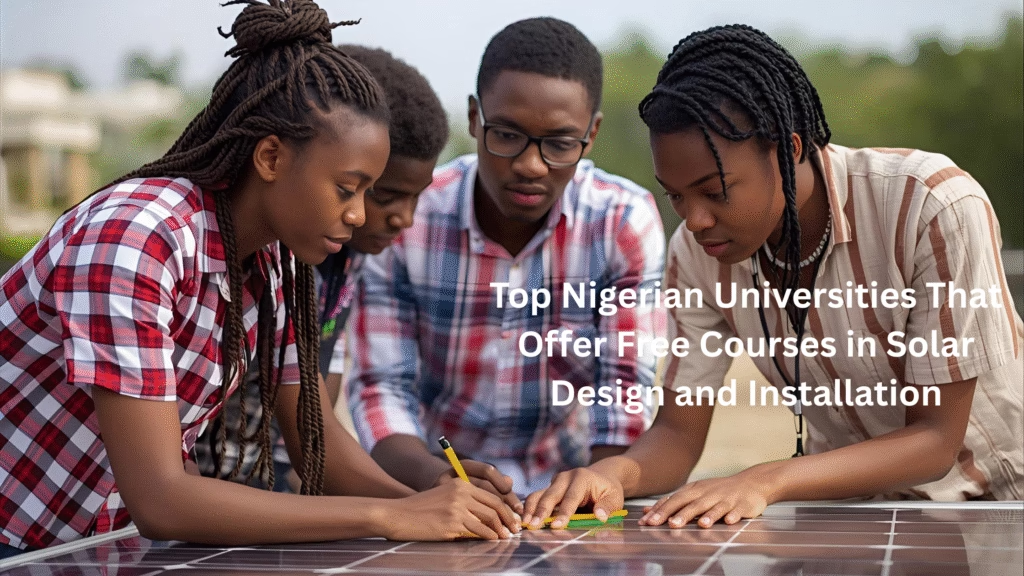
You can learn solar design and installation at university-run centers and sponsored workshops without paying full fees. This article lists universities offering free or heavily subsidized training, explains how to join, and shows how to turn training into income.
What this article covers
- Universities with free or sponsored solar training
- What each program teaches and how to register
- Practical steps to convert training into paid work
Fast list — universities to watch
- University of Ibadan (UI) — industry-sponsored solar training centre
- University of Lagos (UNILAG) — intensive renewable energy bootcamps
- University of Nigeria, Nsukka (UNN) — NCERD professional PV workshops
- Lagos State University (LASU) — inverter and installation certificate courses
- Ahmadu Bello University (ABU Zaria) — EMDC energy modules and labs
- University of Benin (UNIBEN) — campus workshops and NGO partnerships
Read the full details below for what you learn and how to act now.
1) University of Ibadan — itel solar training centre
You get weekly practical training through a partnership with an industry sponsor. The program pairs classroom sessions with hands-on installation labs.
Course topics
- PV fundamentals and component roles
- System sizing and parts selection
- Inverter basics, wiring, earthing and commissioning
- On-site installations and troubleshooting
How you join
- Watch the university news page and the sponsoring partner channels
- Apply when registration opens
- Prioritize hands-on days and document your work
Why it helps you
- You practice with real equipment
- Top performers can get referrals or placement
- Portfolio work helps you win clients
2) University of Lagos — intensive renewable energy training
UNILAG runs short bootcamps that mix theory and labs. Some slots are subsidized for students and community members.
Course topics
- Solar PV theory and system design basics
- Battery systems and inverter configuration
- Practical wiring and commissioning
- Project pitching and small business setup
How you join
- Check UNILAG announcements and Design Studio notices
- Apply quickly when registration opens
3) University of Nigeria, Nsukka — NCERD PV workshops
NCERD and related energy centres run targeted PV workshops. These sessions are technical. They suit people who want to work on large projects.
Course topics
- Professional installation and standards
- System planning and site assessment
- On-site commissioning and testing
How you join
- Monitor NCERD announcements and UNN noticeboards
- Apply to workshop calls and meet selection criteria
4) Lagos State University — inverter installation and repair
LASU ODLRI offers certificate courses focused on inverters and maintenance. These courses teach repair skills you can monetize fast.
Course topics
- Inverter types and operation
- Wiring, configuration and programming
- Troubleshooting and preventive maintenance
How you join
- Check LASU ODLRI course listings
- Register for active cohorts
5) Ahmadu Bello University — EMDC and energy modules
ABU runs technical short courses through EMDC and related departments. The labs support hands-on practice and equipment maintenance work.
Course topics
- Maintenance of electrical equipment
- Solar-specific modules and commissioning
- Practical troubleshooting in lab settings
How you join
- Watch ABU EMDC training calendars
- Apply to short courses when announced
6) University of Benin — campus workshops and NGO partnerships
UNIBEN hosts periodic free workshops in partnership with local NGOs and training centers. These events are ideal for entrepreneurs starting local services.
Course topics
- Solar PV basics and best practice
- Small system installations
- How to market services locally
How you join
- Watch campus noticeboards and local training listings
- Apply early for free slots
Practical checklist — turn training into paid work
Follow these steps after you finish training.
- Register early for courses and attend every hands-on session.
- Document your work. Take photos of installations and list tasks you completed.
- Ask trainers for references.
- Offer maintenance and small installs to friends and local businesses.
- Join installer groups and job boards to find leads.
- Keep learning. Get certified by recognized bodies where possible.
Which skill pays most quickly?
- Inverter repair and commissioning. You can charge for troubleshooting and after-sales service on day one.
Table — program snapshot
| University | Program / Center | Free or Subsidized | Core focus |
|---|---|---|---|
| University of Ibadan (UI) | itel Solar Energy Training Centre | Free (CSR weekly sessions) | Hands-on PV installations and system sizing |
| University of Lagos (UNILAG) | Intensive Renewable Energy Training | Subsidized / occasional free spots | Bootcamp on design and commissioning |
| University of Nigeria, Nsukka (UNN) | NCERD PV Workshops | Sometimes free / sponsored | Professional PV installation and standards |
| Lagos State University (LASU) | ODLRI: Inverter Installation & Repair | Low-cost; occasional sponsored slots | Inverter repair and maintenance |
| Ahmadu Bello University (ABU) | EMDC & energy modules | Occasional project-funded workshops | Equipment maintenance and lab practice |
| University of Benin (UNIBEN) | Campus workshops with NGO partners | Periodic free workshops | Basic PV systems and local market entry |
2. University of Lagos — Short bootcamps
3. UNN — NCERD professional workshops
4. LASU — Inverter repair certificate
5. ABU — Lab-backed maintenance modules
6. UNIBEN — Campus workshops with NGOsHow to act fast
1. Monitor university pages
2. Apply early
3. Focus on hands-on tasks
4. Build a portfolio
5. Offer maintenance services
Sources and verification
Program details change. Confirm registration windows and course details on the universities’ official pages and program announcements before applying.
Suggested source checks
- University of Ibadan news and training centre pages
- University of Lagos Design Studio and training announcements
- UNN NCERD workshop listings
- LASU ODLRI short course listings
- ABU EMDC training calendar
- UNIBEN campus and NGO training listings


I’m interested in the training
Waiting for reply
I am interested in the training of solar installation course.
I want to know more about virtual training
I really want to know more thanks
I want to learn solar installations
I want to learn.
Appreciation
I want to join and learn
Am in Enugu
I am interested
I want to learn
Am interested
Am at ibadan
I am interested .I living in Kaduna.
I am an Electrician, I want more practical training on solar installation. I am in Aguata LGA Anambra State.