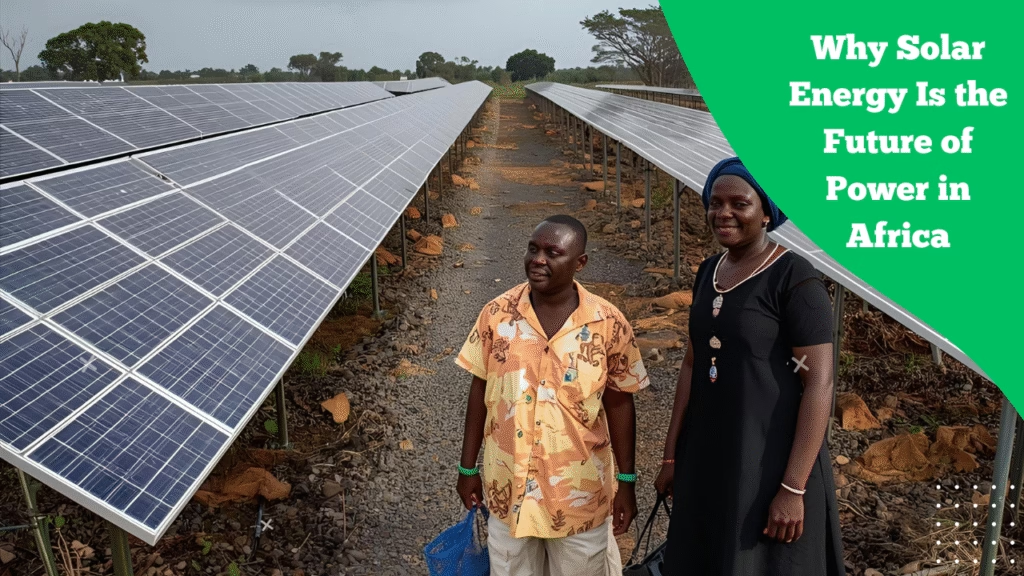
Africa’s energy landscape is at a turning point. Millions of homes and businesses are still grappling with unstable grids, rising fuel prices, and widening electricity gaps. Solar has become the only scalable, affordable, and clean solution capable of meeting the continent’s growing energy demand.
This article breaks down the economic, technical, environmental, and policy-backed reasons solar power is set to dominate Africa’s energy future—and why adoption is accelerating faster than ever.
- Africa’s Energy Crisis: The Current Reality
Despite significant natural resources, many African countries struggle with electricity supply. The challenges are widespread:
- Frequent grid failures and blackouts
- High cost of diesel generators
- Slow-paced grid expansion
- Rapidly growing population and urbanization
- Heavy reliance on fossil fuels
According to the African Development Bank, more than 600 million Africans still lack access to reliable electricity. Traditional energy sources have failed to scale with demand.
This is where solar energy steps in—not as an alternative, but as the only truly viable long-term solution.
-
Why Solar Power Fits Africa Perfectly
Africa has the world’s highest solar irradiation. Most countries receive 5–7 peak sun hours daily, which is optimal for generating high output from solar panels.
Key Natural Advantages
- Abundant sunlight year-round
- Minimal seasonal fluctuation
- Large land availability
- Ideal rooftop potential for urban areas
Unlike hydro, coal, or gas, solar is not limited by geography, water availability, or fuel supply chains. It works anywhere the sun shines.
-
Solar Is Now Africa’s Most Affordable Energy Source
Solar technology costs have dropped by more than 80% in the last decade, making it cheaper than diesel and grid tariffs in many regions.
Cost Comparison: Solar vs Diesel Generator vs Grid (2025)
| Power Source | Average Cost per kWh | Reliability | Maintenance Cost | Long-Term Value |
| Solar + Battery | $0.07 – $0.15 | Very High | Low | Excellent |
| Diesel Generator | $0.40 – $0.70 | Medium | High | Poor |
| Grid Electricity | $0.15 – $0.30 | Low/Medium (frequent outages) | Low | Average |
Solar wins on every long-term metric: cost, reliability, and sustainability.
-
Solar Systems Offer Independence From Unstable National Grids
Grid downtime in many African countries averages 5–10 hours daily. Businesses lose revenue. Homes lose comfort and productivity.
Solar provides:
- Constant daytime power
- Full autonomy when paired with batteries
- Smooth transition during blackouts
- Quiet and clean operation
For many households, solar is no longer a luxury—it’s a necessity.
-
Rapid Growth of Solar Jobs and Innovation Across Africa
The solar sector is now one of the fastest-growing job markets on the continent.
Sectors Benefiting From Solar Growth
- Electrical engineering
- Installation and maintenance
- Solar product manufacturing
- Renewable energy training
- Software for energy management
- EPC contracting
- Consultancy and project management
This ecosystem is expanding yearly, forming new opportunities for entrepreneurs, engineers, and investors.
-
Government Incentives and Policies Supporting Solar Adoption
Several African countries have introduced policies that make solar more accessible. These include:
- Tax exemptions on solar equipment
- Import duty waivers
- Low-interest solar loans
- Rural electrification programs
- Public–private solar partnerships
- Feed-in tariffs for solar farms
Countries like Kenya, Nigeria, South Africa, Rwanda, Morocco, Egypt, and Ghana have already rolled out national solar programs delivering significant megawatts into their grids.
-
Solar Is Powering Africa’s Rural Electrification Drive
In rural regions—where grid expansion is slow and costly—solar mini-grids and standalone systems are transforming communities.
Why Solar Works for Rural Areas
- Quick to deploy
- Low maintenance
- Affordable for community-scale models
- Scalable
- Ideal for schools, clinics, and water pumping
Solar is the backbone of off-grid electrification across Africa.
-
Solar for Homes: Cutting Electricity Bills and Ending Generator Dependency
For homeowners, solar provides immediate benefits:
- Eliminates diesel generator expenses
- Slashes energy bills
- Powers essential appliances during outages
- Increases property value
- Provides quiet, clean energy
A well-installed solar system can last 25+ years, making it an excellent investment.
Typical Solar Home System and Uses
| System Size | Ideal For | Estimated Cost (USD) | Daily Output |
| 1.5 kW | Lights, TV, fans, small appliances | $1,200 – $1,700 | 6–7 kWh |
| 3 kW | Fridge, deep freezer, pumps | $2,000 – $3,500 | 12–15 kWh |
| 5 kW | Medium homes with AC (efficient models) | $4,000 – $7,000 | 20–25 kWh |
| 10 kW | Large homes, offices | $8,500 – $14,000 | 40–50 kWh |
Actual costs vary by country, battery type, and panel quality.
-
Solar for Businesses: Lower Costs, Higher Productivity
Companies across Africa are switching to solar for one key reason: reliability equals profit.
Business Benefits
- Zero downtime
- Predictable energy costs
- Reduced OPEX
- Lower carbon footprint
- Fast ROI (2–5 years depending on scale)
Solar is especially impactful for:
- Shopping malls
- Factories
- Telecom towers
- Hospitals
- Hotels
- Schools
- Data centers
Energy expenses often drop by 30–70% after solar integration.
-
The Rise of Solar Farms and Utility-Scale Projects in Africa
Large-scale solar projects are reshaping energy supply across the continent. Countries like Morocco, South Africa, Egypt, and Namibia have already commissioned solar plants generating hundreds of megawatts.
Why Governments Prefer Solar Farms
- Fast deployment (6–18 months)
- Lower cost per watt
- Minimal environmental impact
- Enables energy export opportunities
- Enhances grid stability
Africa’s 2025–2030 plans include more than 20 GW of upcoming solar farm capacity.
-
Solar Is Now the Most Sustainable Energy Choice
With climate-related challenges worsening, solar offers a clean path forward:
- Zero emissions during operation
- No fuel consumption
- Reduces pressure on forests and hydropower
- No noise pollution
- Supports global climate goals
Solar aligns with Africa’s environmental and economic development strategies.
-
Addressing Common Myths About Solar in Africa
Myth 1: Solar Is too expensive
Reality: Costs have dropped drastically, and long-term savings outweigh installation costs.
Myth 2: Solar can’t power heavy appliances
Reality: Properly designed systems handle freezers, pumps, and even efficient AC units.
Myth 3: Solar panels don’t work on cloudy days
Reality: They still generate power—just at reduced efficiency.
Myth 4: Batteries don’t last
Reality: Modern lithium batteries offer 10–15 years lifespan with high efficiency.
-
Predictions for Africa’s Solar Future (2025–2040)
Experts project explosive growth:
- Solar will become Africa’s dominant energy source by 2040.
- Over 300 million new off-grid solar connections expected.
- Solar-powered EV charging networks will emerge.
- More solar manufacturing plants will launch.
- Cross-border solar energy trading will expand.
Africa has everything needed to lead the world in solar adoption.
Conclusion
Solar energy is not just an option for Africa—it is the continent’s clearest path to affordable, reliable, and sustainable power. With abundant sunlight, falling costs, government support, and strong economic benefits, solar stands firmly as the future of energy in Africa. Homes, businesses, and governments are already embracing it, and adoption will only accelerate.
Now is the best time for African homeowners and organizations to invest in solar and secure long-term independence from unreliable grids and rising energy costs.
FAQ
- Why is solar energy becoming popular in Africa?
Because it is affordable, abundant, reliable, and easy to deploy across both rural and urban regions.
- Can solar replace diesel generators in Africa?
Yes. Modern solar systems paired with lithium batteries provide stable power without fuel or noise.
- How long do solar panels last?
Most panels last 25–30 years with minimal maintenance.
- Is solar cheaper than grid electricity?
In many African countries, solar is now cheaper per kWh than diesel or unstable grid power.
- What size of solar system is suitable for a small African home?
A 1.5–3 kW system typically covers basic household needs.
- Do African governments support solar?
Several countries offer tax incentives, import duty waivers, and renewable energy programs to encourage adoption.