
Solar energy system design is no longer a trial-and-error process or a simple exercise of matching solar panels with an inverter. In modern photovoltaic (PV) engineering, system performance, reliability, and economic viability are achieved through sound electrical fundamentals, accurate mathematical sizing, spreadsheet-based validation, and professional simulation tools.
Designing a solar power system—whether a small residential installation or a large commercial plant—requires a structured approach. Engineers must understand how electricity behaves, how solar components interact, how losses accumulate across the system, and how environmental factors affect long-term energy production.
This article presents a comprehensive and practical explanation of solar energy design concepts using three pillars:
Electrical theory and manual calculations
Excel-based system sizing and verification
Professional simulation using PVsyst
The goal is not just to explain what tools are used, but why each stage of design matters and how they connect to real-world solar projects.
Fundamental Electrical Concepts Needed for Solar System Designers
A strong solar design always begins with electrical fundamentals. Without a clear understanding of voltage, current, power, and energy, even the most sophisticated software tools will produce misleading results. Solar PV systems are electrical systems first and renewable energy systems second.
Voltage represents the electrical pressure that pushes current through a circuit. In solar systems, voltage determines how PV modules are connected in series and how they interface with inverters and batteries. Current represents the flow of electricity and directly affects cable sizing, protection devices, and thermal losses. Power, measured in watts, defines the instantaneous capability of a system, while energy, measured in watt-hours or kilowatt-hours, determines how much useful electricity is delivered over time.
Solar designers must also understand the difference between direct current (DC) and alternating current (AC). Solar modules and batteries operate on DC, while utility grids and most household appliances operate on AC. This fundamental difference explains the central role of the inverter in every PV system. The inverter is not simply a converter; it is a control device that synchronizes voltage, frequency, protection, and power quality.
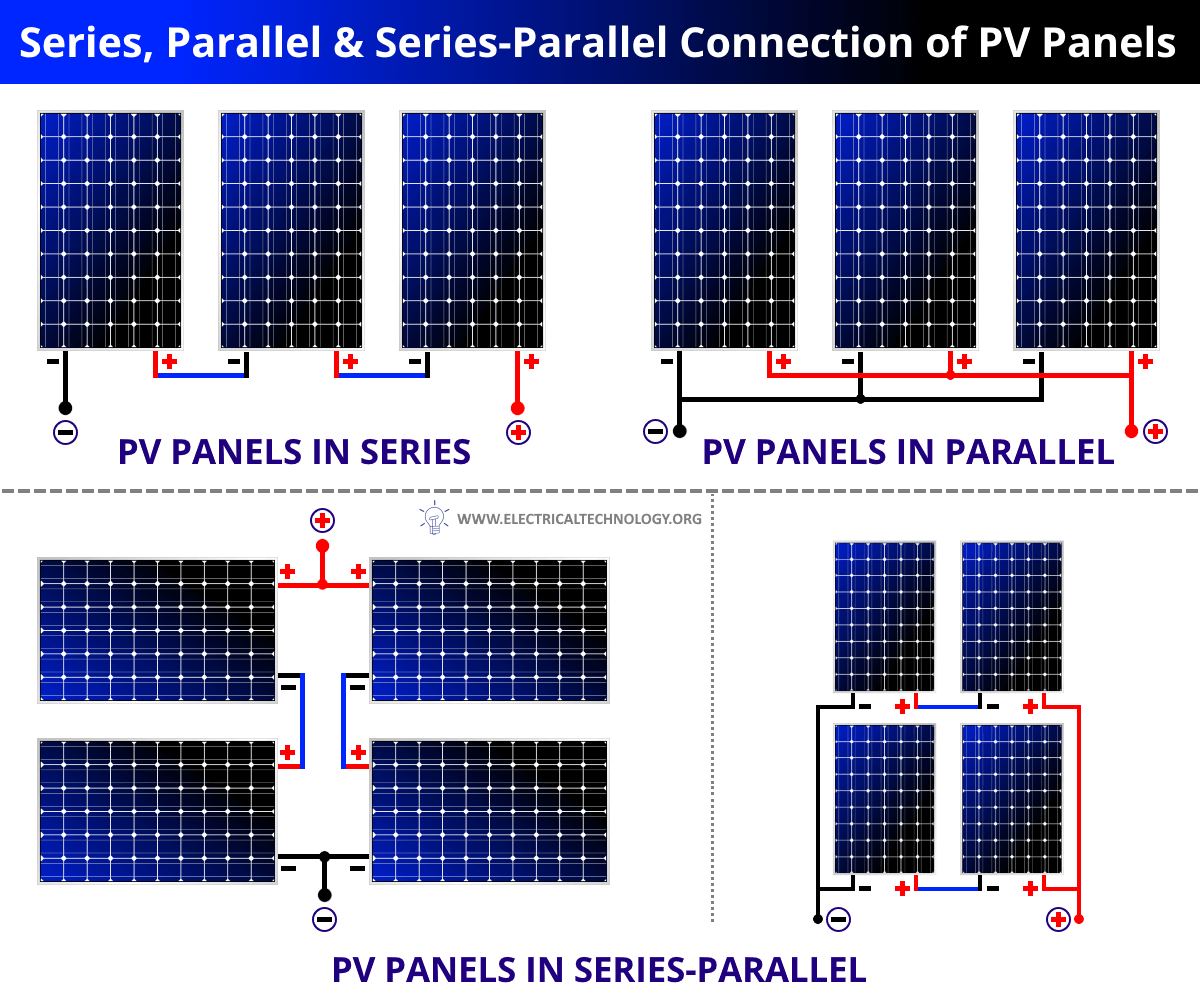
Additionally, concepts such as series and parallel connections, resistive losses, voltage drop, power factor, and efficiency form the foundation of proper system sizing. Neglecting these basics often results in systems that appear correct on paper but fail under real operating conditions.
Different Configurations of PV Solar Systems
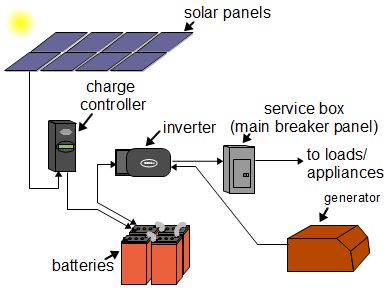
Photovoltaic systems are typically classified according to how they interact with the utility grid and whether energy storage is included. Each configuration has unique design priorities, costs, and operational characteristics.
An off-grid solar system operates independently from the utility grid. All generated energy must either be consumed immediately or stored in batteries. Because there is no external backup, battery sizing and system redundancy are critical. Off-grid systems are common in remote locations, rural communities, and areas with unreliable grid access.
A grid-tied solar system operates in parallel with the public electricity network. Energy generated by the PV array is either consumed on-site or exported to the grid. These systems typically do not include batteries, which reduces cost and complexity. However, grid availability and regulatory requirements strongly influence their design.
A hybrid solar system combines features of both off-grid and grid-tied systems. It includes batteries while also maintaining grid connectivity. Hybrid systems provide backup power during outages and allow optimized energy management, but they require careful control logic, protection coordination, and higher upfront investment.
Choosing the correct configuration is one of the most important early decisions in any solar project, as it directly influences component selection, system topology, and long-term performance.
Various Components of a PV Solar System
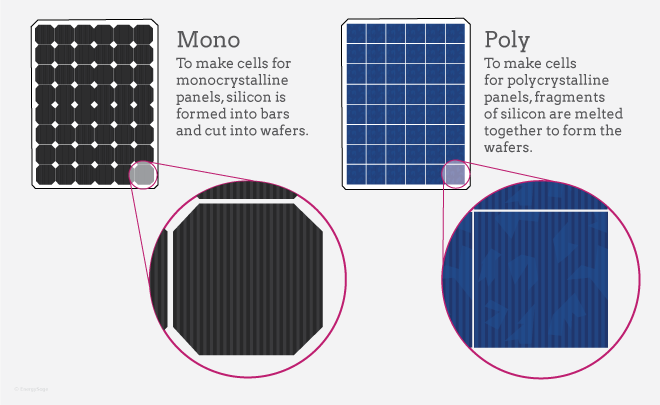
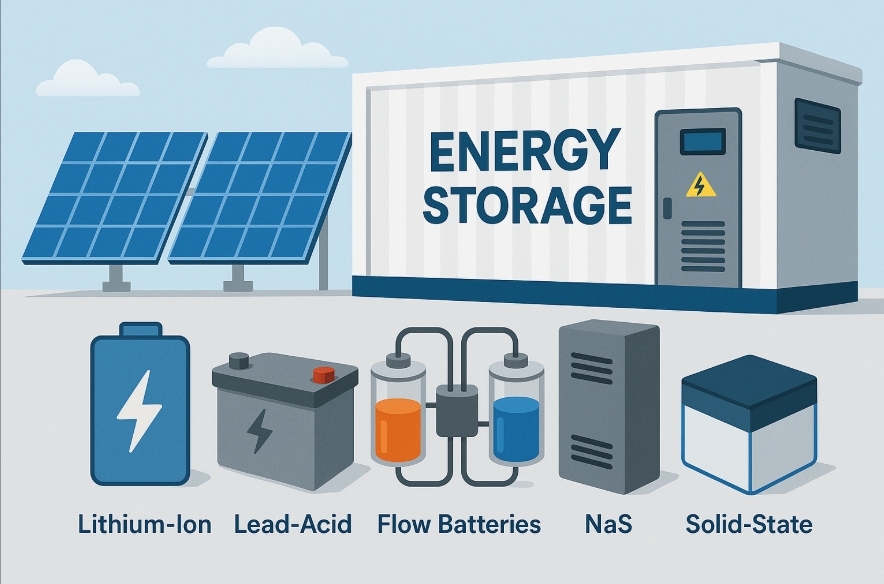
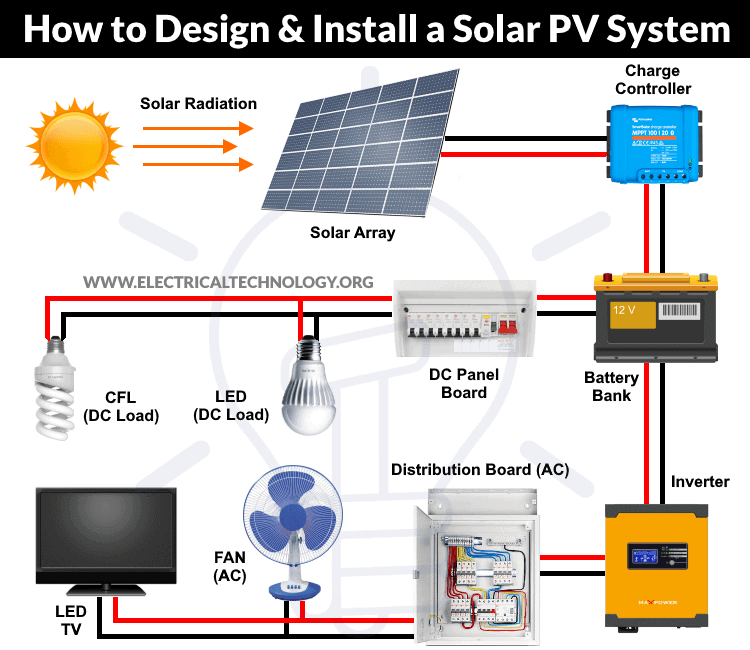
Every photovoltaic system is built from a set of core components, each performing a specific electrical and functional role. Understanding these components individually and collectively is essential for reliable system design.
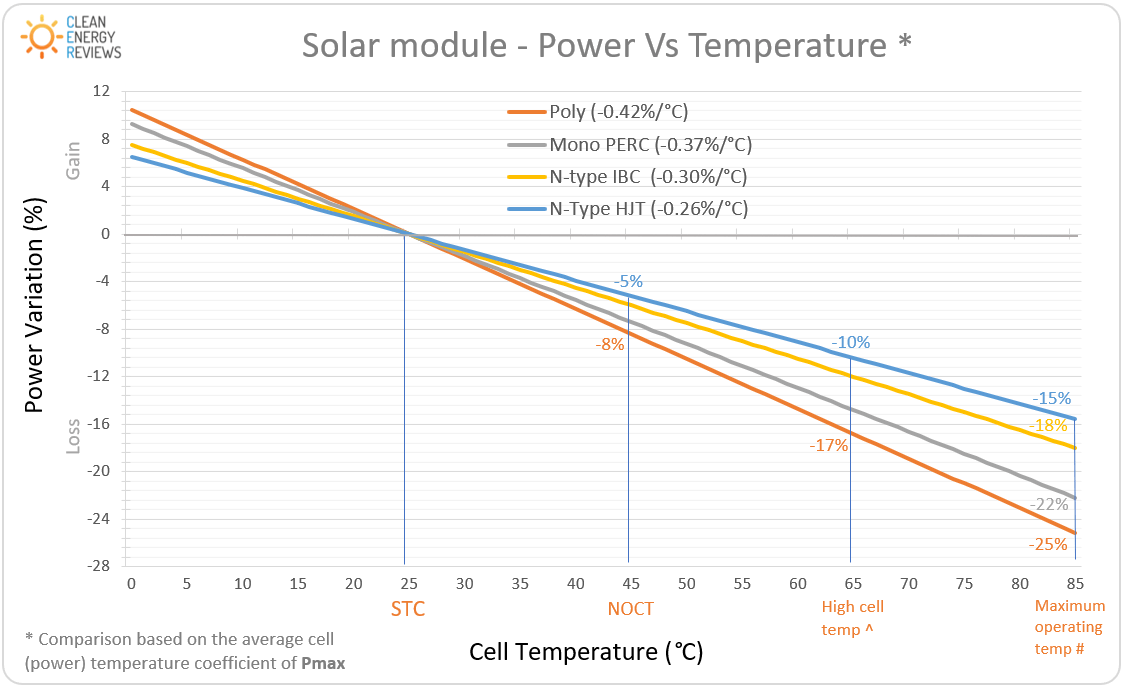
Solar panels, also known as PV modules, are responsible for converting sunlight into DC electricity. Their electrical characteristics—such as maximum power voltage, open-circuit voltage, and temperature coefficients—directly influence string sizing and inverter compatibility. Designers must account for how these parameters change under real environmental conditions, especially high temperatures.
Charge controllers are used in battery-based systems to regulate the flow of energy from the PV array into the battery bank. Modern systems predominantly use Maximum Power Point Tracking (MPPT) charge controllers because they significantly improve energy harvest compared to basic PWM controllers.
Batteries store electrical energy for later use. The choice of battery technology affects system lifespan, maintenance requirements, depth of discharge, and overall cost. Proper battery sizing ensures continuity of supply without excessive degradation.
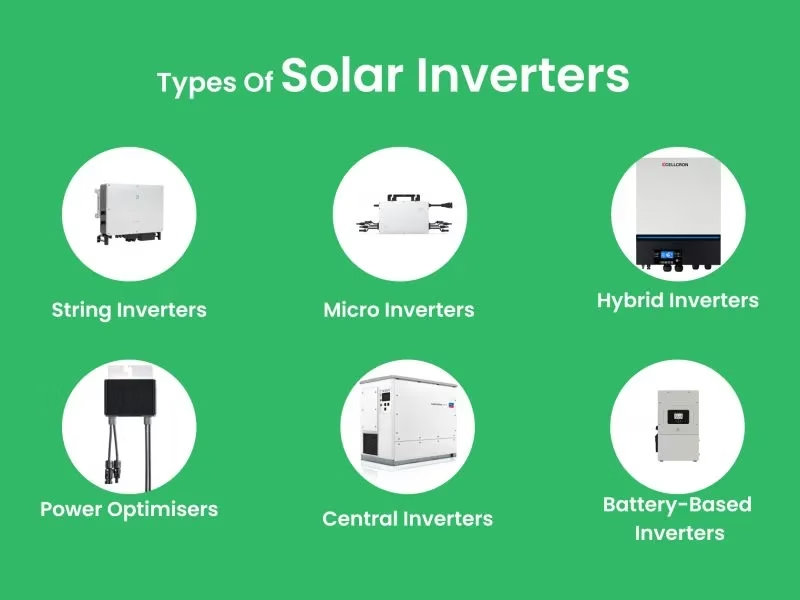
Inverters form the interface between DC generation and AC consumption or grid export. Their sizing, efficiency, voltage window, and protection features determine the operational stability of the entire system. Loads—whether residential appliances, industrial equipment, or critical infrastructure—ultimately define the system’s purpose and performance requirements.
How to Design a Battery-Based Solar PV System
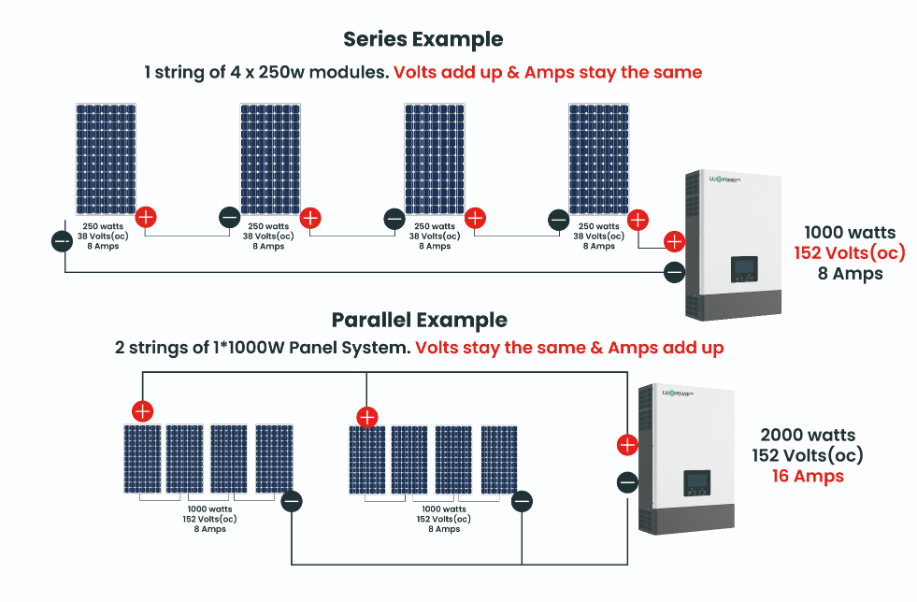
Designing a battery-based solar PV system begins with a detailed assessment of energy consumption. Load analysis involves identifying every electrical appliance, its power rating, and the duration of use. This information is used to calculate daily energy demand, which becomes the foundation for all subsequent sizing steps.
Once daily energy consumption is known, the battery bank is sized to provide sufficient autonomy, typically measured in days. Designers must consider allowable depth of discharge, system voltage, battery efficiency, and degradation over time. Oversizing batteries increases cost unnecessarily, while undersizing results in frequent deep discharges and early failure.
The PV array is then sized to recharge the batteries while supplying daily loads under average solar conditions. Factors such as peak sun hours, system losses, seasonal variations, and panel orientation must all be considered. The inverter is sized to handle both continuous loads and short-duration surge currents from motors and compressors.
A well-designed battery-based system strikes a balance between reliability, cost, and component lifespan. Poor coordination between batteries, inverters, and PV arrays is a common cause of off-grid system failure.
How to Design a Grid-Tie Solar PV System

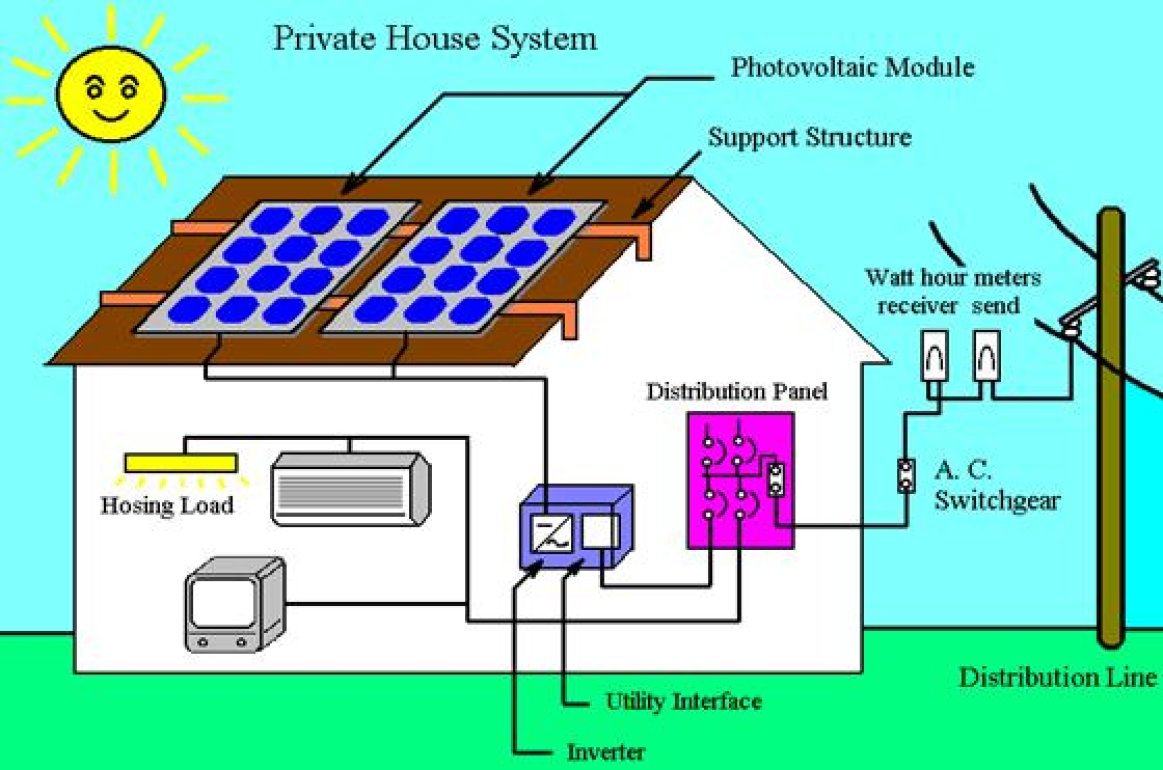
Grid-tied solar system design focuses primarily on energy yield optimization and grid compliance rather than energy storage. The first step is evaluating historical electricity consumption, which helps determine an appropriate PV system size based on annual energy offset rather than peak demand alone.
The PV array is sized according to available installation space, solar resource data, and regulatory export limits. Inverter selection involves matching the DC array capacity with inverter ratings while maintaining acceptable DC-to-AC ratios. Designers must ensure that voltage limits are respected under both cold and hot conditions to avoid inverter shutdowns.
Grid standards require strict adherence to protection, synchronization, and power quality requirements. Anti-islanding protection, grounding, and monitoring systems are not optional; they are essential safety features. Unlike off-grid systems, grid-tied designs prioritize efficiency, compliance, and long-term energy yield.
How to Design a Solar Energy System Using PVsyst Program
PVsyst is widely used by engineers, consultants, and financiers to model solar PV system performance accurately. The software allows designers to simulate how a system will behave under real meteorological conditions over its entire lifetime.
The design process in PVsyst begins with defining the project location and importing meteorological data. The PV system configuration is then created by selecting specific modules and inverters and arranging them into strings. Orientation, tilt angle, and mounting structure are defined to reflect real installation conditions.
One of the most critical features of PVsyst is shading analysis. Even partial shading can have a significant impact on energy yield, and PVsyst allows designers to quantify these losses using 3D scenes and horizon profiles. Additional losses such as soiling, wiring losses, mismatch, and thermal effects are also modeled.
The final output includes detailed reports showing annual energy production, performance ratio, specific yield, and loss breakdowns. These reports are essential for project feasibility studies, financial modeling, and regulatory approvals.
Role of Excel and Math in Solar Design
Despite the availability of advanced simulation tools, Excel and mathematical calculations remain indispensable in solar design. Excel is used to validate assumptions, cross-check software outputs, and perform iterative sizing during early project stages.
Spreadsheet models are commonly used for load analysis, battery autonomy calculations, inverter sizing, cable voltage drop analysis, and cost estimation. Mathematical reasoning ensures that designers understand the underlying logic of their systems instead of relying blindly on software defaults.
In professional practice, Excel and PVsyst complement each other. Excel ensures engineering accuracy, while PVsyst provides performance confidence.
Frequently Asked Questions (FAQ)
What is the role of PVsyst in solar system design?
PVsyst is used to simulate real-world performance of solar PV systems by modeling environmental conditions, component characteristics, and system losses. It provides detailed energy yield predictions that are critical for feasibility studies, financial modeling, and bankability assessments.
Can a solar system be designed without using PVsyst?
Small residential systems can be designed using manual calculations and basic tools. However, for commercial, industrial, or utility-scale projects, professional simulation software such as PVsyst is essential to achieve reliable performance estimates and meet stakeholder requirements.
Why is Excel still important when PVsyst is available?
Excel allows designers to independently verify calculations, analyze loads, size components logically, and understand how system parameters interact. It acts as a validation layer that prevents costly design errors.
What is the most common mistake in solar PV design?
One of the most common mistakes is ignoring system losses and temperature effects. Designs based solely on nominal ratings often fail to meet performance expectations under real operating conditions.
Is mathematical knowledge really necessary for solar design?
Yes. Mathematics is fundamental to understanding energy flow, system behavior, and component interaction. Without it, designers cannot reliably interpret simulation results or troubleshoot performance issues.
Conclusion
Solar energy system design is a structured engineering process that combines electrical fundamentals, mathematical analysis, spreadsheet validation, and professional simulation. Each stage plays a critical role in ensuring that a PV system performs reliably, safely, and economically over its lifetime.
Designers who master this workflow produce systems that are not only functional but technically sound, scalable, and defensible. In modern solar engineering, intuition is not enough—methodical design is non-negotiable.