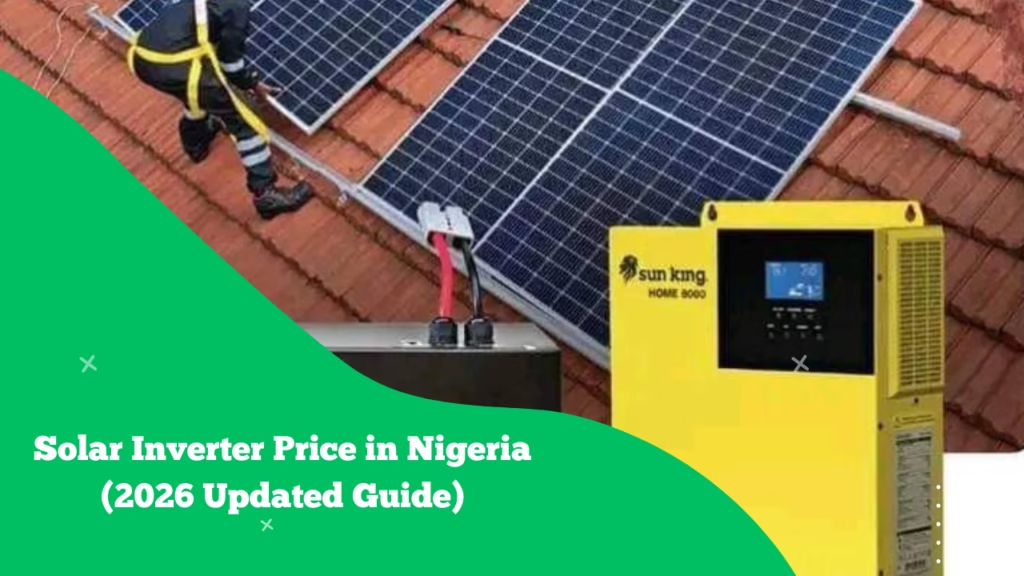

Solar inverter prices in Nigeria vary widely, and this uncertainty causes many people to overspend, undersize their systems, or fall for misleading quotes. With unstable grid power, rising fuel costs, and increasing dependence on generators, millions of Nigerians now search daily for reliable information about solar power costs.
This page is a comprehensive price and decision hub created to answer one question clearly: how much does a solar inverter system really cost in Nigeria, and why? It combines detailed explanations, real-world examples, and up-to-date price tables to help you budget correctly and avoid common mistakes.
This is not a sales page. It is an educational reference that reflects real Nigerian conditions — power outages, fuel costs, heat, wiring challenges, and realistic expectations.
Quick Solar Inverter Price Overview in Nigeria
| System Size | Typical Price Range (₦) | Best For |
|---|---|---|
| 1–2kVA | 450,000 – 900,000 | Backup power, lights, TV |
| 3kVA | 900,000 – 1.8m | Small flats, basic appliances |
| 5kVA | 1.6m – 3.2m | 2–3 bedroom homes |
| 10kVA | 3.5m – 6.5m | Full-house systems, offices |
These are complete system prices, including inverter, batteries, solar panels, installation, and basic accessories. Prices fluctuate based on equipment quality, battery choice, and exchange rates.
Solar inverter prices in Nigeria range from ₦450,000 to over ₦6,500,000, depending on inverter size, battery type, solar panel capacity, and installation quality. Small backup systems cost less, while full-house solar systems with batteries and panels cost significantly more.
What a Solar Inverter System Actually Includes
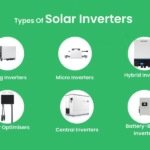
Many Nigerians assume the inverter itself is the most expensive part of a solar system. In reality, the inverter is only one component of a larger system. Understanding what makes up a solar inverter system helps explain why quotes differ so much.
A complete solar inverter system typically includes:
- Solar inverter – Converts DC power from batteries or panels into usable AC electricity
- Batteries – Store energy for night use or during outages
- Solar panels – Generate electricity from sunlight
- Charge controller (built-in or external) – Manages charging safely
- Cables and protection devices – Prevent overloads, short circuits, and damage
- Mounting structures – Secure panels on roofs or ground
- Installation and labour – Wiring, configuration, and testing
Because batteries and panels do most of the work, they often account for more than half of total system cost. This is why two systems with the same inverter size can have very different prices.
Why Solar Inverter Prices Vary So Much in Nigeria
There is no fixed national price for solar inverter systems in Nigeria. Costs vary due to several practical factors:
- Inverter capacity and surge rating – Higher surge capacity costs more
- Battery type and quantity – Lithium vs tubular batteries
- Daily power usage – Light backup vs full-day usage
- Installation quality – Cable size, safety devices, and workmanship
- Distance and layout – Long cable runs increase cost
- Ventilation and heat control – Poor cooling shortens battery life
- Location – Logistics and installer availability
Understanding these factors prevents you from comparing prices blindly without context.
Solar Inverter Prices by Capacity (Detailed Breakdown)
1kVA – 2kVA Solar Inverter Systems
| Component | Typical Cost (₦) |
|---|---|
| Inverter | 180,000 – 350,000 |
| Batteries | 200,000 – 400,000 |
| Panels | 120,000 – 250,000 |
| Installation | 50,000 – 120,000 |
These systems are suitable for lighting, fans, TVs, decoders, routers, and phone charging. They are intended strictly for backup power and are not designed for refrigerators, pumping machines, or air conditioners.
3kVA Solar Inverter Systems
| Component | Typical Cost (₦) |
|---|---|
| Inverter | 350,000 – 700,000 |
| Batteries | 400,000 – 800,000 |
| Panels | 250,000 – 450,000 |
| Installation | 100,000 – 200,000 |
This is the most common entry-level system in Nigeria. It works well when loads are controlled but fails quickly when overloaded.
5kVA Solar Inverter Systems (Most Popular in Nigeria)
| Component | Typical Cost (₦) |
|---|---|
| Inverter | 600,000 – 1.2m |
| Batteries | 800,000 – 1.8m |
| Panels | 400,000 – 900,000 |
| Installation | 150,000 – 300,000 |
A properly designed 5kVA system can support refrigerators, entertainment devices, lighting, and limited air conditioning with sufficient battery storage.
A complete 5kVA solar inverter system in Nigeria costs between ₦1.6 million and ₦3.2 million. The price depends mainly on battery capacity, solar panel size, and installation quality. Cheaper systems usually fail early due to undersized batteries or poor wiring.
10kVA Solar Inverter Systems
| Component | Typical Cost (₦) |
|---|---|
| Inverter | 1.2m – 2.5m |
| Batteries | 1.8m – 3.5m |
| Panels | 700,000 – 1.5m |
| Installation | 200,000 – 500,000 |
These systems are designed for duplexes, offices, clinics, and businesses with heavy loads.
Solar Inverter Prices by Use Case in Nigeria
Solar Inverter Price for 1-Bedroom Apartment
Typical cost: ₦600,000 – ₦1.2 million
Designed for lighting, TV, fans, and basic electronics. Not suitable for refrigerators or AC units.
Solar Inverter Price for 2–3 Bedroom Flat
Typical cost: ₦1.6 million – ₦3 million
This setup can power refrigerators, TVs, lighting, and limited AC use when correctly sized.
Solar Inverter Price for Duplex or Full House
Typical cost: ₦3 million – ₦6.5 million+
Used for multiple AC units, pumping machines, and continuous power needs.
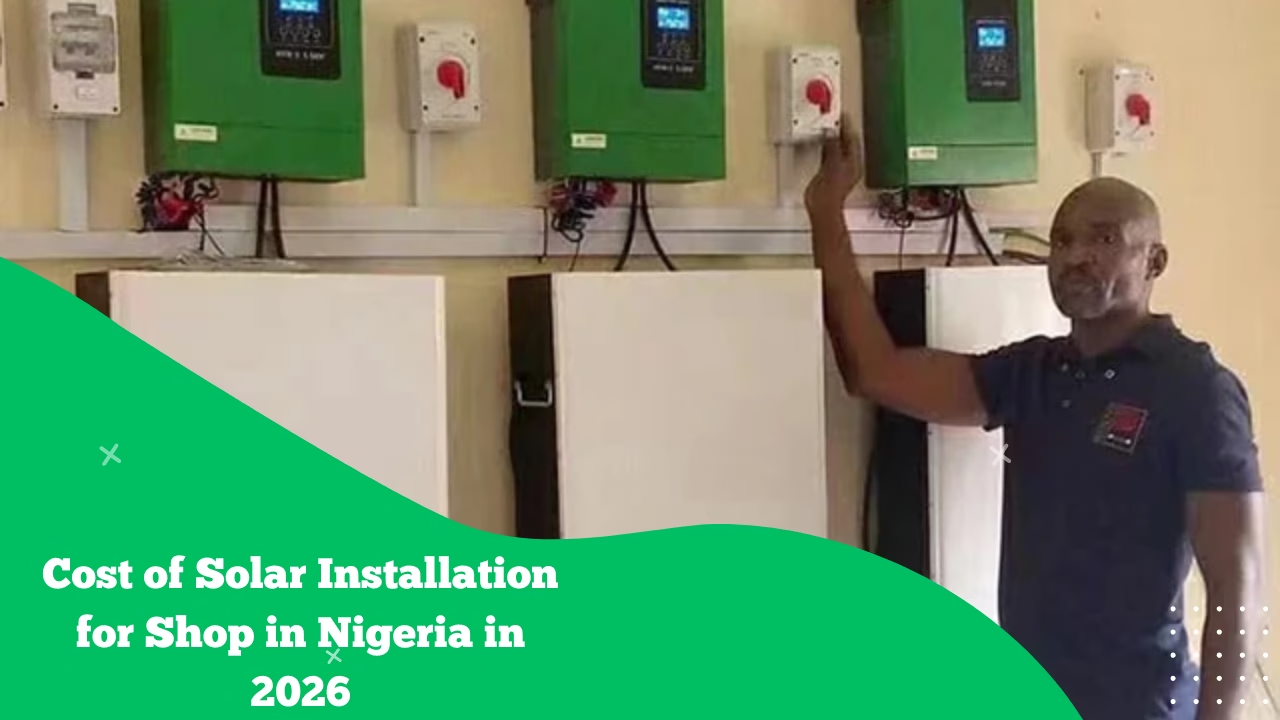
Solar Inverter Price for Shops and Small Businesses
Typical cost: ₦1 million – ₦4 million
Common for salons, clinics, POS businesses, and offices that need quiet, reliable power.
Battery Prices in Nigeria (Major Cost Driver)
| Battery Type | Capacity | Price Range (₦) | Expected Lifespan |
|---|---|---|---|
| Tubular | 200Ah | 280,000 – 500,000 | 2–4 years |
| Lithium | 5kWh | 1.8m – 3.5m | 8–12 years |
Batteries typically account for 40–60% of total system cost, making correct selection critical.
Solar Panel Prices in Nigeria
| Panel Rating | Price Range (₦) |
|---|---|
| 300–350W | 130,000 – 220,000 |
| 450–550W | 260,000 – 420,000 |
Panels are priced per watt and affected by exchange rates and import supply.
Installation, Wiring, and Accessories Cost
| Item | Typical Cost (₦) |
|---|---|
| Cables & Breakers | 50,000 – 150,000 |
| Mounting Structure | 40,000 – 120,000 |
| Labour | 60,000 – 200,000 |
Poor-quality wiring is the most common cause of inverter failure in Nigeria.
How to Avoid Being Cheated When Buying Solar in Nigeria
- Avoid extremely cheap quotes
- Ask for battery specifications
- Insist on proper cable sizing
- Demand realistic load explanations
- Avoid promises of unlimited 24-hour power
Generator vs Solar Inverter: Long-Term Cost Reality
| Expense | Generator | Solar Inverter |
|---|---|---|
| Fuel | Continuous | None |
| Noise | High | Silent |
| Maintenance | Frequent | Minimal |
| Long-Term Cost | Very High | Lower |
A properly sized solar system often recovers its cost within 2–4 years.
Who Solar Is NOT For
Solar may not be suitable if you:
- Expect full-house power on a very low budget
- Refuse to manage appliance usage
- Want instant results without planning
Frequently Asked Questions
How much does a solar inverter cost in Nigeria?
Solar inverter systems in Nigeria cost between ₦450,000 and ₦6,500,000, depending on system size and battery capacity.
How much is a 5kVA inverter in Nigeria?
A 5kVA solar inverter system costs ₦1.6 million to ₦3.2 million for a complete installation.
Can solar inverter run air conditioners in Nigeria?
Yes, but only with sufficient inverter capacity, battery storage, and solar panels.
Why is solar expensive in Nigeria?
Solar systems are expensive due to battery costs, import dependence, exchange rates, and installation quality.
Can I install solar inverter without batteries?
Technically yes, but it is not practical in Nigeria due to frequent power outages.
How long does a solar inverter system last?
With proper installation, inverters last 5–10 years, while batteries vary by type.
Is solar cheaper than generator in Nigeria?
Over time, solar is cheaper because it eliminates fuel and frequent maintenance costs.
Can I upgrade my solar system later?
Yes, if the system is designed for expansion from the start.
Final Advice Before You Buy
Do not judge solar systems by inverter price alone. Correct sizing, quality batteries, and professional installation matter more than brand names.
This page is updated regularly. Bookmark it and check back for the latest solar inverter prices in Nigeria.