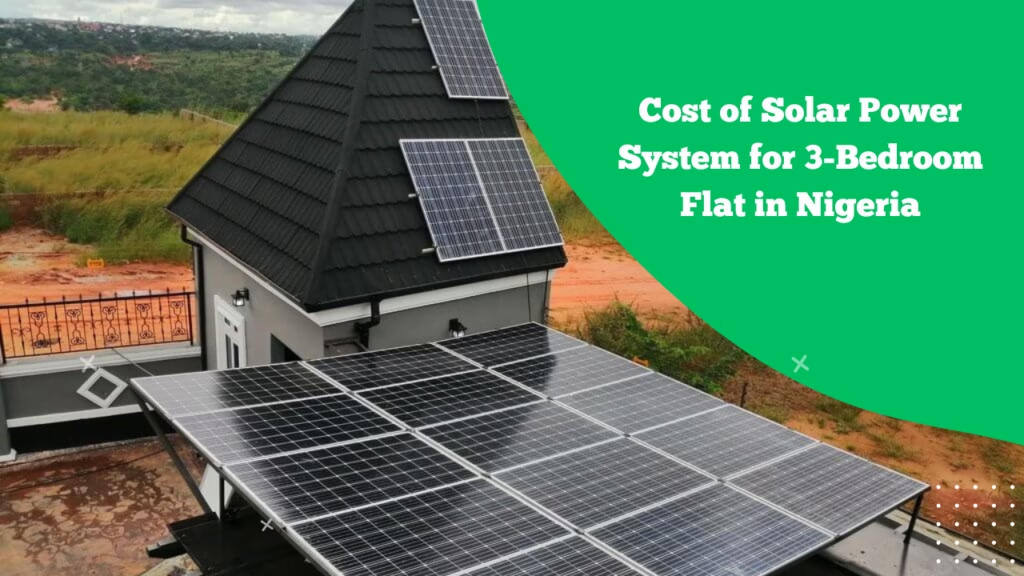

Solar power is no longer an alternative energy option for homes in Nigeria. It has become a financial decision. With unstable grid supply, fuel price volatility, and rising generator maintenance costs, homeowners are now comparing solar system costs vs long-term electricity expenses.
Also Read
- solar power system cost in Nigeria
- solar inverter price in Nigeria
- lithium battery price Nigeria
- solar system for 3-bedroom flat
- hybrid solar installation cost
Solar Power Cost for 3-Bedroom Flat in Nigeria (Quick Summary)
| Usage Level | System Type | Estimated Cost (₦) |
| Light usage | 4 kVA Hybrid | 3.8M – 5.2M |
| Moderate usage | 5–6 kVA Hybrid | 4.8M – 6.8M |
| Heavy usage | 8–10 kVA Hybrid | 7.5M – 12.5M |
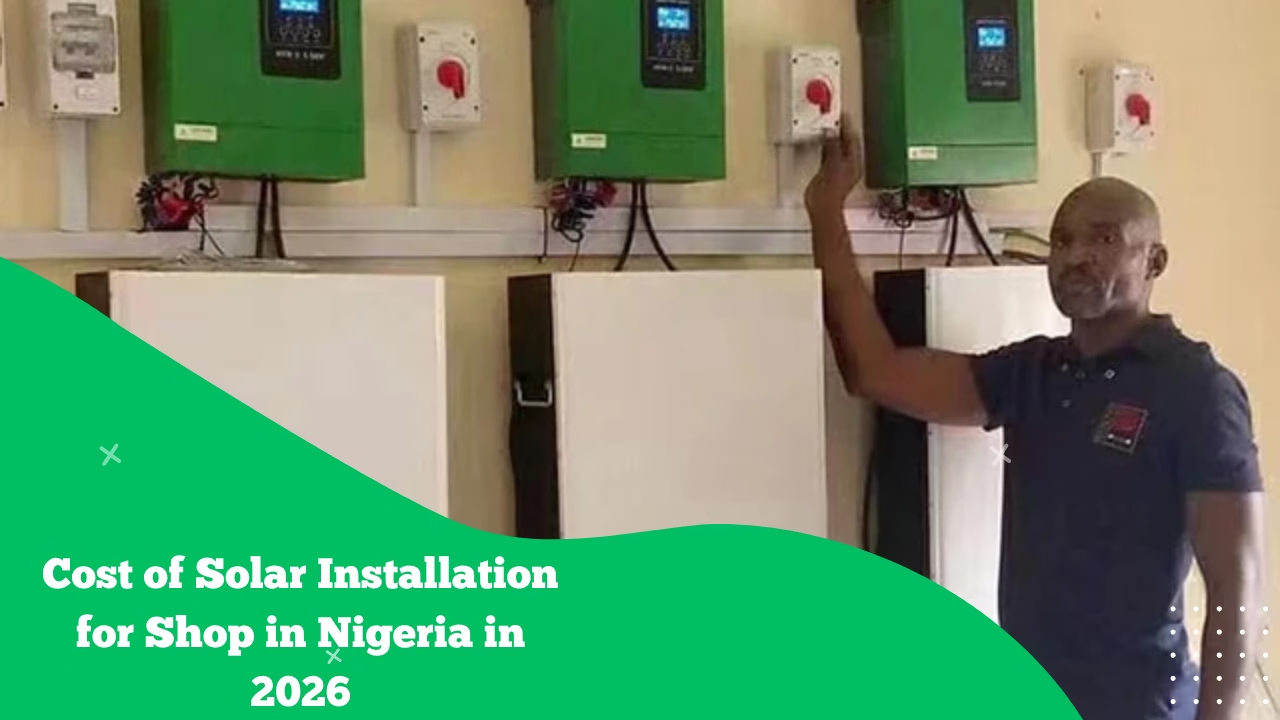
These prices include panels, inverter, batteries, installation, and protection devices.
Solar Load Profile for a Typical 3-Bedroom Flat
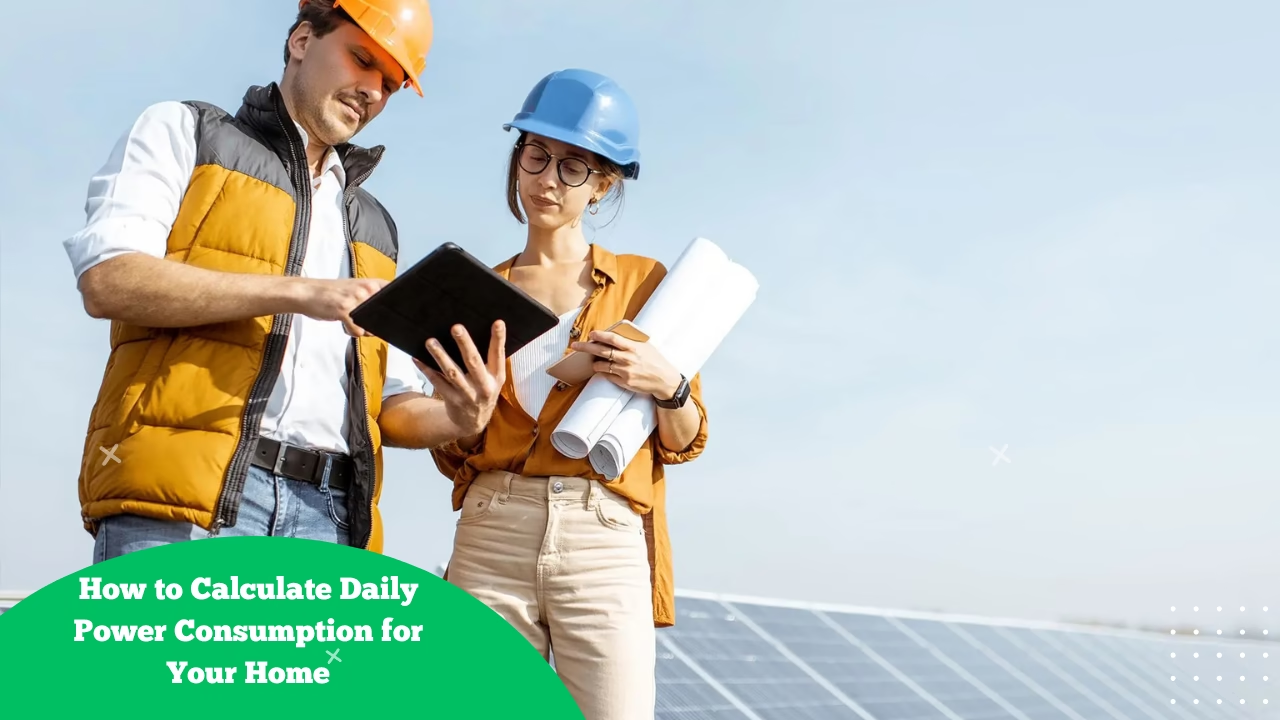
The biggest pricing mistake homeowners make is underestimating daily energy demand. Room count is irrelevant. Appliance behavior defines cost.
Average Appliance Consumption Table
| Appliance | Qty | Power (W) | Hours | Daily Energy (kWh) |
| LED lighting | 15 | 10 | 6 | 0.9 |
| Fans | 5 | 75 | 8 | 3.0 |
| TV & decoder | 2 | 150 | 6 | 1.8 |
| Internet & routers | 2 | 40 | 24 | 1.9 |
| Refrigerator | 1 | 150 | 24 | 3.6 |
| Freezer | 1 | 250 | 24 | 6.0 |
| Washing machine | 1 | 800 | 1 | 0.8 |
| Water pump | 1 | 1,100 | 1 | 1.1 |
| Estimated Total | 19–20 kWh/day |
This energy range determines system size and battery capacity.
Solar System Types for Nigerian Residential Buildings
- Hybrid Solar System (Best Value)
- Combines solar, grid, and batteries
- Reduces battery size and cost
- Most installed option in Nigerian cities
- Off-Grid Solar System
- No PHCN dependence
- Higher battery requirement
- Higher upfront cost
- Grid-Tied Solar System
- No batteries
- Cheapest initial cost
- Poor performance during outages
For 3-bedroom flats, hybrid systems deliver the highest ROI.
Recommended Solar System Size for 3-Bedroom Flats
| Power Use | Inverter Size | Battery Capacity | Suitable Scenario |
| Light | 3.5–4 kVA | 5–7 kWh | No freezer, no AC |
| Medium | 5–6 kVA | 10 kWh | Freezer + pump |
| Heavy | 8–10 kVA | 15–20 kWh | AC units, WFH |
Under sizing increases failure rate and battery degradation.
Solar Power System Cost Breakdown (Nigeria)
5–6 kVA Hybrid Solar System Cost
| Component | Specification | Cost Range (₦) |
| Solar panels | 6 × 550W | 1.1M – 1.4M |
| Hybrid inverter | MPPT 5–6 kVA | 900k – 1.3M |
| Lithium battery | 10 kWh (LiFePO₄) | 2.3M – 3.2M |
| Mounting & BOS | Rails, breakers, SPD | 300k – 500k |
| Installation & labor | — | 250k – 400k |
| Total Cost | 4.8M – 6.8M |
8–10 kVA Hybrid Solar System Cost
| Component | Specification | Cost Range (₦) |
| Solar panels | 10–12 × 550W | 1.9M – 2.6M |
| Hybrid inverter | 8–10 kVA | 1.6M – 2.8M |
| Lithium battery | 15–20 kWh | 3.6M – 6.2M |
| Mounting & BOS | — | 450k – 700k |
| Installation & labor | — | 400k – 650k |
| Total Cost | 7.5M – 12.5M |
Lithium Battery Price in Nigeria
Lithium batteries dominate solar search traffic due to price sensitivity and lifespan comparisons.
| Battery Type | Lifespan | Typical Cost Impact |
| Tubular lead-acid | 2–3 years | Low upfront, high replacement |
| Gel battery | 3–4 years | Moderate |
| Lithium (LiFePO₄) | 8–12 years | Lowest lifetime cost |
Lithium batteries reduce replacement cycles, downtime, and long-term spending.
Solar Inverter Prices in Nigeria
| Inverter Category | Price Range (₦) | Notes |
| PWM/basic | 250k – 500k | Not suitable |
| MPPT hybrid | 850k – 2.5M | Industry standard |
| Parallel hybrid | 2.5M – 4M | Large homes |
MPPT hybrid inverters are essential for efficiency and scalability.
Solar Panel Prices in Nigeria (2026 Estimates)
| Panel Rating | Price (₦) |
| 450W | 180k – 220k |
| 550W | 210k – 260k |
| 600W | 250k – 320k |
Panels have 25–30 year lifespans when correctly mounted.
Installation, Protection & Hidden Costs
A professional installation includes:
- DC/AC breakers
- Surge protection devices
- Proper earthing
- Roof or ground mounting system
These account for 10–15% of total project cost and protect expensive equipment.
Generator vs Solar Power: Real Cost Comparison
| Expense | Generator | Solar |
| Fuel (monthly) | ₦30k–₦60k | ₦0 |
| Noise | High | Silent |
| Maintenance | Frequent | Minimal |
| 10-year cost | ₦3M+ fuel | One-time setup |
Solar breaks even within 3–5 years in most Nigerian homes.
How to Reduce Solar Cost Without Reducing Reliability
- Use gas for cooking
- Choose inverter ACs
- Size batteries for night use only
- Avoid cheap installers
- Buy lithium once instead of replacing lead-acid
Is Solar Power Worth It for a 3-Bedroom Flat in Nigeria?
Yes — but only when the system is properly designed, realistically sized, and professionally installed. In the Nigerian context, solar is not a luxury upgrade; it is an infrastructure investment that directly replaces unreliable grid power and expensive generator use.
1. Financial Value: Solar vs Everyday Energy Costs
For most 3-bedroom flats in Nigeria, monthly electricity expenses are split between:
- PHCN bills with poor supply reliability
- Generator fuel and maintenance
A modest generator consuming ₦30,000–₦60,000 in fuel monthly translates to ₦360,000–₦720,000 per year, excluding servicing and replacements. Over 5–7 years, this exceeds the cost of a well-designed hybrid solar system. Solar front-loads the expense but eliminates recurring energy costs, which is why most households break even within 3 to 5 years.
2. Operational Reliability: Power When You Need It
The real value of solar in Nigeria is not just savings; it is predictable power. A correctly sized hybrid system:
- Supplies uninterrupted electricity during outages
- Protects appliances from voltage fluctuations
- Runs silently, unlike generators
Cheap or undersized systems fail here. Insufficient battery capacity leads to nighttime blackouts, while low-quality inverters trip under normal household loads. Reliability comes from engineering discipline, not low pricing.
3. System Lifespan: One-Time Setup vs Repeated Replacement
When quality components are used:
- Solar panels last 25–30 years
- Lithium batteries last 8–12 years
- Hybrid inverters last 8–10 years
By contrast, small generators often require replacement within 2–3 years under heavy use. Cheap solar systems mimic this failure pattern because of poor component selection and installation shortcuts. Properly designed systems behave differently: they degrade slowly and predictably.
4. Design Quality Determines Success or Failure
Solar “not working” stories are almost always design failures:
- Undersized batteries
- Oversized or undersized inverters
- Poor cable sizing and earthing
- Ignoring actual appliance behavior
A 3-bedroom flat with a freezer, water pump, and occasional air-conditioner use requires a very different system from one running lights and fans only. Correct sizing aligns energy production, storage, and consumption. Anything else is guesswork.
5. Long-Term Practicality
When installed correctly, solar:
- Eliminates generator dependence
- Reduces noise and fumes
- Stabilizes home energy costs
- Increases property value
It becomes part of the building’s infrastructure, not an accessory.
Bottom Line
Solar power is worth it for a 3-bedroom flat in Nigeria only if it is treated as a long-term energy system, not a budget gadget. Cheap systems fail early and cost more over time. Properly sized, professionally installed systems deliver quiet, stable power for decades and outperform generators financially and operationally.
FAQs – Solar Power System Cost in Nigeria
How much does a solar power system cost for a 3-bedroom flat in Nigeria?
The total cost typically ranges from ₦4.5 million to ₦12.5 million. The final price depends on the number of appliances, daily energy consumption, battery capacity, and system design. Homes with freezers, water pumps, or air conditioners require larger inverters and batteries, which increases cost.
Can a solar system comfortably power air conditioners?
Yes. Running air conditioners on solar is practical in Nigeria when the system is properly sized. A minimum of an 8–10 kVA hybrid inverter, supported by high-capacity lithium batteries, is required. Inverter-type ACs significantly reduce energy demand compared to conventional units.
How many solar panels are needed for a 3-bedroom flat?
Most 3-bedroom flats require 6 to 12 high-wattage panels. The exact number depends on daily energy usage, roof space, and sunlight availability. Higher consumption or longer night usage increases the required panel count.
Is using a lithium battery compulsory for residential solar systems?
Lithium batteries are not compulsory, but they are the most cost-effective option over time. They last significantly longer, charge faster, and deliver more usable energy than lead-acid or gel batteries, reducing replacement costs and system downtime.
Can a solar power system be expanded in the future?
Yes, but only if the inverter is designed for expansion. Systems can be scaled by adding more panels and batteries only when the inverter supports parallel or modular upgrades. Systems installed without this consideration often require full replacement during expansion.