
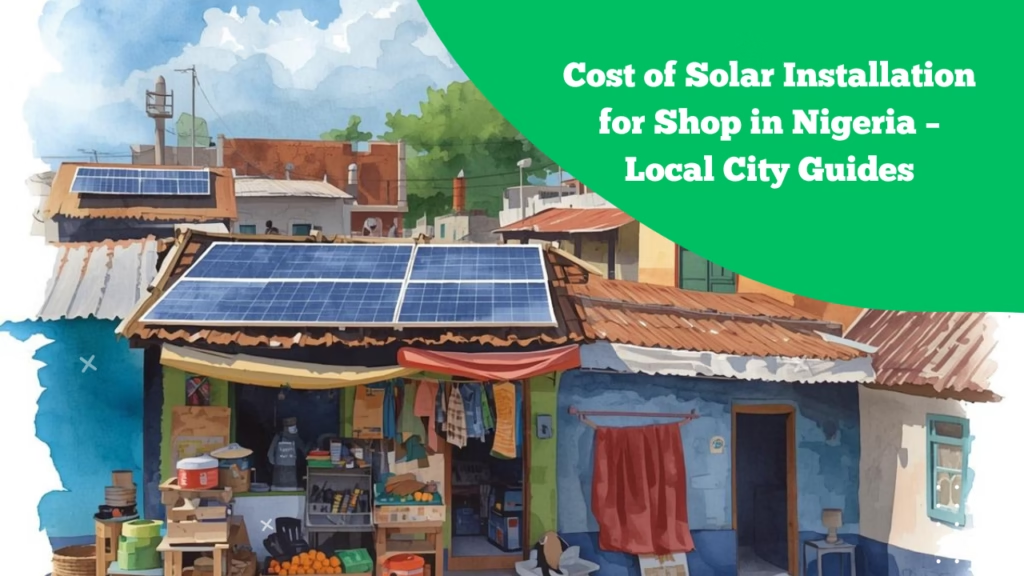

Electricity reliability varies sharply across cities in Nigeria, and this directly affects how much it costs to install solar power for a shop. A system that works well in one city may be over-engineered or under-sized in another. Differences in grid stability, trading hours, fuel availability, climate, and typical shop operations all influence solar system size, battery capacity, and total installation cost.
This Local City Guides series breaks down the real cost of solar installation for shops across major Nigerian cities, moving beyond national averages to city-specific realities. It explains how location affects design choices, pricing ranges, and return on investment, so shop owners can make informed decisions based on where they operate—not guesswork.
Each city guide is written to answer high-intent questions and focuses on:
- Typical shop electricity usage in that city
- Recommended inverter and battery sizes
- Realistic cost ranges for small, medium, and large shops
- Local factors that increase or reduce solar costs
- Expected payback timelines compared to generator use
Whether you run a small retail store, a mini-mart, a pharmacy, or a cold-storage business, these city-level guides show what solar actually costs where you do business and how to size a system that delivers reliable power without unnecessary overspending.
Cost of Solar Installation for Shops in Lagos
Overview: Why Solar Matters for Shops in Lagos
Lagos is Nigeria’s commercial engine, but it also has one of the most unstable and fragmented power supplies. Shops face frequent outages, inconsistent voltage, and rising generator fuel costs. For retailers, pharmacies, salons, cold rooms, and mini-marts, electricity is directly tied to daily revenue.
Solar power has shifted from a backup option to primary business infrastructure in Lagos because it delivers predictable energy and long-term cost control.
Typical Shop Power Usage in Lagos
Lagos shops usually operate long hours and rely heavily on electronics.
Common equipment includes:
- LED lighting (indoor and signage)
- POS systems and routers
- CCTV and security lighting
- Refrigerators and freezers
- Beverage chillers
- Fans or split AC units
Refrigeration and long night-time operation are the largest cost drivers.
Recommended Solar System Sizes for Lagos Shops
| Shop Category | Inverter Size | Battery Capacity |
| Small retail shop | 3–4 kVA | 5–7 kWh |
| Mini-mart / salon | 5–6 kVA | 10 kWh |
| Pharmacy / supermarket | 8–10 kVA | 15–20 kWh |
Hybrid systems are strongly preferred because Lagos has partial grid availability, which reduces battery stress and overall system cost.
Cost of Solar Installation for Shops in Lagos
Small Shop (3–4 kVA Hybrid)
Estimated cost: ₦3.5M – ₦5.2M
Supports lighting, POS, fans, and small refrigeration.
Medium Shop (5–6 kVA Hybrid)
Estimated cost: ₦4.8M – ₦6.8M
Suitable for mini-marts, salons, barbershops, and bakeries.
Large Shop (8–10 kVA Hybrid)
Estimated cost: ₦7.8M – ₦12.5M
Designed for pharmacies, supermarkets, and cold storage.
Lagos-Specific Installation Considerations
- Limited roof space favors high-wattage panels (550W+)
- Surge protection is critical due to grid instability
- Lithium batteries handle Lagos heat better than lead-acid
- Proper ventilation prevents inverter overheating
ROI for Lagos Shop Owners
Most Lagos shops recover solar investment within 2–4 years, largely due to high generator fuel costs and long daily operating hours.
Is Solar Worth It for Lagos Shops?
Yes — when correctly sized and professionally installed. Cheap systems fail quickly under Lagos load conditions. Proper systems deliver silent, uninterrupted power for decades.
Cost of Solar Installation for Shops in Abuja
Overview: Solar for Businesses in Abuja
Abuja enjoys relatively better grid stability than most Nigerian cities, but outages are still frequent—especially in satellite towns. Noise restrictions and estate rules also make generators undesirable.
Solar power offers Abuja shop owners clean, quiet, and compliant energy.
Abuja Shop Load Characteristics
- Shorter trading hours compared to Lagos
- Higher daytime usage than nighttime
- Less refrigeration in small shops
Because of this, Abuja shops often need smaller battery banks, lowering total installation cost.
Recommended System Sizes in Abuja
| Shop Size | Inverter | Battery |
| Small shop | 3–4 kVA | 5 kWh |
| Retail store | 5–6 kVA | 8–10 kWh |
| Large shop | 8–10 kVA | 15 kWh |
Cost of Solar Installation in Abuja
- Small shop: ₦3.2M – ₦4.8M
- Medium shop: ₦4.5M – ₦6.5M
- Large shop: ₦7.2M – ₦11.8M
Abuja installations are often cheaper due to better roof access and lower night load requirements.
Abuja-Specific Design Factors
- Emphasis on daytime solar utilization
- Smaller battery banks reduce cost
- Clean installations favored in estates
- High demand for lithium batteries for silence and reliability
ROI Timeline in Abuja
Payback typically occurs within 3–5 years, depending on generator usage avoided.
Verdict for Abuja Shops
Solar is worth it when sized realistically. Oversizing batteries wastes capital; undersizing leads to downtime. Balanced design delivers maximum value.
Cost of Solar Installation for Shops in Onitsha
Overview: Why Solar Pays Fast in Onitsha
Onitsha has one of the highest shop densities in Africa and one of the worst power reliability profiles in Nigeria. Generator dependence is extreme, making solar payback unusually fast.
Typical Power Use in Onitsha Shops
- Early opening, late closing
- Heavy lighting and POS usage
- Refrigeration is common even in small shops
- Generators often run 10–16 hours daily
Recommended Solar Sizes in Onitsha
| Shop Type | Inverter | Battery |
| Small shop | 4–5 kVA | 8–10 kWh |
| Retail shop | 6–8 kVA | 12–15 kWh |
| Large shop | 10–12 kVA | 20 kWh |
Installation Cost in Onitsha
- Small shop: ₦4.2M – ₦6.0M
- Medium shop: ₦6.5M – ₦9.8M
- Large shop: ₦10.0M – ₦14.0M
Although upfront cost is higher, fuel savings are massive.
Onitsha-Specific Risks & Solutions
- Poor grid quality → strong surge protection required
- Heat and dust → lithium batteries + ventilation
- Long night operation → adequate battery sizing essential
ROI in Onitsha
Many shops recover solar investment within 18–36 months, faster than most Nigerian cities.
Bottom Line for Onitsha Shops
Solar is not optional—it is a competitive advantage. Proper systems eliminate fuel dependency and protect profits.
Cost of Solar Installation for Shops in Ibadan
Overview: Solar Power for Shops in Ibadan
Ibadan is one of the largest cities in Nigeria by landmass, with a high concentration of small and medium retail shops. Power supply is inconsistent, but load patterns are generally lighter than in Lagos or Onitsha. This makes Ibadan one of the most cost-efficient cities for shop solar installations.
Solar adoption is driven by rising generator fuel costs and the need for quiet, stable electricity in dense commercial areas.
Typical Shop Electricity Usage in Ibadan
Most shops in Ibadan operate between 8am and 8pm, with limited night-time load.
Common appliances include:
- LED lighting
- Fans instead of air conditioners
- POS machines and routers
- Refrigerators or freezers (optional)
- Security lighting
Shops without cold storage require significantly smaller battery banks.
Recommended Solar System Sizes for Ibadan Shops
| Shop Type | Inverter Size | Battery Capacity |
| Small retail shop | 3 kVA | 5 kWh |
| Medium shop with freezer | 5 kVA | 8–10 kWh |
| Cold-storage shop | 8 kVA | 15 kWh |
Hybrid systems are preferred due to partial grid availability.
Cost of Solar Installation in Ibadan
Small Shop (3 kVA Hybrid)
₦3.0M – ₦4.2M
Supports lighting, POS, fans, and routers.
Medium Shop (5 kVA Hybrid)
₦4.3M – ₦6.2M
Ideal for shops with refrigerators or freezers.
Large Shop (8 kVA Hybrid)
₦7.0M – ₦10.8M
Used by supermarkets, pharmacies, and cold rooms.
Ibadan-Specific Installation Factors
- Roof space is usually ample
- Lower night load reduces battery cost
- Fans reduce inverter stress compared to AC usage
ROI for Ibadan Shop Owners
Most shop owners recover costs within 3–5 years, faster when generators are heavily used.
Final Verdict for Ibadan
Solar power is highly cost-effective in Ibadan due to moderate loads and favorable installation conditions.
Cost of Solar Installation for Shops in Port Harcourt
Overview: Why Solar Is Critical in Port Harcourt
Port Harcourt suffers from severe grid instability and high generator fuel costs. Shops depend heavily on generators, making operating expenses unpredictable.
Solar power offers fuel independence and protects businesses from daily downtime.
Typical Shop Load Profile in Port Harcourt
Most shops rely on:
- Refrigerators and freezers
- Beverage chillers
- Bright interior lighting
- Fans or ACs
- POS and CCTV
Humidity and heat increase battery degradation risks if poor equipment is used.
Recommended Solar Sizes for PH Shops
| Shop Type | Inverter | Battery |
| Small shop | 4–5 kVA | 8 kWh |
| Retail shop | 6–8 kVA | 12–15 kWh |
| Large supermarket | 10 kVA | 20 kWh |
Lithium batteries are strongly advised.
Cost of Solar Installation in Port Harcourt
- Small shop: ₦4.0M – ₦6.0M
- Medium shop: ₦6.0M – ₦9.5M
- Large shop: ₦9.5M – ₦13.5M
Higher cost reflects larger battery requirements and corrosion-resistant components.
Port Harcourt Design Considerations
- Enhanced ventilation is mandatory
- Strong surge protection due to unstable grid
- Elevated mounting prevents flooding damage
ROI in Port Harcourt
Payback often occurs within 2–4 years due to high generator expenses.
Verdict for PH Shops
Solar is not optional in Port Harcourt—it is a business survival tool.
Cost of Solar Installation for Shops in Benin City
Overview: Solar for Retail Businesses in Benin City
Benin City combines moderate grid access with long evening trading hours, especially for food and beverage shops.
Solar adoption is increasing among retailers seeking predictable operating costs.
Typical Power Usage in Benin City Shops
- Refrigeration is common
- Evening lighting dominates energy use
- Moderate POS and electronics demand
Night-time consumption drives battery sizing.
Recommended System Sizes
| Shop Size | Inverter | Battery |
| Small shop | 4 kVA | 6–8 kWh |
| Medium shop | 6 kVA | 10–12 kWh |
| Large shop | 8–10 kVA | 15–20 kWh |
Cost of Solar Installation in Benin City
- Small shop: ₦3.5M – ₦5.0M
- Medium shop: ₦4.8M – ₦7.0M
- Large shop: ₦7.5M – ₦12.0M
Benin-Specific Installation Notes
- Long nights demand accurate battery sizing
- Roof-mounted systems are common
- Hybrid systems reduce battery wear
ROI for Benin City Shop Owners
Payback typically happens within 3–4 years, depending on generator reliance.
Final Verdict for Benin City
Solar provides stability and cost control for shops with extended evening operations.
Solar Installation Cost for Shops in Aba
- Typical system: 5–10 kVA
- Estimated cost: ₦4.0M – ₦12.8M
- Local factor: Manufacturing + retail hybrid loads
Solar Installation Cost for Shops in Asaba
- Typical system: 3–6 kVA
- Estimated cost: ₦3.2M – ₦7.0M
- Local factor: Moderate trading hours
Solar Installation Cost for Shops in Uyo
- Typical system: 4–8 kVA
- Estimated cost: ₦3.8M – ₦10.5M
- Local factor: Humidity favors lithium batteries
Solar Installation Cost for Shops in Calabar
- Typical system: 3–6 kVA
- Estimated cost: ₦3.4M – ₦7.5M
- Local factor: Lower night usage
Solar Installation Cost for Shops in Owerri
- Typical system: 4–8 kVA
- Estimated cost: ₦3.8M – ₦10.8M
- Local factor: Retail + hospitality overlap
Solar Installation Cost for Shops in Enugu
- Typical system: 3–6 kVA
- Estimated cost: ₦3.2M – ₦7.5M
- Local factor: Office-style retail loads
Solar Installation Cost for Shops in Awka
- Typical system: 3–6 kVA
- Estimated cost: ₦3.3M – ₦7.8M
- Local factor: Moderate refrigeration
Solar Installation Cost for Shops in Abeokuta
- Typical system: 3–5 kVA
- Estimated cost: ₦3.0M – ₦6.5M
- Local factor: Shorter business hours
Solar Installation Cost for Shops in Akure
- Typical system: 3–6 kVA
- Estimated cost: ₦3.1M – ₦7.0M
Solar Installation Cost for Shops in Ilorin
- Typical system: 3–6 kVA
- Estimated cost: ₦3.0M – ₦6.8M
Solar Installation Cost for Shops in Osogbo
- Typical system: 3–5 kVA
- Estimated cost: ₦2.9M – ₦6.2M
Solar Installation Cost for Shops in Lokoja
- Typical system: 3–6 kVA
- Estimated cost: ₦3.0M – ₦6.8M
Solar Installation Cost for Shops in Makurdi
- Typical system: 4–8 kVA
- Estimated cost: ₦3.8M – ₦10.5M
Solar Installation Cost for Shops in Minna
- Typical system: 3–6 kVA
- Estimated cost: ₦3.1M – ₦7.0M
Solar Installation Cost for Shops in Ado-Ekiti
- Typical system: 3–5 kVA
- Estimated cost: ₦2.9M – ₦6.0M

Pingback: Solar Panel Cost in the USA (2026 Guide): What Homeowners Really Pay—and How Much You Can Save - solarinverter