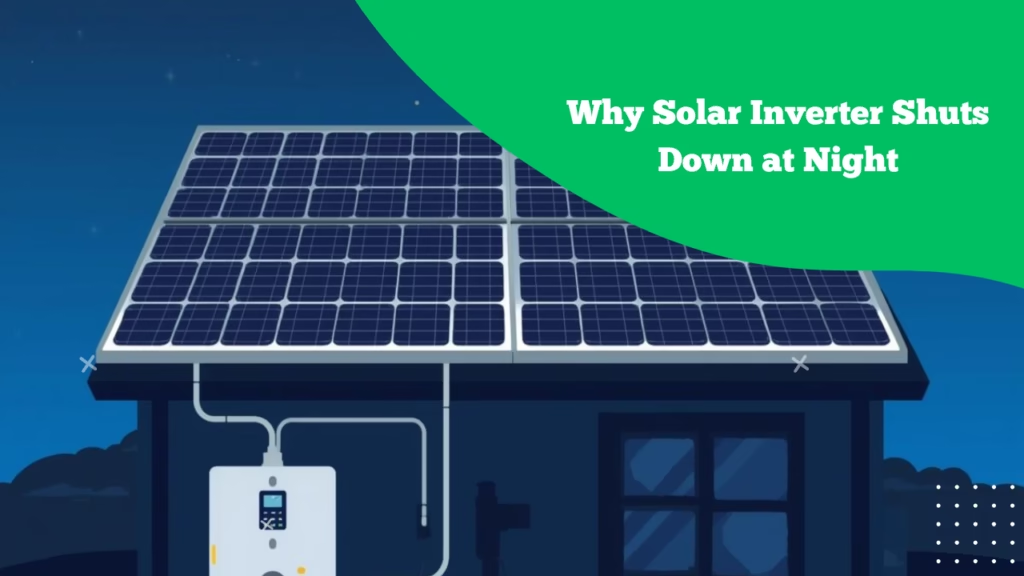

Your solar inverter runs smoothly during the day. Lights stay on. Appliances work without stress. The system feels reliable.
Night arrives. The inverter shuts down. Darkness follows.
This situation confuses many solar system owners because the panels worked well hours earlier. The truth is simple. Solar panels stop contributing power at night. From that moment, your entire system depends on stored energy. When stored energy fails to meet demand, shutdown becomes unavoidable.
This article explains, in plain language, why a solar inverter shuts down at night, what is happening inside the system when this occurs, how to diagnose the real cause without guesswork, and what permanent fixes actually work. It is written for homeowners, business owners, and technicians who want clarity rather than theory.
By the end, you will know whether the issue lies with your batteries, inverter settings, system design, installation quality, or usage pattern.
What Keeps a Solar Inverter Running After Sunset
At night, solar panels produce zero power. There is no partial output or background generation. Darkness means total dependence on the battery bank.
The inverter draws energy stored in batteries and converts it into usable AC power for your appliances. If the batteries cannot supply enough voltage, enough current, or enough total energy, the inverter shuts down to protect itself and the batteries.
This shutdown is a safety response, not a fault in most cases.
Understanding this distinction saves money and stress.
Low Battery Voltage Is the Primary Trigger
Most night-time shutdowns occur because battery voltage drops below the inverter’s preset cutoff level.
Every inverter has a minimum voltage threshold. When battery voltage falls below that level, the inverter turns off automatically. This prevents deep discharge, which damages batteries and shortens lifespan.
During the day, solar input supports both the load and battery charging. At night, the batteries face the full load alone. Voltage begins to fall steadily. Once it crosses the cutoff point, shutdown happens.
This explains why the system works perfectly until evening.
Battery Capacity Determines Night Runtime
Battery capacity defines how long your system can run at night, not how well it performs during the day.
Capacity is measured in amp-hours or kilowatt-hours. It represents stored energy, not power delivery strength. A small battery bank can power large loads briefly. It cannot sustain them for long.
Many systems are installed with just enough battery capacity to reduce upfront cost. During light use, the problem remains hidden. Increased night usage exposes the weakness.
Below is a simplified table showing how battery capacity affects night operation.
| Battery Bank Size | Typical Night Runtime | Shutdown Risk |
| Very small bank | 1 to 2 hours | Very high |
| Small bank | 3 to 4 hours | High |
| Medium bank | 6 to 8 hours | Moderate |
| Large bank | 10 to 14 hours | Low |
If your inverter shuts down every night around the same time, capacity is the first place to look.
Aging Batteries Lose Night Performance First
Battery aging often explains systems that worked well at night in the past but fail now.
Batteries degrade gradually. Daytime performance hides this decline because solar power supports the system. Night-time performance exposes it.
As batteries age, internal resistance increases. Voltage drops faster under load. The inverter reaches cutoff earlier than before. Shutdown happens sooner each night.
A battery that once powered your home for eight hours may now struggle for three hours.
This behavior does not mean the inverter is faulty. It means the batteries can no longer store or deliver enough energy.
Battery Type Plays a Major Role
Not all batteries behave the same at night.
Lead-acid batteries experience sharp voltage drops as they discharge. Tubular batteries perform better but still suffer voltage sag under load. Lithium batteries maintain stable voltage over a much wider discharge range.
If a system was designed for one battery type but uses another, night shutdown becomes common.
For example, using lead-acid batteries with inverter settings meant for lithium batteries leads to early cutoff. The inverter believes the batteries are empty even when usable energy remains.
Correct battery selection and correct inverter configuration must match.
Load Demand Changes After Sunset
Night-time load often exceeds daytime load.
Lights turn on. Fans run longer. Entertainment devices operate for hours. Pumps may activate. Refrigerators cycle more frequently.
During the day, sunlight masks inefficient usage. At night, every watt draws directly from storage.
Even small changes matter. A single freezer cycling more frequently can double night consumption. A water pump switching on briefly can collapse voltage and trigger shutdown.
This explains why systems fail only on certain nights.
Inverter Overload Causes Sudden Shutdown
Some shutdowns occur instantly rather than gradually.
This points to overload rather than energy depletion.
An inverter shuts down when connected devices demand more power than it can supply. At night, this risk increases because battery voltage is lower, reducing available power margin.
A pump starting up or a freezer compressor kicking in can exceed inverter limits for a fraction of a second. That moment is enough to force shutdown.
Once off, the inverter may refuse to restart until load is reduced.
Poor Battery Wiring Magnifies Night Problems
Cable quality becomes critical at night.
Loose connections, undersized cables, or corroded terminals introduce resistance. Resistance causes voltage drop under load. The inverter senses low voltage and shuts down even when batteries still contain energy.
Daytime charging hides this issue. Night-time discharge exposes it.
Many systems fail at night due to wiring mistakes rather than battery failure.
Temperature Effects Reduce Battery Output
Battery performance changes with temperature.
Cold nights reduce chemical reaction speed inside batteries. Voltage falls faster under the same load. The inverter reaches cutoff sooner.
High daytime temperatures age batteries faster, reducing long-term night capacity.
Systems installed in poorly ventilated enclosures experience both problems at different times.
Incorrect Inverter Settings Create Artificial Failures
Modern inverters rely heavily on configuration settings.
Wrong settings lead to unnecessary shutdowns at night.
Common configuration problems include incorrect battery type selection, high low-voltage cutoff values, limited discharge depth, and charging profiles not matched to the battery chemistry.
An inverter set too conservatively shuts down early to protect batteries that do not need that level of protection.
Resetting and configuring the inverter correctly often restores full night operation.
Charging Issues During the Day Affect Night Operation
Night shutdown sometimes begins during daylight hours without anyone noticing.
If batteries never reach full charge during the day, they start the night partially depleted. Shutdown happens early even though batteries appear healthy.
Common causes include insufficient solar panel capacity, shading, dirty panels, poor charge controller performance, and incorrect charging parameters.
The problem shows up at night but starts during the day.
Hybrid Systems Face Unique Night Challenges
Hybrid inverters that combine solar, grid, and battery sources rely on seamless switching.
If grid settings are wrong or backup parameters are misconfigured, the inverter may refuse to draw from batteries at night. It shuts down instead.
This behavior is common in systems installed without proper commissioning.
Generator Interaction Can Trigger Night Shutdown
Some systems include generators for backup charging.
If generator output quality is poor, batteries may not charge fully. Inverter sensors detect unstable input and reduce charging current.
Night shutdown follows due to inadequate stored energy.
Real-World Load vs Design Load Mismatch
Many systems are designed based on estimated usage, not actual usage.
Usage patterns change over time. New appliances appear. Night usage increases quietly.
The original system design becomes inadequate.
This is common in growing households and expanding businesses.
Visualizing a Typical Night-Time Shutdown Scenario
The chart below illustrates how battery voltage typically behaves during night discharge.
| Time of Night | Battery Voltage Trend | Inverter Status |
| Sunset | Fully charged | Running |
| Early night | Gradual drop | Running |
| Midnight | Faster voltage drop | Running |
| Early morning | Voltage reaches cut | Shutdown |
This pattern helps identify whether shutdown timing aligns with capacity limits.
How to Diagnose the Exact Cause
The most reliable diagnosis comes from observation rather than assumptions.
Track when shutdown occurs. Note which appliances were running. Check battery voltage before shutdown if possible. Observe whether the inverter displays a low-voltage or overload warning.
Systems fail consistently for consistent reasons.
Practical Long-Term Solutions
Permanent solutions focus on system balance.
Increasing battery capacity extends night runtime. Reducing night loads preserves stored energy. Correct inverter configuration prevents premature shutdown. Upgrading wiring reduces voltage loss. Replacing aged batteries restores lost capacity.
The correct solution depends on which limitation is present.
When Replacement Makes More Sense Than Repair
Replacing batteries becomes sensible when capacity loss exceeds half of original value. Replacing the inverter becomes sensible when internal faults cause repeated shutdown despite stable batteries and loads.
Upgrading both becomes sensible when system usage has outgrown original design.
Why Ignoring Night Shutdown Is Costly
Repeated deep discharge damages batteries rapidly. Frequent shutdown stresses inverter electronics. Appliances experience unstable power cycles. User frustration increases.
Solving the problem early saves money.
The Core Truth About Night-Time Shutdowns
A solar inverter shutting down at night is not mysterious. It reflects an energy imbalance.
Either storage is insufficient, delivery is restricted, or configuration is wrong.
Once that imbalance is corrected, night operation becomes stable and predictable.