In Nigeria, reliable electricity remains a major challenge. Frequent power outages from the national grid have forced millions of households and businesses to seek alternative power solutions. Among the most popular options are generators and solar inverters. Choosing between the two can be difficult because each has its own advantages, cost implications, and performance characteristics.
This comprehensive guide explores the cost comparison between generators and solar inverters in Nigeria, offering practical insights to help you make an informed decision. We will analyze initial costs, running expenses, maintenance, lifespan, environmental impact, and return on investment (ROI), among other factors.
Understanding the Basics
Before diving into cost comparisons, it is important to understand how generators and solar inverters work.
What Is a Generator?
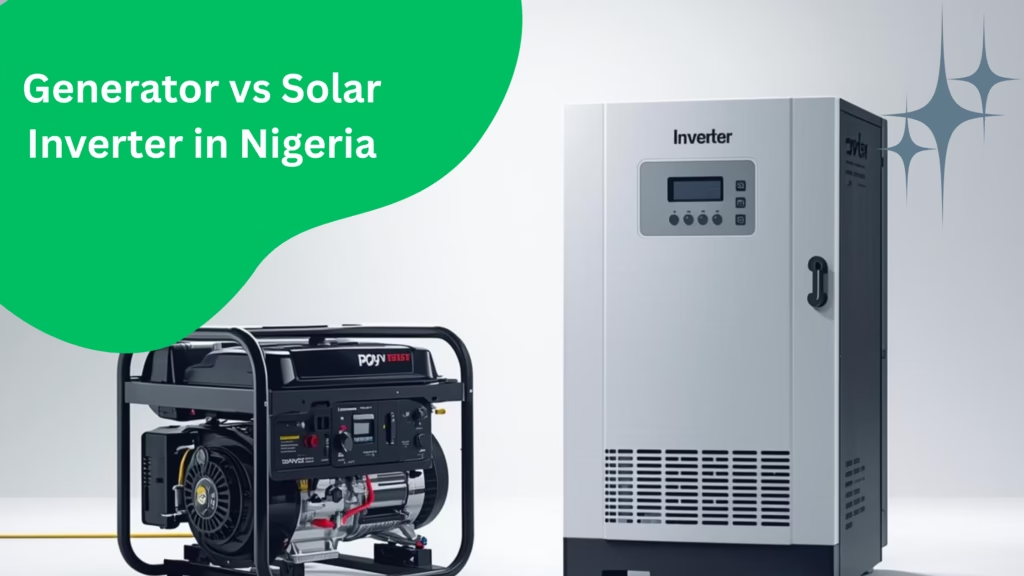
A generator is a machine that converts mechanical energy into electrical energy using a fuel source, usually petrol, diesel, or gas. In Nigeria, diesel generators are the most commonly used due to their reliability and availability of diesel fuel.
Generators provide immediate backup power and can run most electrical appliances when the grid fails. However, they rely on fossil fuels, which can be costly and environmentally unfriendly.
What Is a Solar Inverter?
A solar inverter is part of a solar power system that converts direct current (DC) generated by solar panels and batteries into alternating current (AC), which is used to power household appliances. Solar inverters can be used with or without batteries and are often part of a hybrid system that combines solar power with grid electricity or a generator.
Unlike generators, solar inverters harness energy from the sun, making them a more sustainable and potentially cost-effective alternative.
Initial Cost Comparison
One of the first considerations for most Nigerians evaluating power solutions is the initial cost.
Generator Initial Costs
The initial cost of a generator depends on its capacity, brand, and features. Smaller generators suitable for household use may start around ₦70,000 to ₦150,000 ($90–$190), while larger, more powerful units for businesses can cost anywhere from ₦300,000 to over ₦1,000,000 ($380–$1,270).
The cost increases if you include accessories such as soundproof chambers, automatic transfer switches, fuel cans, and installation services.
Solar Inverter Initial Costs
The initial cost of a solar inverter system is generally higher than that of a generator. A basic solar inverter for a small household with limited load capacity might cost between ₦250,000 and ₦500,000 ($320–$640). For a larger home or business setup with batteries and solar panels, the price can range from ₦800,000 to ₦3,000,000 ($1,000–$3,800) or more.
Solar systems require several components:
- Solar panels
- Battery bank
- Solar inverter
- Mounting structures
- Wiring and installation
The quality and capacity of each component influence the overall cost.
Table: Initial Cost Comparison
| Component | Generator (NGN) | Solar Inverter (NGN) |
| Base Unit | 70,000 – 1,000,000 | 250,000 – 3,000,000 |
| Accessories | 20,000 – 100,000 | Included in system |
| Installation | 10,000 – 50,000 | 50,000 – 150,000 |
| Total Estimated Cost | 100,000 – 1,150,000 | 300,000 – 3,150,000 |
At first glance, solar inverters appear to be significantly more expensive. However, to make a good comparison, we must consider operational costs and lifespan.
Operational Costs: Fuel vs. Solar
Generator Fuel Costs
Fuel consumption is one of the biggest ongoing expenses associated with generators. Diesel prices in Nigeria have fluctuated over the years due to economic and policy changes. Assuming an average diesel price of ₦1,000–₦1,500 per liter and a consumption rate of 0.4–0.6 liters per hour for a small generator, the operational costs can add up quickly.
For example, running a generator for 8 hours a day could use roughly 3.2 to 4.8 liters of diesel, which translates to ₦3,200–₦7,200 daily. Over a month, this can cost between ₦96,000 and ₦216,000.
Solar Inverter Running Costs
Solar inverter systems do not consume fuel. Once installed, they derive energy from the sun, making daily operational costs almost zero. The only recurring costs may include occasional battery water top-ups (for lead-acid batteries), cleaning of solar panels, and minor maintenance.
In terms of fuel cost savings alone, solar inverters can offer significant benefits over time.
Maintenance Costs
Generator Maintenance
Generators require regular servicing to remain reliable. Maintenance activities include:
- Oil changes
- Filter replacements
- Spark plug replacements
- Coolant checks
- Periodic engine servicing
Annual maintenance may cost between ₦20,000 and ₦100,000, depending on usage frequency and the generator’s quality.
Solar Inverter Maintenance
Solar systems generally have lower maintenance costs. Maintenance mostly involves:
- Cleaning solar panels to remove dust and debris
- Checking battery health
- Occasional inverter servicing
Panel cleaning can be done quarterly, and battery checks yearly. Maintenance costs for solar systems are typically lower than those of generators.
Lifespan and Durability
Generator Lifespan
A well-maintained generator can last between 7 and 15 years, depending on usage intensity and maintenance quality. Heavy use can significantly reduce lifespan, especially in dusty environments.
Solar Inverter System Lifespan
Solar panels often come with a 25-year performance warranty. The inverter itself typically lasts between 10 and 15 years, while batteries vary based on type:
- Lead-acid batteries: 3–7 years
- Lithium batteries: 8–15 years
When you factor in replacement batteries, the overall lifespan cost of a solar system may still be favorable.
Environmental Impact
Generators burn fossil fuel and emit greenhouse gases, contributing to air pollution. The noise pollution from generators is also a concern, especially in residential areas.
Solar power is clean and renewable. Solar inverters produce no emissions and operate silently, making them environmentally friendly.
Cost Comparison Over Time
Putting all the factors together, it is important to look at the total cost of ownership (TCO) over a period of time.
Chart: 5-Year Cost Projection (NGN)
Imagine the following example for a household:
- Generator initial cost: ₦300,000
- Solar inverter system cost: ₦1,500,000
- Daily generator fuel cost: ₦150,000
- Solar operational cost: ₦5,000 monthly (maintenance)
| Year | Generator Total Cost | Solar Inverter Total Cost |
| 1 | 1,525,000 | 1,560,000 |
| 2 | 3,325,000 | 1,620,000 |
| 3 | 5,125,000 | 1,680,000 |
| 4 | 6,925,000 | 1,740,000 |
| 5 | 8,725,000 | 1,800,000 |
This simplified example shows how generators quickly become more expensive over time due to fuel costs.
Practical Use Cases in Nigeria
When Generators Make Sense
Generators are ideal for short-term power needs, emergency backup, construction sites, and businesses that can absorb fuel costs. Generators are inexpensive to acquire and easy to install.
When Solar Inverters Make Sense
Solar inverters are better suited for long-term savings, environmental sustainability, residential homes with high daytime power needs, and areas with abundant sunlight. Solar systems are particularly beneficial when grid outages are frequent and long.
Tips for Choosing the Right System
To decide what works best for your situation, start by evaluating your daily power needs, list appliances and usage hours, and consider calculating average monthly energy requirements. Hybrid systems that combine solar with a generator can also optimize reliability. Always choose quality equipment because cheaper units often fail early, increasing total cost. Finally, account for inflation and fuel price changes because future costs may increase.
Conclusion
Choosing between a generator and a solar inverter in Nigeria depends on your budget, power needs, and long-term goals. While generators have lower upfront costs and provide dependable backup power, the high operational costs due to fuel consumption can make them expensive over time.
Solar inverters have higher initial costs but offer significant savings over time, lower maintenance, and environmental benefits. For those who plan to stay in their homes or businesses for several years, solar is often the more cost-effective and sustainable choice.
Ultimately, a hybrid solution that combines solar and a generator can offer the best of both worlds: clean energy most of the time and reliable backup when needed.