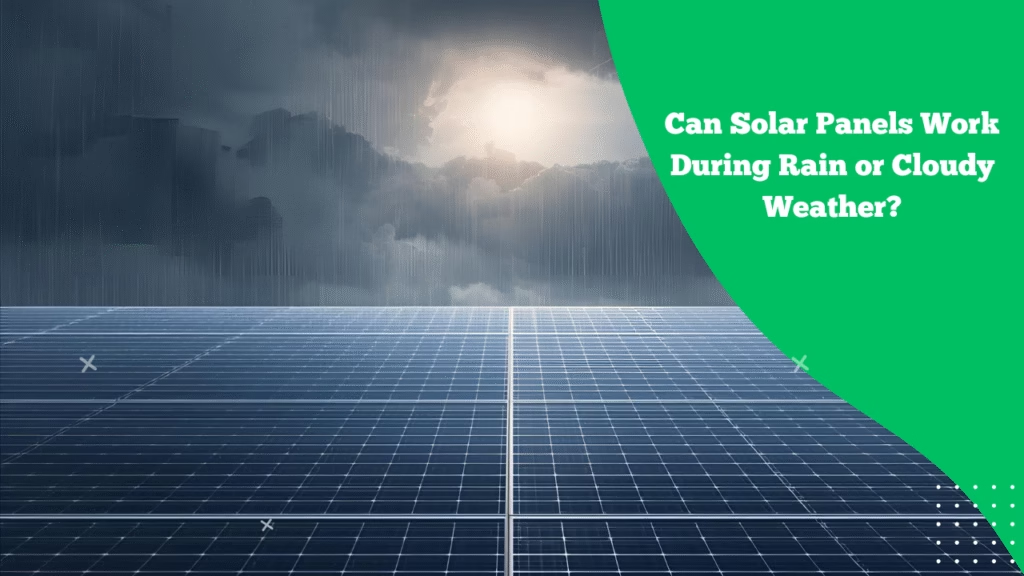
If you’re considering solar panels for your home, one of the first questions that probably comes to mind is, “What happens when the weather isn’t perfect?” It’s a logical concern. After all, solar panels are synonymous with bright, sunny days. So, it’s natural to wonder: can solar panels work during rain or cloudy weather?
The short, and often surprising, answer is yes, solar panels do work on cloudy and rainy days. However, their electrical output is significantly reduced compared to a clear, sunny day.
In this comprehensive guide, we’ll demystify how solar technology performs under less-than-ideal weather conditions. We’ll explore the science behind solar energy production, explain exactly how much power you can expect, and reveal the unexpected benefit of rainy days. Finally, we’ll discuss the critical components, like solar batteries, that ensure you have power even when the sun isn’t shining.
How Do Solar Panels Generate Electricity? A Quick Refresher
To understand how solar panels work in poor weather, it helps to first know how they work in perfect conditions.
Solar panels are composed of many smaller units called photovoltaic (PV) cells. These cells are typically made from silicon, a semiconductor material. Here’s the basic process:
- Photon Absorption: When sunlight, which is made of tiny particles called photons, hits a PV cell, it energizes the silicon atoms.
- Electron Dislodgement: This energy knocks electrons loose from their atoms.
- Electric Current Creation: The structure of the PV cell creates an electric field that forces these freed electrons to move in a specific direction, creating a flow of electricity known as direct current (DC).
- Conversion to Usable Power: An inverter then converts this DC electricity into alternating current (AC), which is the type of electricity used to power your home’s appliances, lights, and devices.
This entire process relies on light, not heat. This is a crucial distinction that explains why panels can still function without direct, intense sunlight.
Solar Panel Performance on Cloudy Days
Clouds are essentially collections of water droplets or ice crystals floating in the atmosphere. They act as a filter, scattering and absorbing a portion of the sunlight before it reaches your roof.
The Science of Diffused Light
On a cloudy day, your solar panels aren’t receiving direct sunlight. Instead, they are operating on **diffused or diffuse sunlight**. This is sunlight that has been scattered by the clouds and atmosphere. While this light is less intense and contains fewer photons than direct beam radiation, it is still a viable source of energy for your PV cells.
Modern solar panels are exceptionally efficient at capturing a broad spectrum of light, including this diffused light. While they won’t produce their maximum rated capacity, a quality system will still generate a meaningful amount of electricity.
How Much Power Can You Expect?
The exact drop in production depends on the density and coverage of the clouds. As a general rule of thumb:
On a consistently overcast day, a solar panel system might produce between 10% and 25% of its rated capacity.
For example, if your 10 kW system typically produces 40 kWh on a bright sunny day, you might see a production of 4 to 10 kWh on a heavily cloudy day.
It’s also important to note that not all “cloudy” conditions are equal. A day with high, thin clouds (cirrostratus) will allow more light through than a day with thick, low-lying storm clouds (nimbostratus).
A Surprising Phenomenon: The “Edge-of-Cloud” Effect
Interestingly, clouds can sometimes *boost* solar panel performance for very short periods. This occurs during the “edge-of-cloud” effect. When the sun is positioned just behind a cloud, the cloud’s edges can act like a magnifying glass, refracting and concentrating sunlight onto your panels. This can lead to a brief, sharp spike in power output, sometimes even exceeding the system’s rated capacity. However, this is a transient event and not a reliable source of consistent energy.
Solar Panel Performance During Rainy Days
Rainy days are typically synonymous with heavy cloud cover, so everything mentioned above about cloudy days applies. Production will be on the lower end of the spectrum, often closer to that 10-15% range.
However, rain provides a hidden benefit that is often overlooked: it cleans your solar panels.
The Natural Cleaning Effect
Over time, solar panels accumulate dust, pollen, bird droppings, and other debris. This layer of grime blocks sunlight from reaching the PV cells, reducing the system’s efficiency. A good downpour naturally washes this buildup away, restoring your panels to their clean, optimal state. After the rain passes and the sky clears, you’ll often find your system operating at peak performance thanks to this free cleaning service.
So, while production dips during the rain itself, the long-term performance and maintenance benefits can be a net positive.
What About at Night?
Solar panels require light to generate electricity. In the absence of any light source—be it the sun, the moon, or your outdoor security light—they produce zero electricity. This is an unavoidable limitation of photovoltaic technology.
This reality highlights the absolute necessity of a solution for energy continuity, which we will explore in the next section.
The Key to 24/7 Solar Power: Energy Storage and the Grid
Understanding that solar panels have intermittent production is the first step. The second, and more important step, is knowing how to manage it. This is where energy storage and grid connection become essential.
- Net Metering: Using the Grid as a Battery
Net metering is this cool setup that a lot of utility companies offer—it’s basically like turning the power grid into your own massive battery. Let me break it down for you:
- Overproduction: On those bright, sunny days when your solar panels are cranking out more electricity than your house needs, the extra power gets pushed back into the grid.
- Earning Credits: Your meter spins backward (figuratively speaking), and you get credits for all that excess energy you’re sharing.
- Pulling Power When Needed: At night, on gloomy days, or when you’re blasting the AC, you just pull what you need from the grid.
- Settling the Bill: At the end of the month, they only charge you for the net amount—the difference between what you used and what you produced. If you made more than you needed, those credits often carry over to the next bill.
It’s a smart way to keep things balanced, so you’re never left in the dark, even when the sun isn’t shining.
- Solar Battery Storage: True Energy Independence
If you’re all about going off-grid-ish and having backup during blackouts, solar batteries are a game-changer. Think of them as your personal power stash.
- How They Work: Batteries like the Tesla Powerwall or LG Chem RESU grab that extra juice your panels make during the day and store it for later.
- Smooth Switchover: When the sun dips or the grid goes out, your home flips over to battery power without a hitch—you might not even realize it happened.
- That Extra Security: With the right size battery, you can keep the essentials running—like your fridge, lights, or Wi-Fi—through the night or even multi-day storms.
Sure, batteries bump up the upfront cost, but they give you real peace of mind and let you squeeze every drop of value from your clean, home-grown energy.
Maximizing Your Solar System for All Weather Conditions
Weather’s unpredictable, right? But you can tweak your solar setup to handle whatever comes its way and keep performing strong.
- Pick High-Efficiency Panels: Not every panel is the same. Go for top-tier ones from brands like SunPower, LG, or Panasonic—they’re better at grabbing scattered light, so you get more output even on overcast days.
- Get the Installation Right: The angle and direction of your panels matter a ton. A pro installer will set them up based on your location’s sun path. A steeper tilt can also help rain wash off dirt more easily, keeping things clean naturally.
- Avoid Shade Like the Plague: Even a little shadow from a tree or chimney can tank production. Newer systems have tech like optimizers or microinverters to lessen the hit, but ideally, pick a spot with zero shade.
- Panel Tech Choices: Monocrystalline panels usually edge out polycrystalline ones in efficiency, especially in dim light, so they’re great for cloudier areas.
Conclusion: A Reliable Investment, Rain or Shine
Look, the idea that solar panels are pointless without blazing sun is just an old myth. The truth? They’re a solid, dependable energy source even in places that aren’t always sunny.
Yeah, they produce less on cloudy or rainy days, but they don’t quit—they keep pulling in energy from the diffused light, helping power your home and cut your bills. And with net metering or batteries in the mix, you bridge those gaps at night or during low-output times, so your power stays steady.
Going solar is about saving money long-term and doing something good for the planet. It’s built for real life, where clouds and rain happen. Once you get how it all works in any weather, you can jump in with confidence and enjoy that solar power every day of the year.
FAQ: Solar Panels and Inclement Weather
Q1: Do solar panels work in the winter? Absolutely, they do great in winter! Cold temps actually make them more efficient. The bigger issues are shorter days and snow buildup, but panels are made to let snow slide off. Plus, sunlight bouncing off snowy ground (the albedo effect) can sometimes give production a little boost.
Q2: Can hail damage solar panels? Good panels are tough—they’re tested to handle hail up to about an inch in diameter zipping at 50 mph. Always check the specs and warranty on yours, and make sure your home insurance covers it just in case.
Q3: How do I know how much power my system is generating on a cloudy day? Most setups come with monitoring apps or online dashboards. You can check real-time stats on your phone or computer to see exactly what’s happening, no matter the weather.
Q4: Should I clean my solar panels myself? Usually, rain takes care of it. But if you’re in a dry, dusty spot, a gentle clean now and then might help. I’d suggest hiring pros to avoid scratches or warranty issues—skip the scrub brushes and strong cleaners.
Q5: Are solar panels a good investment in a cloudy climate? Totally! Take Germany—they’ve got weather like the rainy Pacific Northwest but lead the world in solar. Output might be lower per panel than in sunny spots, but higher electricity rates mean big savings anyway. Just size your system right for your needs, and you’re golden.