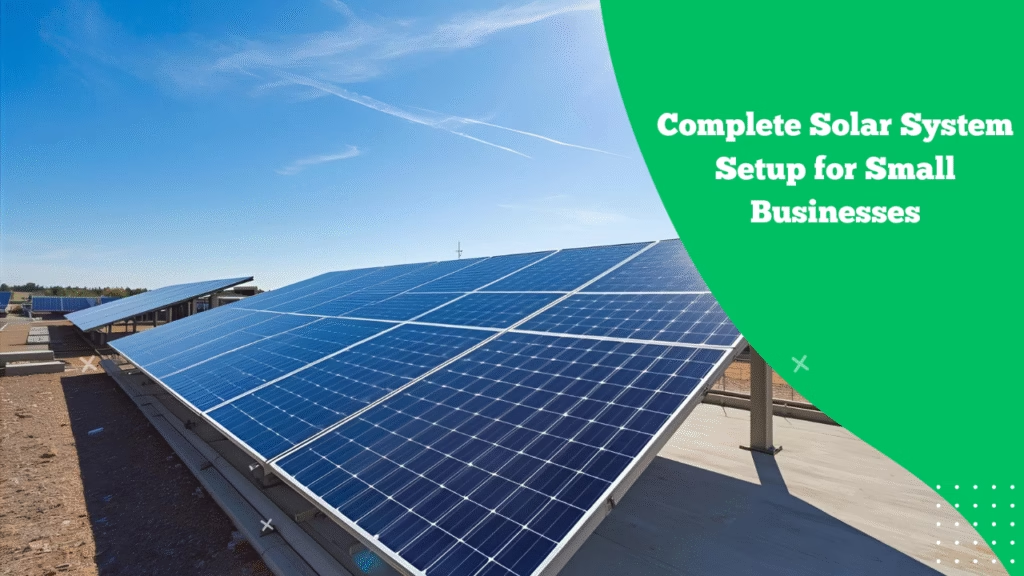
Hey there, fellow small business owner! In this crazy competitive world, we’re all hustling to cut costs, polish up our brand, and make sure our operations can handle whatever the future throws at us. And guess what? One of the smartest ways to nail all that is right above your head—literally. I’m talking about slapping a commercial solar energy system on your roof.
Going solar isn’t just for tree-huggers anymore; it’s a no-brainer move for anyone who wants to save money and run a smarter business. With energy bills skyrocketing and tech getting better every day, the payoff from solar is at an all-time high. This guide is here to break it all down for you, making the whole process feel less intimidating and more like a straightforward win for your bottom line.
Why Your Small Business Should Jump on Solar: It’s Not Just About Being Eco-Friendly
Sure, helping the planet is a big plus, but let’s be real—the real perks for your business are all about the dollars and sense.
- Slash Those Pesky Operating Costs: Your power bill is like that annoying subscription you can’t cancel—always there, always fluctuating. Solar locks in your energy costs for years, shielding you from those sneaky utility increases. Once you’ve paid off the system, that sunshine-powered electricity? Basically free.
- Grab Those Sweet Financial Perks: Uncle Sam and a bunch of states and cities are throwing money at solar to make it easier on your wallet. The Federal Investment Tax Credit (ITC) lets you knock 30% off your system’s cost on your taxes. Toss in state rebates, faster write-offs, and other goodies, and you could halve your upfront expenses.
- Boost Your Brand’s Cool Factor: People love supporting businesses that care about the environment these days. Shout about your solar setup on social media or your website, and watch it draw in eco-conscious customers while building stronger ties in your community.
- Pump Up Your Property’s Value: A building with solar panels screams “modern and efficient.” Research shows these properties fetch higher prices when it’s time to sell—think of it as a built-in upgrade.
- Get Energy Independence and Peace of Mind: Blackouts can tank your day-to-day operations. Add a battery like a Tesla Powerwall, and you’re golden—keeping the lights on, registers ringing, and everything running smooth even when the grid goes down.
What’s Inside a Commercial Solar Setup? Let’s Break It Down
Getting familiar with the main pieces will help you chat with installers like a pro and pick what’s right for you.
- Solar Panels (The Star of the Show): These bad boys soak up sunlight and turn it into DC electricity. For businesses, go for high-efficiency monocrystalline ones—they pack more punch in less space.
- Inverters (The Brainiac): This converts that DC power into AC, which is what your office or shop actually uses. Options include string inverters for straightforward, sunny roofs or microinverters if you’ve got shade or funky angles.
- Racking and Mounting (The Backbone): The sturdy stuff that holds everything in place on your roof or ground. It’s custom-built for your spot, factoring in weather and building type.
- Battery Storage (A Game-Changer, If You Ask Me): Not mandatory, but super handy. Lithium-ion batteries store extra daytime power for evenings, peak times, or outages. It amps up your independence big time.
- Monitoring Tools (Your Dashboard): Fancy apps let you check production, usage, and system health from your phone. It’s like having a personal energy coach.
Quick Comparison of Solar Gear
Here’s a handy table to weigh your options:
| Component | Option A | Option B | Best For… |
| Solar Panels | Monocrystalline | Polycrystalline | Businesses with limited roof space needing high efficiency (Monocrystalline). |
| Inverter Type | Microinverters | String Inverter | Roofs with shading or complex designs (Microinverters). Large, unshaded, simple roofs (String). |
| Storage | Battery (e.g., Tesla Powerwall, LG Chem) | No Battery (Grid-Tied) | Businesses needing backup power or wanting to maximize self-sufficiency. |
| Mounting | Roof-Mounted | Ground-Mounted | Most businesses with viable roof space. Businesses with ample land but poor roof conditions. |
Your Step-by-Step Roadmap to Going Solar
Don’t sweat it—the process is doable if you take it one bite at a time.
Step 1: Check If It’s a Fit for You Start simple: Look at your roof—is it in good shape, what material, how old? If it’s due for a redo soon, fix that first. Dig out a year’s worth of power bills to see your average kWh usage. That’s key for sizing things right. And think about your budget—loans, leases, or other financing can make it painless.
Step 2: Shop Around for Installers Hit up at least three pros with solid creds in commercial solar. They’ll visit, scope things out, and hand you a custom plan with system size, expected output, costs, savings projections, and gear details.
Step 3: Lock In Funding and Bonuses Your installer can guide you on the money side. Apply for loans if needed, and they’ll tackle the paperwork for tax credits and rebates.
Step 4: Design, Permits, and Green Lights Sign on the dotted line, and their engineers draw up plans that pass all local codes. Permits and utility hookups follow—might take a few weeks.
Step 5: The Actual Install This part’s quick—a few days to weeks. They mount the racks, pop on panels, wire up inverters, and connect it all.
Step 6: Final Checks and Go Time Inspectors give it a thumbs-up for safety, then your utility flips the switch with “Permission to Operate.” You’re live!
Step 7: Keep an Eye on It Monitor via the app, and maintenance is a breeze—just clean occasionally and glance over it now and then.
The Money Talk: Costs, Savings, and When You’ll Break Even
Alright, let’s crunch some numbers— this is where it gets exciting for your wallet.
Commercial solar usually runs $2.50 to $3.50 per watt before perks. For a 25 kW setup:
- Gross Cost: 25,000 watts × $3.00/W = $75,000
- ITC (30%): -$22,500
- Sample State Rebate: -$5,000
- Net Cost: $47,500
If you’re paying $0.15/kWh and the system cranks out 35,000 kWh a year:
- Yearly Savings: 35,000 × $0.15 = $5,250
- Payback: $47,500 / $5,250 ≈ 9 years
With 25-year warranties, that’s 16+ years of free power afterward. Sweet deal!
Common Questions About Solar, Sorted
Q1: What about cloudy days or nighttime? Output dips on clouds, zilch at night. You’ll pull from the grid then, or tap your battery if you’ve got one. Extra daytime power often gets you credits via net metering to cover those times.
Q2: Will my roof work? South-facing with no shade is prime, but east/west can rock too. Key is strength and space—installers will check.
Q3: Net metering explained? When you make more power than you use, it goes back to the grid, spinning your meter backward for credits. Use ’em later when you need grid juice.
Q4: How long till it’s up and running? From contract to full power: 2-6 months, mostly waiting on paperwork, not the install itself.
Q5: Can I avoid a big upfront cost? Totally! Loans let you own it and snag incentives. Leases or PPAs mean no down payment—you just pay a fixed rate for the power, owned by someone else.
Wrapping It Up: Light Up Your Business’s Future
Diving into solar is one of those game-changing choices that pays off in savings, toughness, and good vibes for the planet. The tech’s solid, the deals are out there, and the wins keep coming.
Take it step by step—figure your needs, talk to experts, crunch the numbers—and you’ll be powering your growth with free sunshine for years. It’s not “if” anymore; it’s “when are you starting?”
Quick Note: This is just info to get you thinking. Prices, perks, and rules shift and differ by spot. Chat with a certified installer for advice tailored to you.