Nigeria’s electricity challenges have pushed millions of homes and businesses to seek alternative power sources. Solar energy has emerged as one of the most reliable and affordable solutions, and this shift has created a rapidly growing demand for skilled solar installers and technicians.
As the solar industry expands across cities like Lagos, Abuja, Port Harcourt, and other parts of the country, many Nigerians are looking to build careers in renewable energy. One of the most common questions people ask before entering the industry is: How much does solar installation training cost in Nigeria?
The answer varies depending on several factors such as the training institute, course duration, level of specialization, and whether the training is theoretical or practical. Some short introductory courses are quite affordable, while professional training programs that include extensive hands-on practice can cost significantly more.
This comprehensive guide explains the real cost of solar installation training in Nigeria, what students learn during the training, the factors that influence pricing, and whether the investment is worth it in the long run. The goal is to help aspiring solar technicians, electricians, engineers, and entrepreneurs understand the financial commitment required to enter Nigeria’s fast-growing solar industry.
Understanding Solar Installation Training in Nigeria
Solar installation training programs are designed to teach students how solar photovoltaic systems work and how to install them safely and efficiently. The training typically begins with foundational knowledge about electricity and solar energy before progressing to practical installation techniques.
During a typical training program, students learn how to assess a building’s energy demand, design an appropriate solar system, select suitable components, and install the system properly. Training also covers system troubleshooting, maintenance procedures, and safety standards that must be followed when working with electrical equipment.
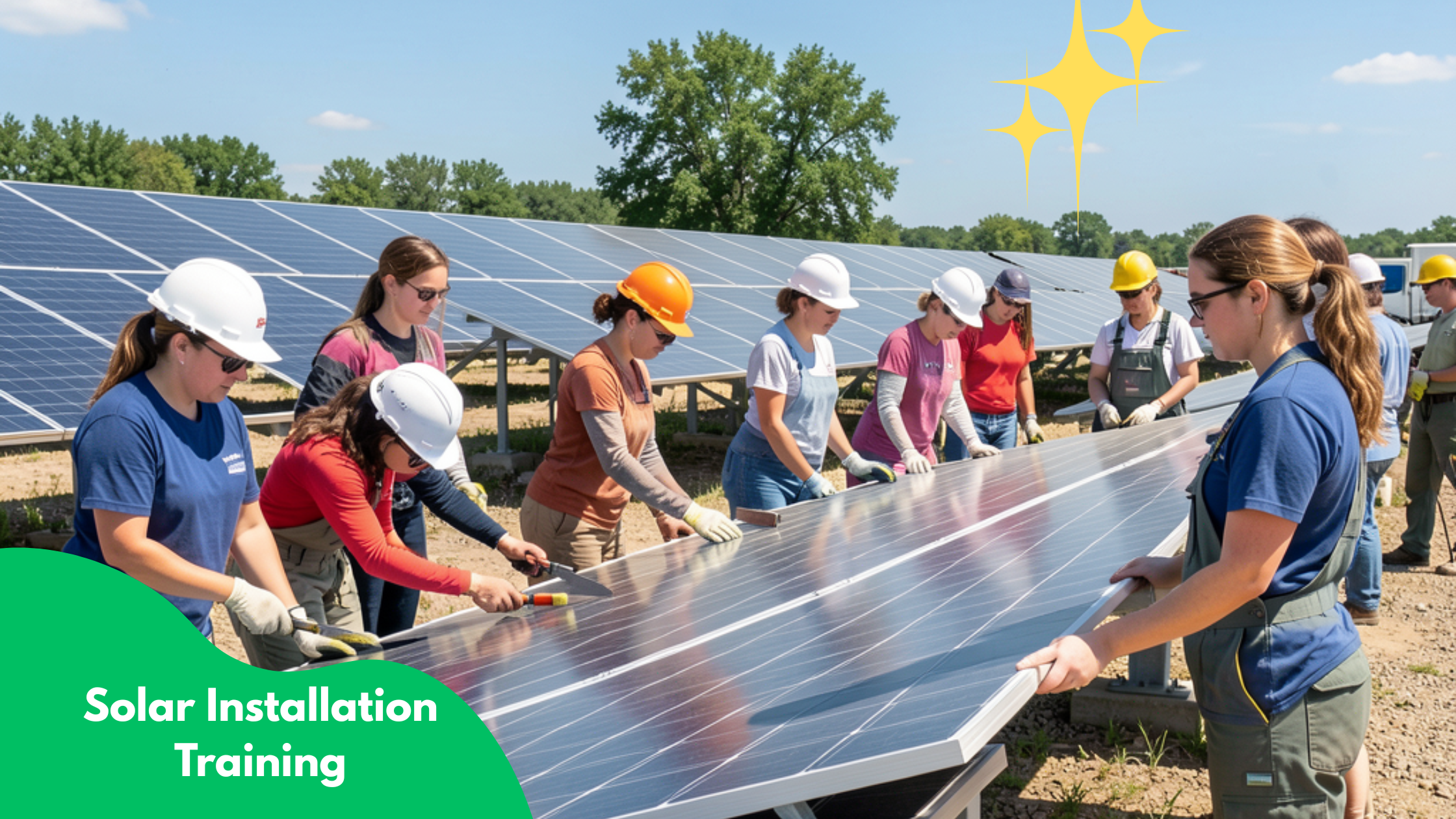
Many solar training institutes in Nigeria also include real installation demonstrations where students participate in the installation of panels, batteries, and inverters. This practical experience is extremely valuable because solar installation is a hands-on technical skill that requires real-world exposure.
Depending on the institute, solar training programs can last anywhere from a few days to several months. Short courses usually introduce the fundamentals, while advanced programs focus on system design, commercial installations, and solar business development.

Average Cost of Solar Installation Training in Nigeria
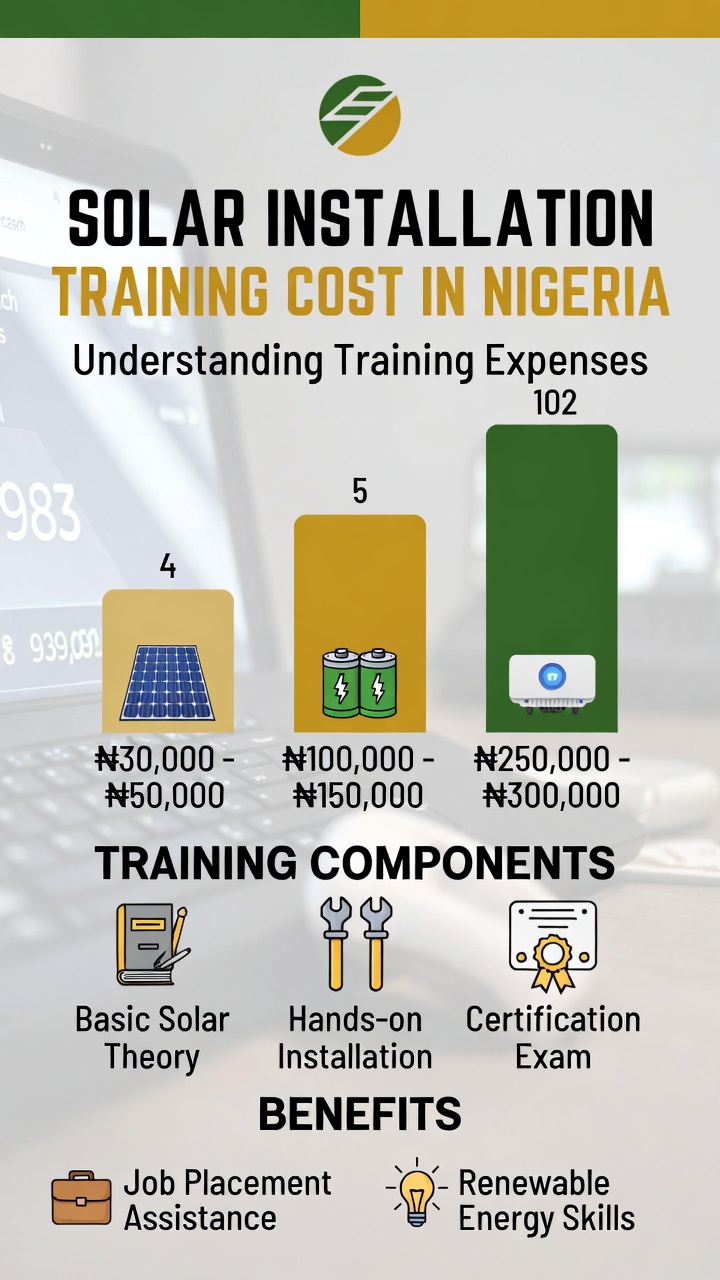
The cost of solar installation training in Nigeria varies widely depending on the level of the program. Short introductory workshops tend to be the least expensive, while advanced professional courses that include extensive practical training can cost significantly more.
The table below shows a general estimate of solar training costs across Nigeria.
| Training Category | Typical Duration | Average Cost Range (₦) | Training Level |
| Introductory solar workshop | 2–5 days | ₦30,000 – ₦60,000 | Beginner |
| Online solar installation course | 2–4 weeks | ₦50,000 – ₦80,000 | Beginner |
| Practical solar installation training | 3–6 weeks | ₦100,000 – ₦180,000 | Intermediate |
| Professional solar installer program | 6–12 weeks | ₦200,000 – ₦300,000 | Advanced |
These price ranges are typical across many renewable energy training institutes in Nigeria. However, some specialized programs that include advanced solar engineering concepts or international certification may charge higher fees.
Solar Training Cost by Training Format
The format of the training program has a major influence on how much students pay. Some courses are conducted online, while others take place in physical training centers with practical workshops.
Online Solar Training Programs
Online solar courses have become increasingly popular because they are flexible and relatively affordable. These programs usually consist of video lectures, downloadable study materials, and online assessments.
Students who enroll in online courses typically learn the theoretical aspects of solar energy systems, including system design, load calculations, and component selection. Some online programs also include optional physical workshops where students can gain practical experience.
The cost of online solar training in Nigeria typically falls within the following range.
| Training Feature | Typical Details |
| Average cost | ₦50,000 – ₦80,000 |
| Duration | 2–4 weeks |
| Certification | Included |
| Practical training | Sometimes optional |
Online courses are particularly suitable for people who want to learn the fundamentals of solar energy before enrolling in advanced hands-on training.
Classroom and Practical Solar Training
Physical training programs are more comprehensive because they combine theoretical instruction with practical demonstrations. Students learn how to install solar panels, connect inverters, configure battery systems, and test solar equipment.
Hands-on training is often conducted in specialized laboratories or outdoor training facilities where participants can practice installing real systems. This format provides students with the confidence and experience needed to perform installations independently.
The cost of classroom-based solar training is typically higher than online training because it requires instructors, equipment, and training infrastructure.
| Training Feature | Typical Details |
| Average cost | ₦120,000 – ₦200,000 |
| Duration | 3–6 weeks |
| Practical experience | Extensive |
| Certification | Included |
This training format is widely considered the best option for individuals who want to pursue a full-time career in solar installation.
Advanced Professional Solar Training
Advanced solar training programs are designed for engineers, technicians, and professionals who want deeper expertise in solar energy systems. These courses often include advanced system design, commercial solar installations, and solar project management.
Participants may learn how to design large solar farms, perform energy audits, and use specialized solar design software. Some advanced programs also include business development modules that teach students how to start and manage solar installation companies.
The table below shows the typical cost range for professional solar training.
| Training Feature | Typical Details |
| Average cost | ₦200,000 – ₦300,000 |
| Duration | 6–12 weeks |
| Training level | Professional |
| Project work | Included |
Graduates of these programs often pursue careers as solar engineers, project managers, or renewable energy consultants.
Comparison Chart of Solar Training Costs
The chart below summarizes the typical cost range of solar installation training programs available in Nigeria.
| Training Type | Minimum Cost | Maximum Cost |
| Introductory workshop | ₦30,000 | ₦60,000 |
| Online certification course | ₦50,000 | ₦80,000 |
| Practical installation training | ₦100,000 | ₦180,000 |
| Professional solar technician course | ₦200,000 | ₦300,000 |
This comparison helps prospective students determine which training level matches their budget and career goals.
Factors That Influence Solar Training Costs
Several factors determine how much solar installation training costs in Nigeria. Course duration plays a major role because longer programs usually include more modules and extended practical sessions. Training institutes must provide instructors, equipment, and facilities for these sessions, which increases the cost.
Another important factor is the level of certification provided at the end of the course. Programs that offer professional certification or internationally recognized credentials often charge higher fees.
The availability of practical training equipment also affects the cost. Institutes that provide real solar panels, batteries, and inverters for practice must invest in expensive hardware, which increases the overall training price.
Location can also influence cost. Training programs conducted in major cities such as Lagos, Abuja, and Port Harcourt tend to be more expensive than those in smaller cities due to higher operating expenses.
What Students Learn During Solar Installation Training
Solar installation training programs typically follow a structured curriculum that covers both theoretical knowledge and practical skills.
Students begin by learning the fundamentals of solar energy and electricity. This includes understanding voltage, current, resistance, and how photovoltaic cells convert sunlight into electrical energy.
As the training progresses, participants learn about different types of solar panels, battery technologies, and inverter systems. They also study system sizing techniques that allow installers to determine how many panels and batteries a building requires.
Practical sessions focus on installing mounting structures, wiring solar panels, connecting inverters, and configuring battery storage systems. Students also learn how to diagnose system faults and perform maintenance procedures.
These skills are essential for anyone who wants to work professionally as a solar installer or renewable energy technician.
Return on Investment of Solar Training
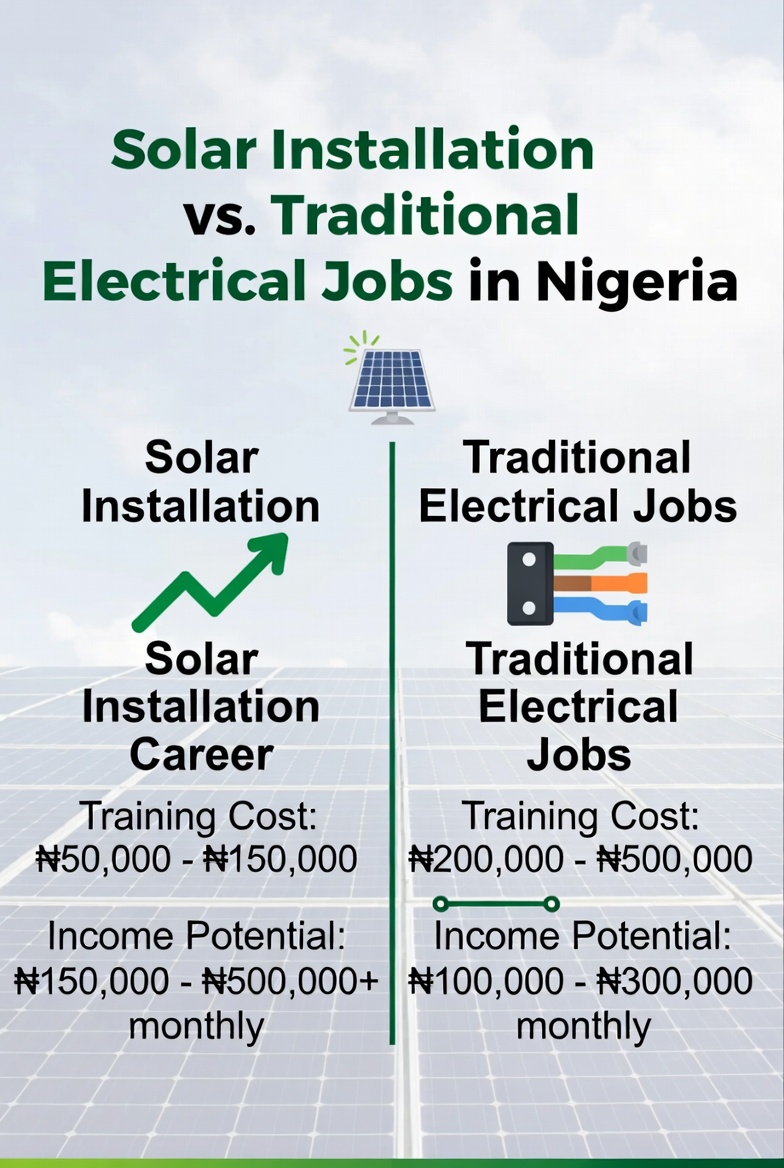
Many people hesitate to enroll in solar training because of the cost. However, the return on investment can be very high due to the strong demand for solar installations across Nigeria.
The table below illustrates a simple example of potential earnings for trained solar installers.
| Item | Estimated Value |
| Training investment | ₦100,000 – ₦300,000 |
| Profit per solar installation | ₦50,000 – ₦300,000 |
| Installations per month | 2 – 6 |
| Potential monthly income | ₦200,000 – ₦1,000,000 |
Many technicians recover their training cost after completing just one or two solar installation projects.
The Future of Solar Careers in Nigeria
Nigeria has one of the largest untapped solar energy markets in Africa. With rising fuel prices, frequent power outages, and increasing electricity demand, solar power is becoming the preferred alternative energy source for millions of households and businesses.
As a result, the demand for trained solar professionals continues to grow rapidly. Solar technicians are needed to install residential systems, maintain solar equipment, and develop large renewable energy projects.
For individuals seeking a stable and future-proof career, solar installation training offers an excellent opportunity to enter a high-growth industry.
Conclusion
Solar installation training in Nigeria generally costs between ₦30,000 and ₦300,000, depending on the training level, program duration, and type of certification offered. Short introductory workshops are the most affordable option, while professional training programs that include advanced technical skills and hands-on installation experience tend to be more expensive.
Despite the initial cost, solar training can be a highly rewarding investment. Nigeria’s growing renewable energy sector offers numerous opportunities for skilled technicians, engineers, and entrepreneurs who are ready to participate in the transition toward sustainable energy.
Anyone who acquires solar installation skills today is positioning themselves for long-term success in one of the fastest-growing industries in Africa.
Frequently Asked Questions (FAQ)
How much does solar installation training cost in Nigeria?
Solar installation training in Nigeria usually costs between ₦30,000 and ₦300,000 depending on the training institute, course duration, and level of certification.
How long does solar installation training take?
Most solar training programs last between three weeks and three months, although some short workshops can be completed in a few days.
Can beginners enroll in solar training programs?
Yes. Many training institutes accept students with no prior electrical experience and begin with basic electricity concepts before moving to advanced solar installation techniques.
Is solar installation a profitable career in Nigeria?
Solar installation can be very profitable because demand for solar systems continues to grow due to unreliable electricity supply and rising fuel costs.