Installing solar panels at home is one of the smartest investments you can make in 2025, especially in Nigeria where electricity costs are rising and power outages remain a daily challenge. With advancing technology, affordable components, and government incentives like REA subsidies, homeowners can achieve energy independence while slashing bills by up to 90%.
This comprehensive step-by-step guide covers everything from planning to maintenance. Whether you’re in Lagos, Abuja, or a rural area, we’ll walk you through a safe, DIY-friendly installation (with professional tips where needed). By the end, you’ll know exactly how to set up a reliable solar system for your home.
Why Install Solar Panels at Home in Nigeria in 2025?
Nigeria’s solar market is booming. According to the Rural Electrification Agency (REA), over 85 million Nigerians lack reliable grid power. Solar installations grew by 45% in 2024 alone, driven by falling panel prices (now under ₦150/watt) and hybrid inverters that seamlessly blend solar with NEPA.
Benefits include:
- Massive Savings: A 5kW system can save ₦500,000+ yearly on diesel/generator fuel.
- Energy Security: 24/7 power during blackouts.
- Environmental Impact: Reduce carbon footprint by 4-6 tons annually per household.
- Government Support: Up to 50% subsidies via NEP/REA programs.
- Property Value Boost: Homes with solar sell 20% faster.
Ready to go solar? Let’s dive in.
Step 1: Assess Your Energy Needs (Pre-Installation Planning)
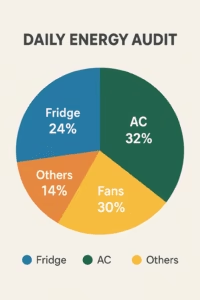
Before buying anything, calculate your load.
How to Calculate Daily Energy Consumption
- List all appliances (fans, lights, fridge, TV, AC, etc.).
- Note wattage and daily usage hours.
- Multiply: Watts × Hours = Watt-hours (Wh).
- Add 20% buffer for inefficiencies.
Example for a 3-Bedroom Flat:
| Appliance | Wattage | Hours/Day | Daily Wh |
| LED Lights (10) | 100W | 8 | 800 |
| Fans (5) | 375W | 12 | 4,500 |
| Fridge | 150W | 24 | 3,600 |
| TV + Decoder | 200W | 6 | 1,200 |
| AC (1.5HP) | 1,200W | 4 | 4,800 |
| Total | 14,900 Wh (14.9 kWh) |
For 24-hour backup, aim for a 5-10kW system with 10-20kWh batteries.
Pro Tip: Use free tools like PVWatts for Nigeria-specific solar irradiance (average 5.5 kWh/m²/day).
Step 2: Choose the Right Solar Components (2025 Recommendations)
Quality matters—cheap Chinese knockoffs fail fast in Nigeria’s heat/humidity.
Key Components and 2025 Pricing (Lagos Market)
| Component | Recommended Specs | Top Brands | Price Range (₦) | Why Choose It? |
| Solar Panels | 550W Mono PERC Half-Cut | Jinko, Trina, Canadian Solar | 75,000 – 120,000/panel | High efficiency (22%+) |
| Inverter | 5kVA Hybrid (MPPT 120A) | Felicity, Luminous, Growatt | 450,000 – 850,000 | Grid-tie + battery support |
| Batteries | 200Ah Lithium (LiFePO4) | Pylontech, Felicity | 1,200,000 – 1,800,000/unit | 6,000+ cycles |
| Charge Controller | Built-in MPPT | Included in hybrid | N/A | 99% efficiency |
| Mounting Rack | Galvanized Roof/Ground | Local fabricators | 150,000 – 300,000 | Rust-proof |
| Cables & Accessories | 6mm² Solar Cable + MC4 | Standard | 50,000 – 100,000 | UV-resistant |
Total for 5kW System (10 Panels + 4 Batteries): ₦4.5M – ₦7M (50% cheaper than 2023!).
Step 3: Site Survey and Roof Assessment
- Sun Exposure: South-facing roof, 15-35° tilt, no shade 9AM-4PM.
- Roof Strength: Concrete roofs handle 20kg/m² easily.
- Space Needed: 1kW requires ~6m².
Use apps like SunSeeker or Google Project Sunroof (Nigeria data available 2025).
Safety Note: If roof is weak/asbestos, use ground mounts.
Step 4: Obtain Permits and Incentives (2025 Updates)
- REA/NEP Grants: Up to ₦500,000 subsidy for rural homes. Apply via rea.gov.ng.
- NEMT Tariff: Sell excess power to DISCOs at ₦25/kWh.
- No Customs Duty: Solar components are duty-free.
Step-by-Step Application:
- Register on REA portal.
- Submit energy audit + quotation.
- Approval in 30 days.
Step 5: Purchase and Delivery
Buy from verified vendors:
- Jumia/Konga (warranty).
- Solar shops in Lagos (Alaba, Ikeja).
- Direct importers (felicitysolar.ng).
Insist on 25-year panel warranty + 10-year inverter.
Step 6: Actual Installation (Step-by-Step with Diagrams)
Tools Needed: Drill, multimeter, crimper, ladder, PPE.
Phase 1: Mount the Panels
- Mark rack positions.
- Drill holes, apply sealant.
- Fix rails → mid clamps → end clamps.
- Torque to 12Nm.
Phase 2: Wire Panels (Series vs Parallel)
- Series: Higher voltage, lower current (for long runs).
- Parallel: Higher current, shade-resistant.
For 10 panels: 5S2P configuration (550V max).
Diagram: Series-Parallel Wiring (Visual: Panels → MC4 connectors → combiner box)
Phase 3: Install Inverter and Batteries
- Mount inverter indoors (ventilated).
- Connect panels → MPPT input.
- Batteries → DC bus.
- Inverter → load panel (bypass NEPA).
Wiring Diagram: Full 5kW Hybrid Setup (Color-coded: Red +, Black -, Green earth; labels for breakers, fuses)
Phase 4: Grounding and Safety
- Earth all metal parts.
- Install surge protectors + DC isolators.
Pro Tip: Hire a COREN-certified engineer for final connections (₦50,000 fee).
Step 7: System Testing and Commissioning
- Check voltage (open-circuit ~45V/panel).
- Monitor app (Growatt ShineLink or Felicity app).
- Load test: Run full house for 2 hours.
Expected output: 25-35kWh/day in sunny season.
Step 8: Maintenance for Longevity (2025 Best Practices)
- Clean panels bi-monthly (rain does 70% in rainy season).
- Check batteries quarterly (Lithium needs zero maintenance).
- Update firmware annually.
Lifespan: Panels 25+ years, batteries 10-15 years.
Maintenance Schedule Table
| Month | Task | Tools Needed |
| 1-3 | Visual inspection | None |
| 6 | Clean panels | Soft brush |
| 12 | Battery SOC check | Multimeter |
| Yearly | Inverter service | Technician |
Common Mistakes to Avoid in 2025
- Undersizing: Many buy 2kW for AC homes—fails at night.
- Poor Wiring: Causes 40% of fires—use 99.9% copper.
- No Bypass: System crashes when NEPA returns.
- Ignoring Shade: One shaded panel drops output 50%.
- Fake Components: Test with multimeter before install.
Cost-Benefit Analysis: ROI in 2025
Investment: ₦6M (5kW full hybrid). Savings: ₦1.2M/year (vs generator). Payback: 4-6 years. After 10 Years: ₦10M+ profit.
FAQs: Solar Panel Installation in Nigeria 2025
1. How much does it cost to install a solar system in Nigeria?
In 2025, the cost varies widely depending on system size, components, and location.
- A 400 W solar panel costs about ₦150,000–₦180,000.
- Full system installations (panels, inverter, batteries, and labour) range from ₦2 million to ₦5 million or more for a typical home system.
- Labour and installation costs may increase depending on roof type, height, and wiring complexity.
2. What factors determine how many solar panels I need?
Key factors include:
- Your daily electricity consumption (lights, fridge, ACs, etc.).
- Average daily sunlight in your area (usually 4–7 hours/day in most parts of Nigeria).
- Available roof space and direction (south-facing roofs perform best).
- Whether you want a grid-tied, hybrid, or completely off-grid system.
3. What orientation and mounting should the solar panels have in Nigeria?
To maximize solar output:
- Mount panels where they receive direct sunlight for most of the day.
- Avoid shading from trees or nearby buildings.
- Tilt angle should roughly match your local latitude for best results.
- Ensure your roof is strong enough to hold the panels for 20+ years.
4. Do I need special permits or must I follow regulations to install solar panels?
Yes. Compliance is required for safety and performance.
- Installers and equipment must meet national standards set by NERC and NEMSA.
- Housing estates or local authorities may require approval before installation.
- Always use certified installers and equipment to avoid safety or warranty issues.
5. How long will the system last and what maintenance does it need?
- High-quality panels last 20–25 years or more with minimal performance loss.
- Basic maintenance includes:
- Cleaning panels periodically, especially during dusty harmattan months.
- Checking wiring, inverter output, and battery performance regularly.
- Replacing batteries every few years, depending on the type used.
- Proper maintenance ensures long-term efficiency and reliability.
6. Can solar power run air conditioners (ACs) in Nigeria?
Yes, but it requires a sufficiently large system.
- ACs draw a lot of power, so the system must include high-capacity inverters, larger panel arrays, and possibly battery storage for night-time use.
- A proper load assessment by an installer helps you size the system correctly.
7. What are common mistakes or pitfalls to avoid?
Common issues include:
- Under-sizing the system or using poor-quality components.
- Poor panel placement (wrong orientation, shading).
- Weak roof structure or improper mounting.
- Ignoring routine maintenance such as cleaning or inspection.
8. What about financing or incentives?
- High upfront cost is the biggest barrier for most households.
- Many installers now offer flexible payment plans or financing options.
- Always request a detailed, itemized quotation (equipment, wiring, and installation) before committing.
9. How do I pick a reliable installer and good quality equipment?
- Choose certified installers with proven experience and verifiable past projects.
- Ask for references, certifications, and warranties.
- Prefer reputable brands for panels, inverters, and batteries with available local support.
- Ensure all components come with valid warranties (panels – 10-25 yrs; inverters – 5-10 yrs; batteries – depends on type).
10. What is the payback period, and how much can I save?
- Savings come mainly from reduced generator fuel use, fewer outages, and lower grid dependence.
- Payback period typically ranges between 3 to 7 years, depending on system cost, sunlight, and energy consumption.
- A detailed load analysis from your installer will help estimate savings and return on investment.
Conclusion: Start Your Solar Journey Today
Installing solar panels at home in 2025 is simpler, cheaper, and more rewarding than ever. Follow this guide, and you’ll have reliable power in under a week.