The result? A massive skills shortage. Industry experts estimate Nigeria will need over 5,000 trained solar professionals by 2027, yet fewer than 200 are currently properly certified. That gap is your opportunity.
Whether you are a secondary school leaver, an electrician looking to upskill, or a graduate seeking a high-demand career, this beginner’s roadmap will take you from zero experience to earning ₦150,000–₦350,000+ per month within 12–18 months.
Let’s get started.
Why Solar Jobs Are Growing Fast in Nigeria

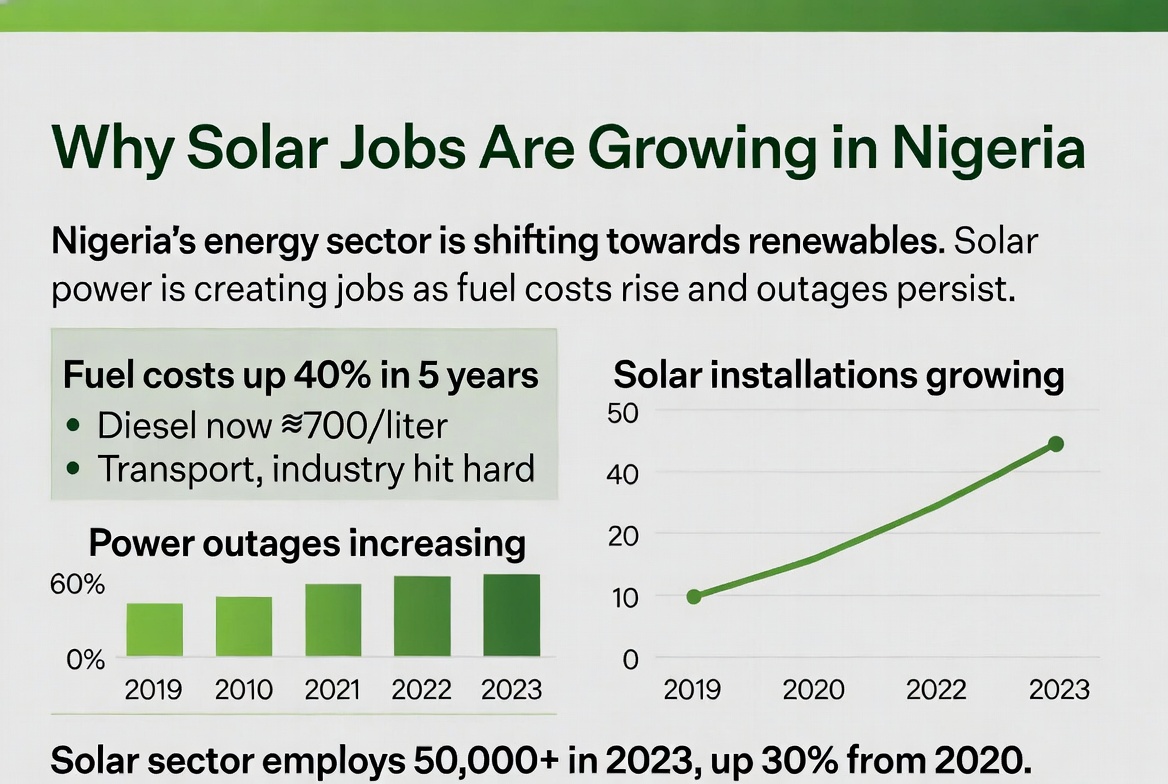
The numbers tell a compelling story:
- Fuel prices rose over 40% in the past year after subsidy removal.
- Businesses and homes now pay ₦220+/kWh on the grid in some bands, while solar + battery systems deliver power at ₦140–180/kWh.
- Solar capacity is forecast to grow at 25%+ CAGR through 2031, creating jobs in installation, sales, maintenance, design, and project management.
- Government initiatives (Solar Power Naija, REA projects, net metering) and falling panel prices are accelerating adoption.
Solar is no longer just “green” — it is the most reliable and cheapest power source for millions of Nigerians today.
Where the Jobs Are: Major Cities with High Demand

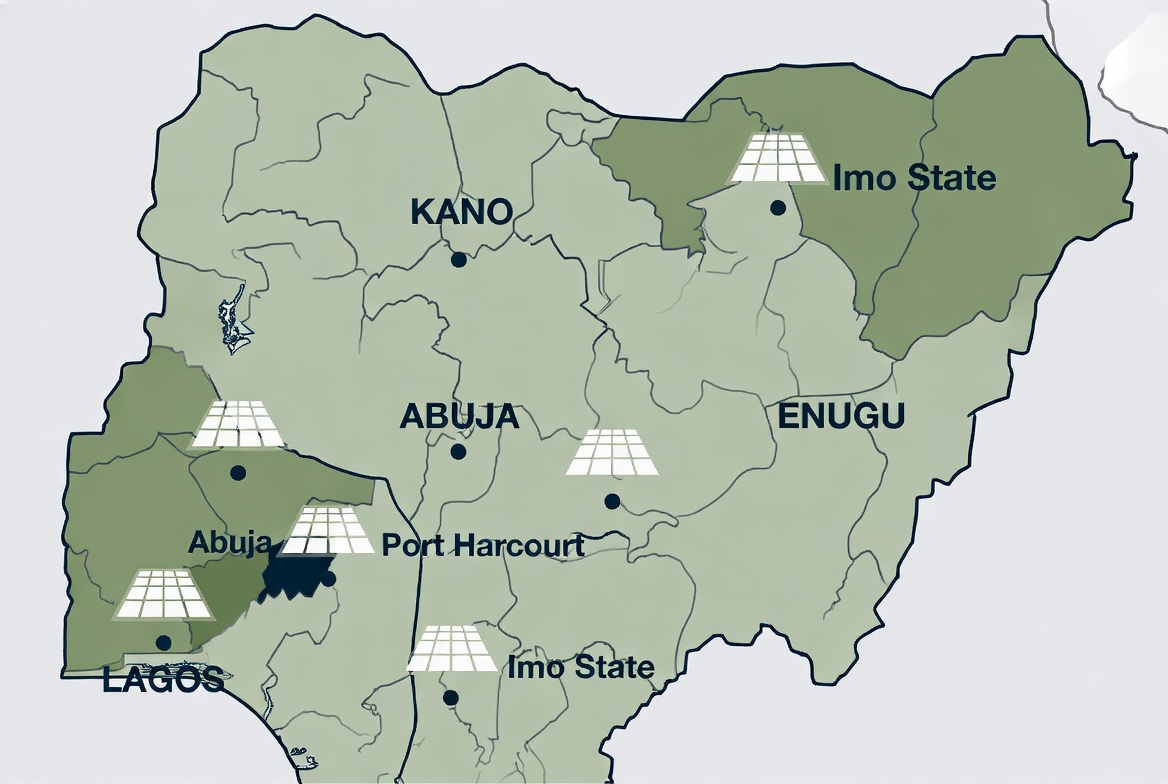
Demand is strongest in:
- Lagos (commercial & residential boom)
- Abuja (government and high-end estates)
- Port Harcourt (industrial and oil-company backup systems)
- Kano (northern sunlight advantage + large markets)
- Enugu & Imo (fast-growing southeast installations)
Freelancers and small teams can earn excellent money serving these cities and their surrounding states.
Essential Skills You Need to Succeed
Technical skills
- Basic electrical knowledge (wiring, inverters, batteries)
- Solar PV system design and sizing
- Safe installation and maintenance of panels, mounting structures, and hybrid systems
- Troubleshooting and fault finding
Soft & business skills
- Customer service and sales (especially for freelancers)
- Safety awareness (HSE)
- Project management and documentation
- Digital literacy (using sizing software, apps, and basic accounting)
No degree is mandatory to start, but a background in electrical engineering, physics, or any technical field gives you an advantage.
Your 7-Step Beginner’s Roadmap to a Solar Career
| Step | What to Do | Timeframe | Cost Estimate |
|---|---|---|---|
| 1 | Build foundational knowledge | 1–2 months | Free – ₦50k |
| 2 | Enrol in hands-on training | 2–8 weeks | ₦150k – ₦350k |
| 3 | Get certified | During/after training | Included or +₦50k |
| 4 | Gain practical experience | 3–6 months | Low or paid |
| 5 | Choose your path: Employee or Freelance | 6–12 months | – |
| 6 | Build your toolkit & network | Ongoing | ₦200k–₦500k |
| 7 | Scale up (specialise or start company) | 12–24 months | Varies |
Step 1: Build Foundations (Free or Low Cost) Study free resources: YouTube channels (Gennex, Ashdam Solar), IRENA reports, and basic electrical textbooks. Learn terms like MPPT, inverter efficiency, battery depth of discharge, and load calculation.
Step 2 & 3: Professional Training & Certification This is the most important investment. Reputable academies include:
- Ashdam Solar Academy – COREN-accredited SPVI course (Lagos/Abuja)
- Gennex Solar Academy – Comprehensive design & installation (Lekki, Lagos)
- RETTI (Renewable Energy Technology Training Institute) – Multiple levels including safety
- Kompetent Solar Academy, Soutech Ventures (Abuja, Owerri, Lagos)
- LASU ODLRI – Solar Inverter Installation & Repair certificate
Look for programmes that include practical rooftop installations, not just theory.
International credentials like NABCEP PV Associate (available online + exam) add huge credibility.
Step 4: Hands-On Experience After training:
- Volunteer or apprentice with installers (many pay ₦50k–₦100k/month during apprenticeship)
- Join solar Facebook groups (“Solar Installers and Dealers Nigeria”)
- Offer to assist on weekends for free initially to build portfolio
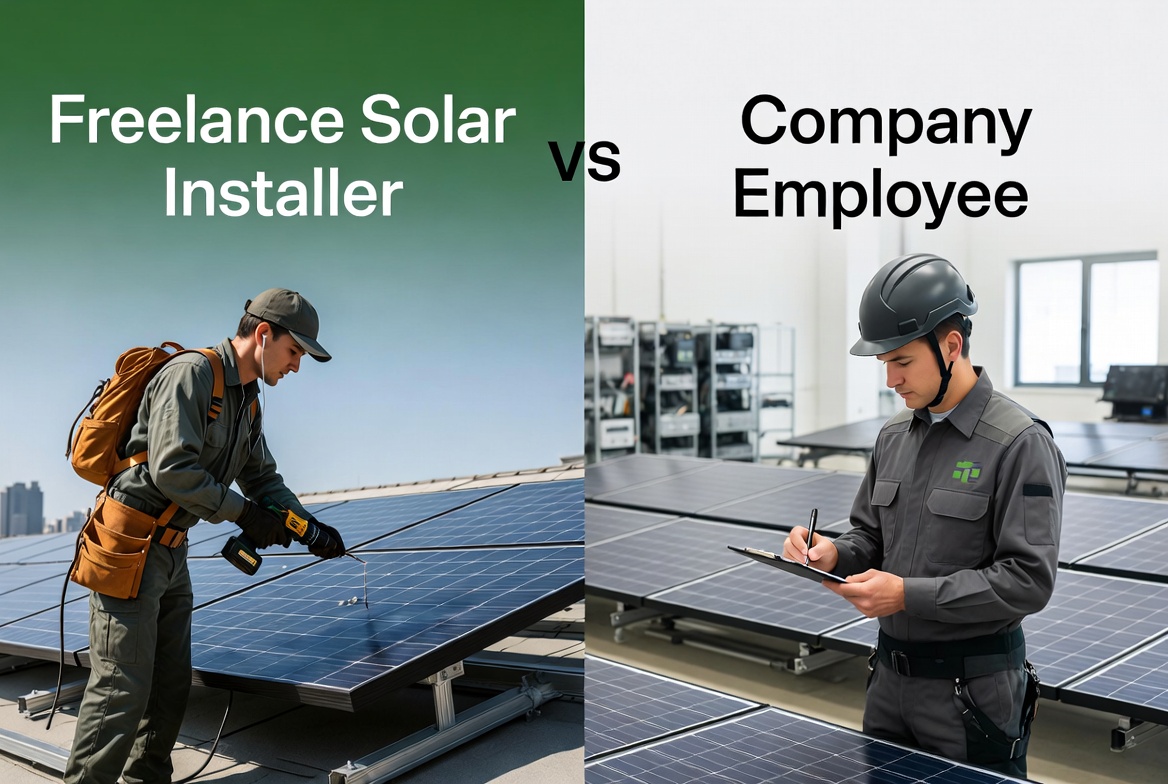
Step 5: Freelance Solar Installer vs Company Employee

| Aspect | Freelance Installer | Company Employee |
|---|---|---|
| Income Potential | ₦300k–₦1m+/month (after 1 year) | ₦150k–₦400k/month (stable) |
| Flexibility | High (choose your jobs & hours) | Fixed schedule |
| Risk | Higher (client acquisition, tools) | Lower (benefits, training provided) |
| Growth | Can build own company | Promotions to supervisor/engineer |
| Best For | Entrepreneurial personalities | Those wanting stability & benefits |
Step 6: Professional Tools Every Serious Installer Needs
 Essential starter kit (budget ₦250k–₦500k):
- Multimeter & clamp meter
- MC4 crimping tool & connectors
- Solar panel mounting tools
- Safety helmet, gloves, harness
- DC breakers, surge protectors
- Ladder, torque wrench, cable cutters
Buy quality brands once — cheap tools fail on rooftops.
Step 7: Scale Your Career
- Specialise in hybrid systems, mini-grids, or commercial C&I projects
- Learn battery storage (huge demand)
- Start your own company after 18–24 months
- Register with NEMSA/COREN for bigger contracts
Average Salaries in 2026 (Nigeria)
| Role | Entry Level (₦/month) | Experienced (₦/month) | Freelance Potential |
|---|---|---|---|
| Solar Installer/Technician | 80,000 – 150,000 | 180,000 – 350,000 | 400k – 1m+ |
| Solar Sales Executive | 100,000 + commission | 250,000 + commission | High |
| System Designer/Engineer | 150,000 – 250,000 | 350,000 – 700,000 | Very High |
| Project Manager | 200,000 | 500,000+ | – |
Common Challenges & How to Overcome Them
- High initial training cost → Many academies offer instalment plans or scholarships for youth/women.
- Client trust → Build a strong portfolio with before/after photos and testimonials.
- Rainy season slowdown → Use the time for marketing, certifications, and maintenance contracts.
- Competition → Specialise (e.g., high-end hybrid systems for estates) and deliver exceptional service.
Frequently Asked Questions (FAQ)
Q1: Do I need a university degree to start? No. Many successful installers have only SSCE + technical training. A degree in engineering helps for senior roles.
Q2: How long does it take to start earning? With focused training, you can land your first paid gig within 3–4 months.
Q3: Is solar work physically demanding? Yes — rooftop work requires fitness and safety awareness. Proper training teaches safe practices.
Q4: Can women succeed in solar installation? Absolutely. Many women now run successful solar sales and design companies. Some academies offer women-only cohorts.
Q5: What is the best training academy in Nigeria? Ashdam Solar (COREN) and Gennex are highly regarded for practical content. Visit multiple and check reviews.
Q6: How do I get clients as a freelancer? Facebook groups, Instagram, WhatsApp status, estate associations, and Google My Business listing.
Q7: Is financing available for tools or business? Yes — BOI, Bank of Industry renewable energy loans, and some academies partner with microfinance.
Q8: Will solar jobs still exist in 10 years? They will grow exponentially. Nigeria aims for 30,000 MW renewables by 2030 — the sector is just beginning.
Final Words: Your Bright Future Starts Today
The solar revolution in Nigeria is not coming — it is already here. Every day that passes without you taking action is a missed opportunity to secure a high-paying, future-proof career while solving one of Nigeria’s biggest problems: reliable electricity.
Start with Step 1 today. Research one training academy this week. Book a visit or call. Invest in yourself.
In 12 months, you could be the skilled solar professional that homeowners and businesses desperately need — earning well, working outdoors, and contributing to a cleaner Nigeria.
The sun is shining. Now is the time to build your solar career.
Ready to begin? Comment below with your city and current qualification, and I’ll recommend the best training option for you.
Share this roadmap with any young person looking for a real opportunity in 2026.