
Nigeria’s renewable energy sector has moved beyond early adoption and is now one of the most promising employment frontiers in the country. As grid instability persists and diesel costs continue to fluctuate, households and businesses are increasingly turning to solar solutions. This steady transition has created strong demand for trained professionals who understand both the technical and commercial sides of solar energy.
Companies such as Arnergy, Daystar Power, Sun King, and Lumos Nigeria are part of a growing ecosystem hiring technicians, engineers, sales professionals, project managers, and business development officers across Nigeria. However, getting hired requires more than basic interest in renewable energy. Employers are looking for a blend of practical technical competence and strong business awareness.
This in-depth guide explains the exact technical and business skills required to secure a solar job in Nigeria, how those skills influence salary potential, and how to strategically build them for long-term career growth.
Understanding the Nigerian Solar Job Landscape
Nigeria’s energy deficit has accelerated the adoption of off-grid and hybrid solar systems. Residential installations, commercial rooftop systems, industrial hybrid solutions, and rural mini-grids are expanding year after year. This expansion has shifted hiring patterns. Employers no longer seek only basic installers; they prefer multi-skilled professionals who can design, install, manage, sell, and maintain systems efficiently.
The modern solar professional must understand both electricity and economics. While installation expertise gets your foot in the door, your ability to communicate value, calculate costs, and manage projects determines how far you will rise in the industry.
Core Technical Skills Required in Nigeria’s Solar Industry
Technical competence remains the foundation of employability in the renewable energy sector. Most entry-level opportunities begin with hands-on roles, particularly in installation and system configuration.
Solar PV Installation Mastery
The ability to properly install photovoltaic panels is the most fundamental skill in the industry. Installation involves mounting solar modules securely, wiring DC connections correctly, integrating combiner boxes, configuring inverters, and testing output performance. In Nigeria’s climate, installers must also understand structural integrity, roof compatibility, and weather exposure considerations.
An installer who understands correct panel orientation, tilt angle optimization, and cable management immediately stands out from inexperienced applicants. Because installation errors can damage expensive equipment, employers prioritize candidates who demonstrate practical competence.
Inverter and Battery System Configuration
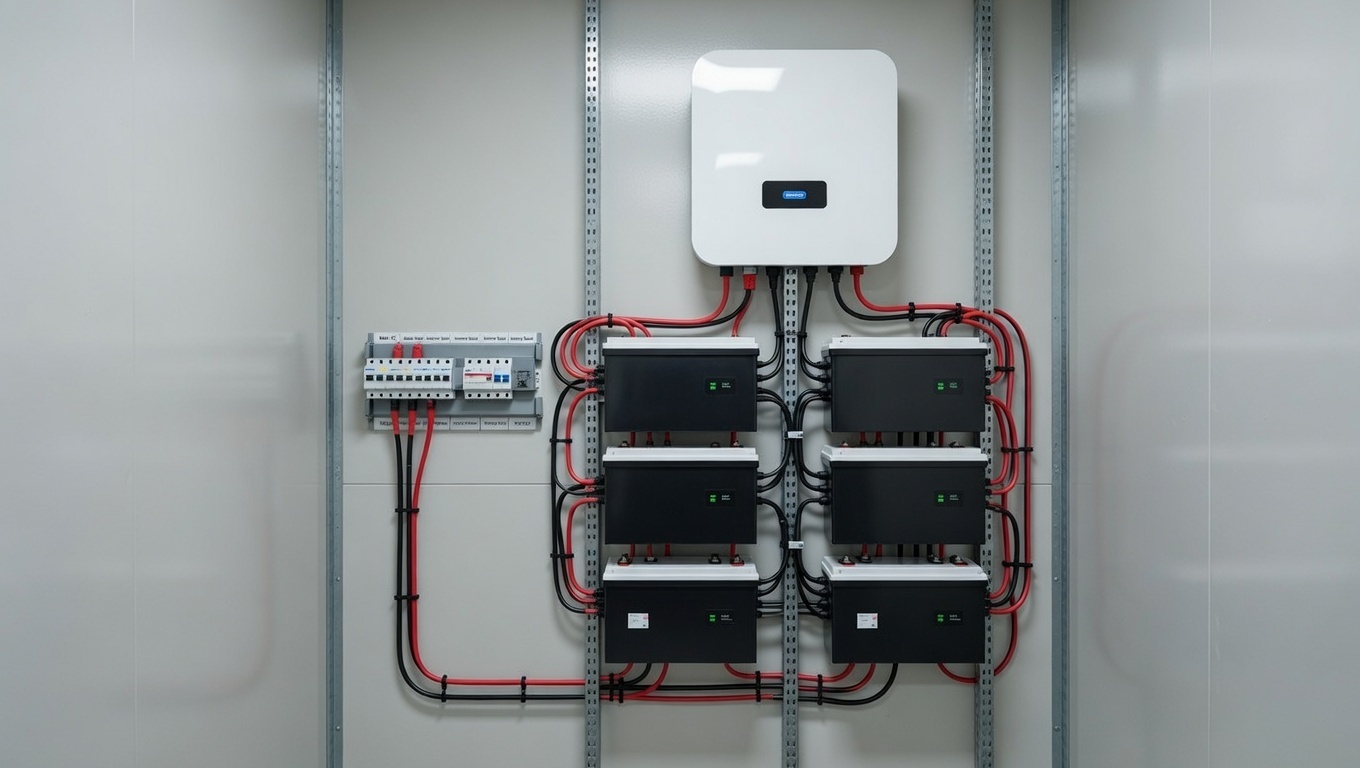
As Nigerian consumers increasingly demand hybrid systems that combine grid power, solar generation, and battery storage, inverter configuration skills have become highly valuable. Professionals must understand inverter sizing principles, load prioritization, and system programming. They should also know how to configure lithium battery banks and manage battery protection systems.
Lithium battery integration has become a major salary differentiator. Technicians who can correctly configure lithium-based storage systems often command higher compensation than those limited to traditional tubular batteries.
Electrical Wiring and Safety Compliance
Solar systems are electrical systems. Without solid grounding in electrical fundamentals, even well-mounted panels cannot function safely. Professionals must understand AC and DC load calculations, cable sizing, breaker selection, surge protection devices, and proper earthing systems.
Nigeria’s environment demands strict attention to safety. Faulty installations can cause equipment damage or fire hazards. Employers therefore value candidates with proven knowledge of electrical safety standards and compliance procedures.
Solar System Design and Load Analysis
Beyond installation lies design expertise. System design requires assessing a client’s power consumption, calculating energy needs, sizing solar arrays, selecting appropriate inverters, and estimating battery storage capacity. Professionals who can perform detailed load analysis reduce under-sizing or over-sizing errors, both of which affect system efficiency and profitability.
Design skills significantly improve earning potential because they position a professional as a consultant rather than just a technician.
Project Coordination and Technical Documentation
Larger commercial installations require structured coordination. Project scheduling, supplier communication, inventory tracking, installation supervision, and quality control are essential in high-value solar contracts. Engineers and senior technicians who understand documentation, compliance reporting, and commissioning protocols often transition into managerial roles.
Technical Skill Demand in Nigeria (2026 Overview)
The following table presents a simplified demand index for core solar technical skills in Nigeria’s current market.
| Technical Skill | Demand Level | Salary Influence | Promotion Potential |
| Solar Installation | Very High | Moderate | Strong |
| Inverter & Battery Setup | High | High | Strong |
| Electrical Wiring | High | Moderate | Moderate |
| System Design | Medium | High | Very Strong |
| Project Coordination | Growing | Very High | Very Strong |
Installation remains the primary entry pathway, but inverter configuration and design expertise increasingly drive higher salaries.
Business Skills That Increase Employability and Income
Many candidates focus exclusively on technical training. However, the highest earners in Nigeria’s solar industry combine engineering capability with business intelligence. Solar energy is not only about electricity; it is also about return on investment, financing structures, and customer trust.
Solar Sales and Customer Education
Solar systems are significant financial investments for households and businesses. Customers require detailed explanations about cost savings, payback periods, maintenance requirements, and financing options. A professional who can clearly communicate return on investment becomes extremely valuable to employers.
Sales-oriented professionals often earn commissions in addition to base salaries, making this skill particularly lucrative.
Costing and Quotation Development
Understanding how to price a solar system accurately is critical. This involves calculating component costs, labor expenses, logistics, taxes, and desired profit margins. Staff members who can prepare professional quotations reduce company errors and increase contract win rates.
Employers appreciate individuals who understand profit structures rather than focusing only on technical installation.
Communication and Client Relationship Management
In Nigeria’s competitive solar market, customer retention is essential. Professionals must explain technical concepts in simple language and maintain professional communication throughout installation and maintenance processes. Strong client relationship skills often lead to repeat business and referrals.
Digital Marketing and Lead Generation Awareness
Modern solar companies increasingly rely on digital marketing channels. Professionals who understand online lead generation, search engine optimization, social media campaigns, and WhatsApp business engagement bring added value to their employers. Even technical staff who understand how digital leads convert into installations gain strategic insight into business growth.
Entrepreneurial and Business Development Insight
Many experienced solar professionals eventually establish their own firms. Understanding supplier negotiation, inventory management, customer acquisition, and financial planning creates opportunities for long-term independence. Entrepreneurship knowledge also improves performance within corporate roles, particularly in business development departments.
Technical and Business Skills Comparison
The relationship between skill type and income growth can be summarized in the table below.
| Skill Category | Entry-Level Relevance | Income Acceleration | Leadership Impact |
| Installation Expertise | Essential | Moderate | Moderate |
| Inverter Configuration | High | Strong | Strong |
| Solar System Design | Medium | Strong | Very Strong |
| Sales & Customer Education | Moderate | Very Strong | Strong |
| Project Management | Limited at Entry | Very Strong | Very Strong |
| Costing & Financial Awareness | Growing | Strong | Strong |
This comparison shows that combining technical expertise with financial awareness creates the fastest pathway to higher income.
Salary Progression Based on Skill Depth
The Nigerian solar industry offers steady salary growth for professionals who continually upgrade their capabilities.
| Career Level | Typical Monthly Income Range (₦) |
| Entry-Level Installer | 80,000 – 150,000 |
| Advanced Technician (Hybrid Systems) | 150,000 – 250,000 |
| Solar Design Engineer | 200,000 – 350,000 |
| Project Manager | 300,000 and above |
| Business Development Lead | 350,000 and above |
Income levels vary by location and employer, but advanced technical knowledge combined with business acumen consistently improves earnings.
How to Develop These Skills in Nigeria
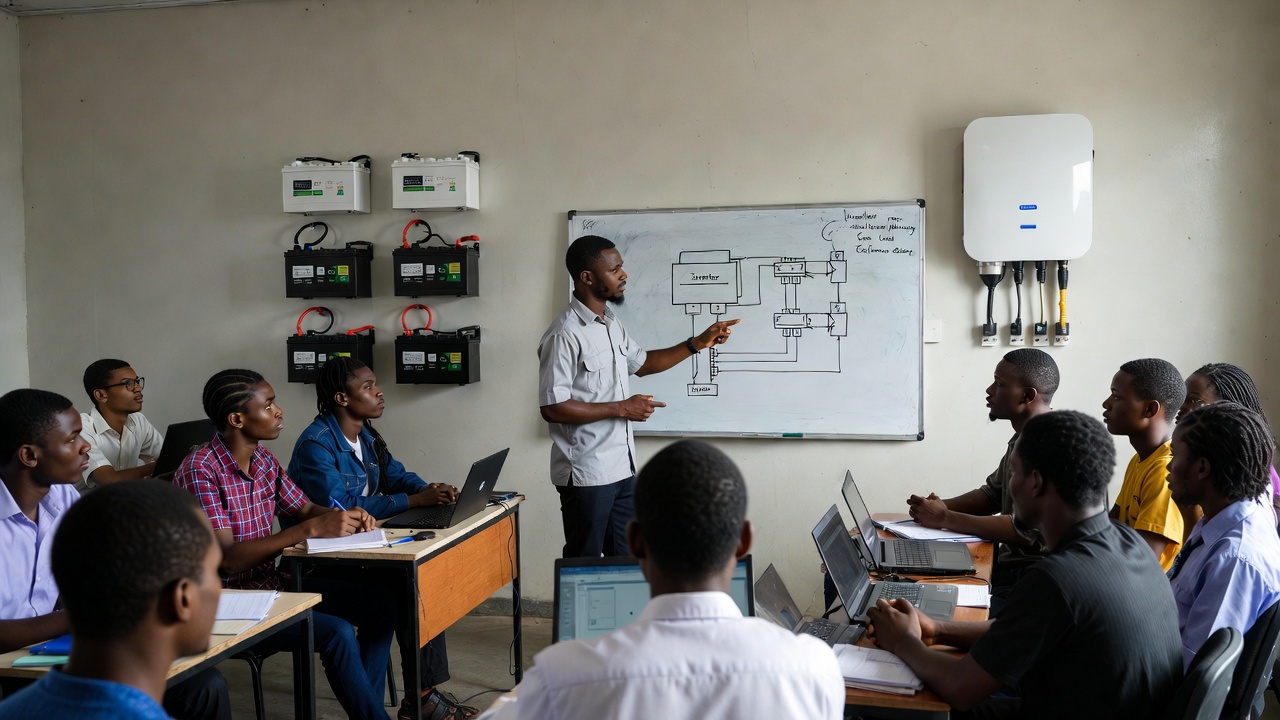
Acquiring solar skills requires deliberate effort. Practical training institutes provide hands-on experience with panels, inverters, and batteries. Apprenticeship under experienced installers remains one of the most effective learning pathways, as field exposure builds confidence and competence faster than theory alone.
Online renewable energy courses offer foundational knowledge in system design and electrical principles, but combining online education with field practice produces stronger employability outcomes. Internships and volunteer roles also increase industry exposure and strengthen CV credibility.
Continuous learning is critical. As battery technology evolves and hybrid systems become more sophisticated, professionals must update their knowledge regularly to remain competitive.
Common Mistakes That Prevent Solar Job Success
Many job seekers struggle not because of limited intelligence but because of limited practical experience. Some rely solely on classroom theory without field practice. Others neglect safety standards, underestimate battery complexity, or fail to communicate clearly with clients.
Weak CV presentation is another common obstacle. Employers expect concise documentation highlighting measurable installation achievements rather than vague statements. Including installation photos, certifications, and quantified results increases interview chances significantly.
The Solar Career Pathway in Nigeria
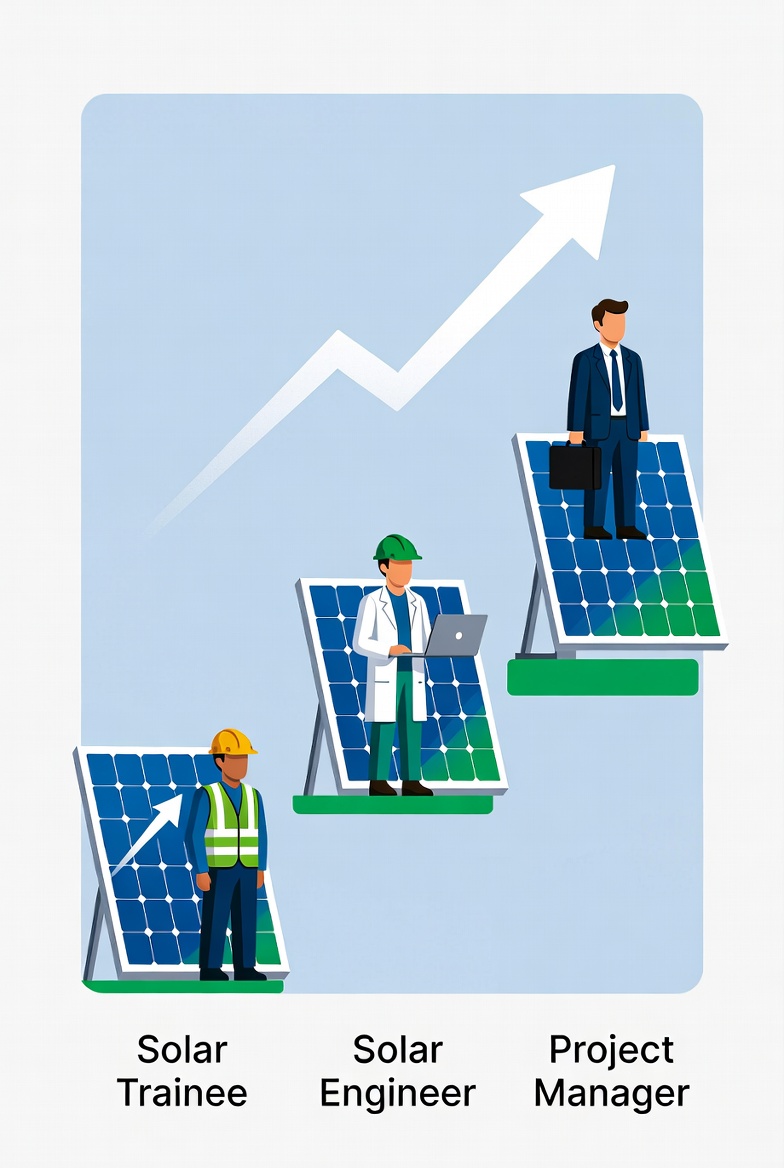
The solar career journey often begins with training and apprenticeship, progresses into junior installation roles, advances toward hybrid system specialization, and eventually transitions into engineering or project management positions. With added business knowledge, professionals may move into strategic management or establish independent solar enterprises.
Skill accumulation defines this progression. Each new competency unlocks greater responsibility and compensation.
Long-Term Outlook of Solar Careers in Nigeria
Nigeria’s energy demand continues to grow. Rising urbanization, small business expansion, and rural electrification initiatives ensure sustained demand for renewable energy solutions. As financing models improve and battery costs decline, solar adoption is expected to accelerate further.
Professionals who invest in both technical excellence and business literacy will remain competitive in this expanding market. The industry rewards discipline, adaptability, and continuous learning.
Nigeria’s solar industry is one of the most promising employment sectors of the decade. Technical expertise opens doors. Business intelligence accelerates growth. Professionals who develop both will not only secure employment but build sustainable, long-term careers in renewable energy.