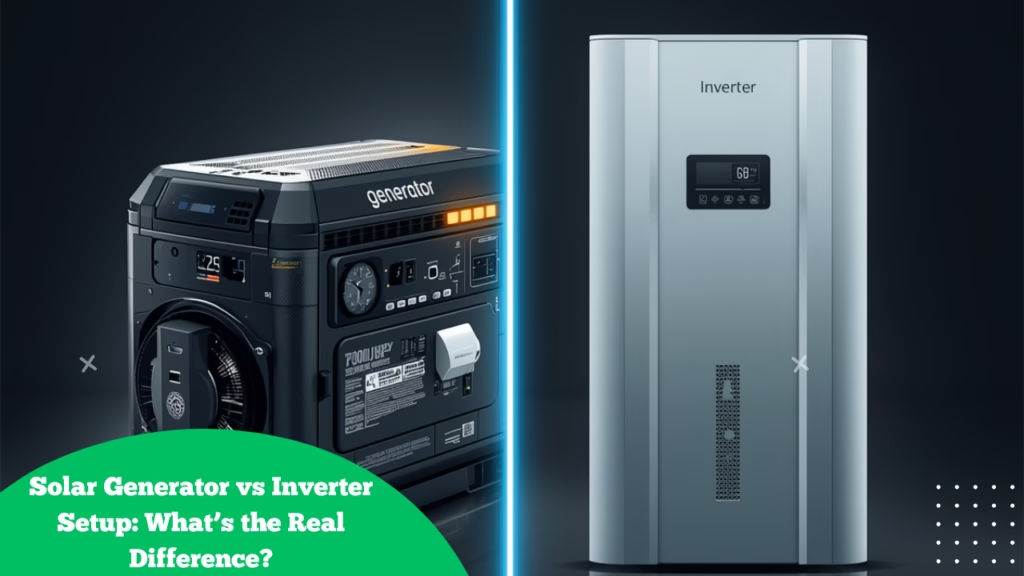
Electricity has become one of the most critical needs in modern homes and businesses. In countries like Nigeria, where power supply can be inconsistent, many people are now investing in solar energy solutions to ensure reliability and reduce dependence on fuel-powered generators. However, one major source of confusion for beginners is understanding the difference between a solar generator and a regular inverter setup.
At a glance, both systems appear to perform the same function—they store energy and supply electricity when needed. But beneath the surface, they are fundamentally different in design, performance, scalability, and long-term value. Choosing the wrong system can lead to unnecessary expenses, limited power supply, and frustration over time.
This article explains everything in clear, simple language, helping you understand how each system works, where each one fits best, and which option is more suitable for your needs.
Understanding a Solar Generator
A solar generator is best described as a compact, all-in-one power solution. It integrates several components that would normally exist separately in a traditional solar system. Inside a solar generator, you will find a battery for energy storage, an inverter to convert power, and a charge controller that regulates energy input. All of these are built into a single portable unit.
The simplicity of this design is what makes solar generators attractive to many users. Once purchased, the system requires little to no technical setup. You can charge it using electricity from the grid or connect it to solar panels, and it becomes ready for use almost immediately.
Because of its compact structure, a solar generator is typically used for light energy needs. It is commonly found in small apartments, single rooms, or situations where temporary backup power is required. For example, it can comfortably run a television, charge phones and laptops, power a fan, and keep basic lighting systems active.
What makes solar generators even more appealing is their quiet operation and portability. Unlike traditional fuel generators, they do not produce noise or emissions. This makes them suitable for indoor use and convenient for mobility, especially for people who need power on the go.
Understanding a Regular Inverter Setup
A regular inverter setup, often referred to as a conventional or full solar system, operates quite differently. Instead of combining everything into one unit, it consists of separate components that work together to generate, store, and distribute electricity.
This system typically includes solar panels for capturing sunlight, an inverter for converting energy, batteries for storage, and additional electrical components for safety and control. Because each part is separate, the system can be designed and configured to meet specific energy demands.
An inverter setup is commonly used in homes, offices, and commercial spaces where energy needs are higher. Unlike solar generators, which are limited in capacity, inverter systems can power heavy appliances such as refrigerators, air conditioners, water pumps, and washing machines.
One of the most important features of an inverter setup is its flexibility. The system can be expanded over time by adding more batteries or solar panels. This means that as your energy consumption grows, your system can grow with it, making it a long-term investment rather than a temporary solution.
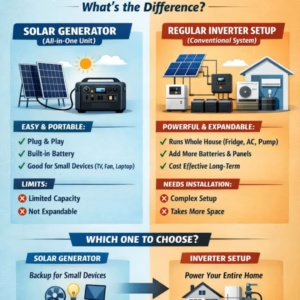
Key Differences Between Solar Generator and Inverter Setup
The distinction between these two systems becomes clearer when you compare them across important factors such as structure, capacity, flexibility, and cost.
| Feature | Solar Generator | Inverter Setup |
| System Design | All-in-one unit | Separate components |
| Installation | No installation required | Requires professional installation |
| Power Capacity | Low to moderate | Moderate to high |
| Expandability | Limited | Highly expandable |
| Portability | Portable | Fixed installation |
| Upfront Cost | Lower | Higher |
| Long-Term Value | Limited | High |
From this comparison, it becomes clear that solar generators are designed for convenience and simplicity, while inverter setups are built for performance and scalability.
Performance and Energy Capacity
One of the most important factors to consider when choosing between these systems is how much power you actually need. Solar generators are typically designed to handle smaller loads. They perform well when used for basic electronics and lighting, but they struggle when connected to high-power appliances.
In contrast, inverter setups are capable of delivering much higher energy output. Because the system is customizable, it can be designed to match the exact energy requirements of a household or business. Whether you need to power a single room or an entire building, an inverter system can be scaled accordingly.
To better illustrate this difference, consider the table below:
| Appliance | Solar Generator Suitability | Inverter Setup Suitability |
| LED TV | Suitable | Suitable |
| Fan | Suitable | Suitable |
| Laptop | Suitable | Suitable |
| Refrigerator | Not suitable | Suitable |
| Air Conditioner | Not suitable | Suitable |
| Water Pump | Not suitable | Suitable |
This comparison highlights a key point: while solar generators are useful for light tasks, inverter systems are necessary for heavy-duty applications.
Cost Implications and Long-Term Value
Cost is often the deciding factor for many people, but it is important to look beyond the initial price. Solar generators are generally more affordable upfront, making them attractive for individuals on a tight budget. However, their limited capacity means that users often outgrow them quickly and may need to purchase a larger system later.
Inverter setups, on the other hand, require a higher initial investment. This cost includes purchasing multiple components and paying for professional installation. While this may seem expensive at first, the long-term benefits usually outweigh the initial expense.
An inverter system allows you to expand gradually instead of replacing the entire setup. This flexibility reduces long-term costs and provides better value over time. Additionally, the ability to power more appliances means greater convenience and efficiency in daily living.
Installation and Ease of Use
Another important difference lies in how easy each system is to set up and operate. Solar generators are designed with simplicity in mind. They do not require wiring or technical expertise. Users can simply plug in their devices and start using the system immediately.
Inverter setups require a more structured installation process. Because the system involves multiple components and electrical connections, it must be installed by professionals to ensure safety and optimal performance. While this adds to the initial complexity, it also ensures that the system is tailored to your specific needs.
Flexibility and Future Expansion
One of the biggest advantages of inverter systems is their ability to grow with your energy needs. If your power consumption increases, you can add more batteries or solar panels without replacing the entire system.
Solar generators lack this flexibility. Once you reach the system’s capacity, your only option is to upgrade to a new unit. This limitation makes them less suitable for long-term use, especially in households where energy demand is expected to increase.
Practical Considerations for Nigerian Users
In a country like Nigeria, energy demand is often high due to frequent power outages and the need to run essential appliances. Many households rely on fuel generators, which come with ongoing costs and environmental concerns.
Solar energy provides a cleaner and more sustainable alternative, but choosing the right system is crucial. For most Nigerian homes, an inverter setup offers greater reliability and long-term benefits. It can handle the demands of daily life, reduce fuel expenses, and provide consistent power supply.
Solar generators, while useful, are better suited for smaller applications such as charging devices or powering a few essential items during short outages.
Real-World Usage Scenarios
To better understand how these systems fit into everyday life, imagine two different users. The first user lives in a small apartment and only needs to power a fan, a television, and a few lights. For this person, a solar generator would be sufficient and cost-effective.
The second user lives in a larger household with multiple appliances, including a refrigerator and pumping machine. In this case, a solar generator would not meet the energy demand, and an inverter setup would be the more practical choice.
Final Thoughts: Making the Right Choice
Choosing between a solar generator and an inverter setup ultimately comes down to your energy needs, budget, and long-term goals. While solar generators offer convenience and portability, they are limited in capacity and expansion.
Inverter setups, although more complex and expensive initially, provide greater flexibility, higher performance, and better long-term value. For users who are serious about reducing electricity challenges and achieving energy independence, an inverter system is often the smarter investment.
If you are planning to go solar, it is important to think beyond immediate needs and consider future expansion. Making the right choice from the beginning can save you money, improve your energy experience, and provide peace of mind for years to come.
Frequently Asked Questions (FAQs)
What is the main difference between a solar generator and an inverter setup?
The main difference lies in design and capacity. A solar generator is an all-in-one, portable unit designed for light power needs, while an inverter setup is a fully customizable system built to handle larger energy demands and power entire homes or businesses.
Which option is better for homes in Nigeria?
For most homes in Nigeria, an inverter setup is usually the better choice because it can handle higher energy demands, power multiple appliances, and adapt to frequent power outages. A solar generator is more suitable for light use or short-term backup.
Can a solar generator run heavy appliances like a refrigerator or air conditioner?
In most cases, solar generators are not designed to handle heavy appliances such as refrigerators, air conditioners, or water pumps. These appliances require higher power capacity, which is better supported by an inverter setup.
Is a solar generator cheaper than an inverter system?
A solar generator is generally cheaper upfront. However, an inverter setup often provides better long-term value because it can be expanded and used for a wider range of applications without needing replacement.
Do I need solar panels for both systems?
Both systems can use solar panels, but they are not always required. A solar generator can be charged using electricity from the grid or solar panels, while an inverter setup is typically designed to work primarily with solar panels for energy generation.
Which system is easier to install?
A solar generator is much easier to use since it requires no installation. It works as a plug-and-play device. On the other hand, an inverter setup requires professional installation to ensure safety and efficiency.
Can I expand my system later?
An inverter setup allows for easy expansion by adding more batteries or solar panels as your energy needs grow. Solar generators have limited expandability, and upgrading usually means buying a new unit.
How long do these systems last?
Both systems can last several years depending on usage and maintenance. However, inverter setups often have a longer lifespan because individual components can be replaced or upgraded without changing the entire system.
Is solar power better than fuel generators?
Solar power is generally cleaner, quieter, and more cost-effective over time compared to fuel generators. It eliminates fuel costs, reduces noise, and requires less maintenance, making it a more sustainable option.
What should I consider before choosing a system?
Before making a decision, consider your energy needs, budget, available space, and long-term plans. If your goal is to power only small devices, a solar generator may be sufficient. If you want to power your entire home and plan for future expansion, an inverter setup is the better choice.
Can I use both a solar generator and an inverter setup together?
Yes, some users combine both systems. A solar generator can serve as a portable backup for small devices, while the inverter setup powers the main household appliances.
Which system is best for beginners?
Solar generators are ideal for beginners because they are simple to use and require no technical knowledge. Inverter setups are better suited for users who are ready to invest in a long-term energy solution and can work with professionals for installation