
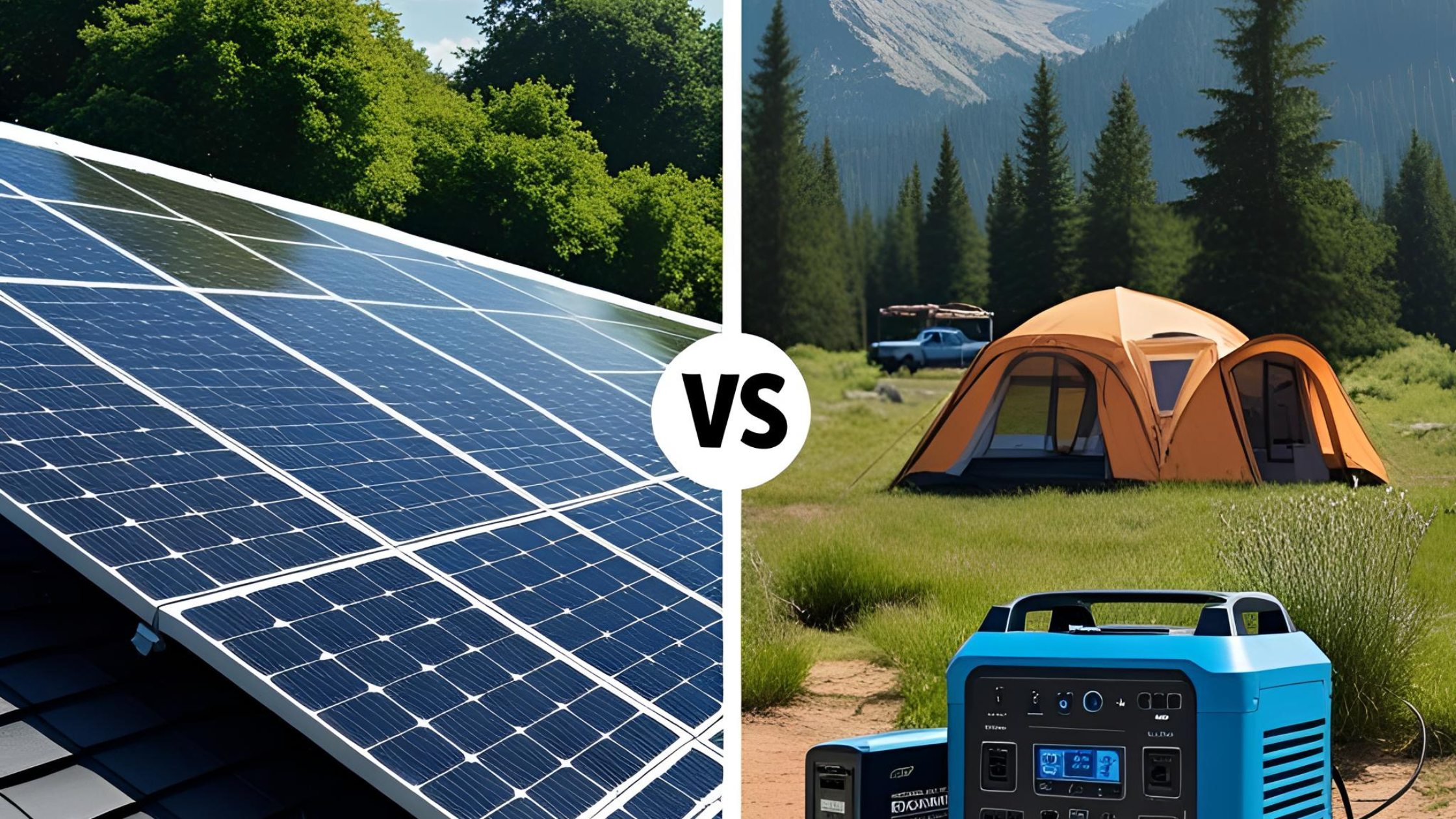
Trying to choose between solar panels and solar generators?
You’re not alone.
Both promise energy independence and lower bills—but they serve different needs.
So which one actually saves you more money?
Let’s break it down by cost, power output, long-term value, and more.
What You’ll Learn
Differences between solar panels and solar generators
Upfront and long-term costs
Which setup provides more energy savings
Use-case comparisons: daily home use vs. emergency backup
How to choose based on your needs
Real data and examples
What Are Solar Panels?
Solar panels are installed systems that convert sunlight into electricity for your home.
They’re mounted on rooftops or the ground and connect to your main power supply.
Most home solar systems include:
Solar panels
Inverters
Mounting equipment
Wiring and connections
Optional battery storage
Once installed, they can power your entire home and offset your electricity bill.
What Are Solar Generators?
Solar generators are portable power stations that use solar panels to charge an internal battery.
They usually include:
Foldable or rigid solar panels
A battery pack
An inverter
Outlets (AC/DC/USB) for devices
Unlike full solar systems, they don’t connect to your home’s power grid.
They’re best used for:
Backup during outages
Camping or off-grid activities
Powering small appliances and electronics
Upfront Cost Comparison
Let’s talk money.
Solar Panels:
System size: 5kW to 10kW
Price range: $10,000 to $25,000 (before tax credits)
Installation included
Eligible for incentives and rebates
Payback period: 6–10 years
Solar Generators:
Capacity: 500Wh to 5000Wh
Price range: $300 to $4,000
Plug-and-play setup
No installation required
No federal tax credits
Long-Term Savings
This is where the gap widens.
Solar Panels:
Reduce or eliminate electric bills
Can save $1,000+ per year on utility costs
Net metering allows credit for extra energy
25-year lifespan or more
Adds value to your home
Solar Generators:
No impact on electric bill
Used occasionally
Needs frequent recharging or sun exposure
Battery degradation after 3–5 years
No resale value
Which one pays you back over time?
Only solar panels.
Use Case: Which One Fits Your Lifestyle?
Daily Home Use:
Go with solar panels
Power high-energy appliances: HVAC, fridge, washer, lights
Lower your grid dependence
Protect against rising electricity rates
Short-Term Backup:
Use a solar generator
Keep your phone, router, and lights running during outages
Avoid fuel costs of gas generators
Recharge using sunlight anywhere
Energy Output and Capacity
Let’s break this down with numbers.
Solar Panels:
A 6kW system can generate 24–30 kWh per day
That’s enough to run an average U.S. home
Can scale to match energy use
Works best with direct sun exposure
Solar Generators:
A 2000Wh generator can run a fridge for ~10 hours
Or power a laptop for several days
Charges slowly with limited panels
Not ideal for whole-house coverage
Hidden Costs to Watch
With Solar Panels:
Maintenance is minimal
Occasional inverter replacement ($1,000–$2,000 after 10+ years)
Battery storage (if used) adds cost but increases flexibility
With Solar Generators:
Battery replacements every few years
Slower recharge time during cloudy days
Often need additional panels for longer use
Not weatherproof without shelter
Which Option Has Better ROI?
If you:
Own your home
Want to reduce energy bills
Stay in one place long-term
Solar panels will give you a better return.
If you:
Rent
Travel often
Only need short-term power backup
A solar generator may fit better.
Real-World Example
One homeowner in Texas installed a 7.2kW solar panel system in 2022.
Installation cost: $19,800
Tax credit: $5,940
Net cost: $13,860
Electric bill savings: $120/month
Payback time: 9.6 years
Compare that to a user with a $2,000 solar generator:
Runs lights, modem, small fridge
Lasts 1–2 days between charges
No impact on monthly bills
Different tools for different goals.
What Should You Choose?
Ask yourself:
Do you want long-term savings or short-term backup?
How much energy do you use each day?
Do you want to power your entire home or just essentials?
Are you prepared for a permanent install or need something mobile?
Do you qualify for solar incentives?