
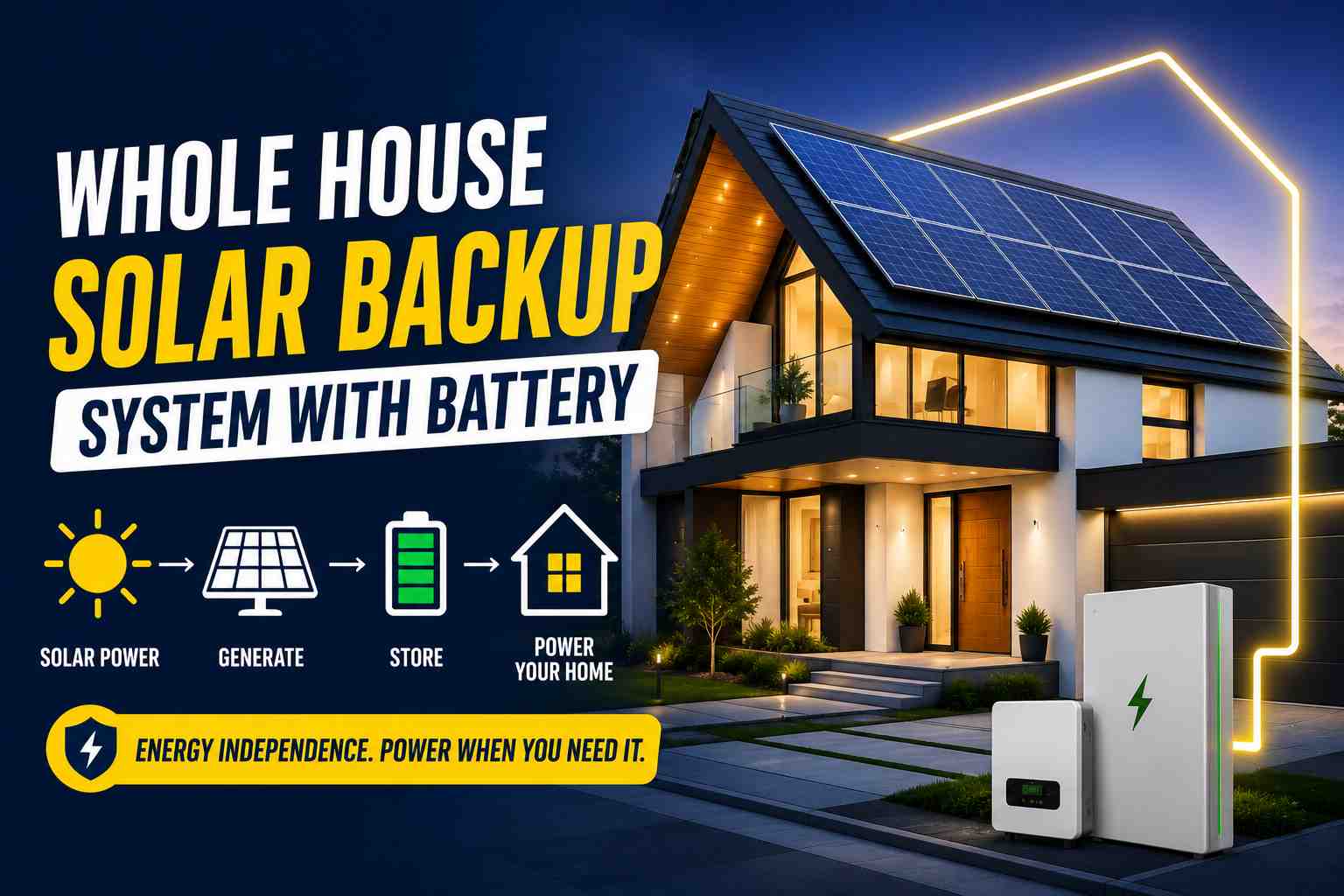
Power outages are becoming more frequent due to severe weather, aging power grids, and increasing electricity demand. At the same time, electricity prices continue to rise, encouraging more homeowners to invest in renewable energy solutions.
A whole house solar backup system with battery allows your home to continue operating during power outages while reducing dependence on the utility grid. Unlike traditional generators that rely on fuel, solar backup systems store clean energy generated during the day and automatically supply power when it’s needed.
Whether you’re planning a new solar installation or upgrading an existing system, this guide explains how whole-home solar backup works, its costs, benefits, system components, and how to choose the right setup for your home in 2026.
What Is a Whole House Solar Backup System?
A whole house solar backup system combines:
- Solar panels
- Hybrid solar inverter
- Battery storage
- Backup electrical panel (if required)
- Smart energy management system
Together, these components generate electricity, store excess energy, and automatically provide backup power when the utility grid goes offline.
Unlike partial backup systems that only power essential appliances, a whole-house system is designed to support nearly all household electrical loads, depending on system size.
How Does a Solar Backup System Work?
During normal operation:
- Solar panels produce electricity.
- Your home uses solar energy first.
- Excess electricity charges the battery.
- Additional unused energy may be exported to the utility grid if net metering is available.
During a power outage:
- The inverter disconnects your home from the utility grid.
- The battery begins supplying stored electricity.
- Solar panels continue charging the battery during daylight hours (with compatible systems).
This process happens automatically in many modern hybrid systems.
Main Components of a Whole House Backup System
Solar Panels
Solar panels convert sunlight into electricity.
Higher-efficiency panels produce more power using less roof space, making them ideal for residential installations.
Hybrid Solar Inverter
The inverter converts DC electricity from solar panels into AC electricity used by household appliances.
Hybrid inverters also manage battery charging and backup power automatically.
Popular choices include:
- SolarEdge
- Enphase
- SMA
- Fronius
- Growatt
- GoodWe
Home Battery Storage
The battery stores excess solar energy for later use.
Popular residential battery systems include:
- Tesla Powerwall 3
- Enphase IQ Battery
- FranklinWH
- EcoFlow DELTA Pro Ultra
- LG Energy Solution
- BYD Battery-Box Premium
Battery capacity determines how long your home can operate during an outage.
Smart Monitoring System
Most premium systems include:
- Mobile apps
- Real-time energy monitoring
- Battery status
- Power consumption reports
- Remote diagnostics
These features help homeowners optimize energy usage and monitor system performance.
Benefits of a Whole House Solar Backup System
Backup Power During Outages
One of the biggest advantages is uninterrupted electricity during blackouts.
Your home can continue operating important appliances without relying on fuel-powered generators.
Lower Electricity Bills
Stored solar energy reduces the amount of electricity purchased from the utility company, especially during peak-rate periods.
Greater Energy Independence
Generating and storing your own electricity reduces dependence on the electrical grid.
Quiet Operation
Unlike gas generators, battery systems operate silently without emissions or fuel storage.
Environmentally Friendly
Solar backup systems generate clean, renewable energy and reduce greenhouse gas emissions.
How Large Should Your Backup System Be?
The ideal system size depends on your daily electricity usage and the appliances you want to power during outages.
| Home Size | Recommended Solar System | Suggested Battery Storage |
|---|---|---|
| Small Home | 5–6 kW | 10–15 kWh |
| Medium Home | 6–8 kW | 15–20 kWh |
| Large Home | 8–12 kW | 20–30+ kWh |
Homes with electric heating, electric vehicle chargers, or swimming pools often require larger systems.
Also Read: Solar Panel Installation Cost for a 2000 Sq Ft House (2026)
Estimated Cost in 2026
The total investment depends on system size, battery capacity, equipment quality, and installation.
| Component | Estimated Cost (USD) |
|---|---|
| Solar Panels | $12,000–$22,000 |
| Hybrid Inverter | $2,000–$5,000 |
| Battery Storage | $8,000–$18,000 |
| Installation & Permits | $4,000–$8,000 |
Estimated Total Cost: $26,000–$50,000+
Costs can be reduced through available tax credits and local incentive programs where applicable.
How Long Can a Solar Battery Power a House?
Runtime depends on:
- Battery capacity
- Household electricity usage
- Number of appliances operating
- Solar production during the outage
For example:
- A 13–15 kWh battery may power essential household loads for approximately 12–24 hours.
- Larger battery banks can provide multiple days of backup when combined with daytime solar production.
Should You Install Multiple Batteries?
Many homeowners install more than one battery if they want:
- Whole-home backup
- Longer outage protection
- Electric vehicle charging
- Heavy appliance operation
- Greater energy independence
Battery systems are often expandable, allowing additional storage to be added later.
Is a Whole House Backup Better Than a Generator?
| Feature | Solar Battery System | Gas Generator |
|---|---|---|
| Fuel Required | No | Yes |
| Noise | Silent | Loud |
| Maintenance | Low | Moderate |
| Emissions | None | Produces Emissions |
| Automatic Operation | Yes | Many Models |
| Long-Term Savings | Higher | Lower |
For long-term energy independence, many homeowners prefer solar battery systems over traditional generators.
Financing Options
Because whole-home solar systems require a larger investment, several financing options are available.
Cash Purchase
Provides the highest long-term savings by avoiding interest costs.
Solar Loan
Allows homeowners to own the system while spreading payments over several years.
Home Equity Loan
Some homeowners finance solar installations using home equity, often at competitive interest rates.
Solar Lease or Power Purchase Agreement
Available in some areas, though ownership remains with the provider.
Common Mistakes to Avoid
Choosing a Battery That Is Too Small
An undersized battery may not provide enough backup during extended outages.
Estimate your energy needs before purchasing.
Ignoring Future Electricity Usage
If you plan to buy an electric vehicle or add high-power appliances, account for those future energy demands.
Buying Based Only on Price
Lower-cost equipment may have:
- Shorter warranties
- Lower efficiency
- Limited technical support
Choose products with proven reliability and strong warranty coverage.
Hiring Inexperienced Installers
Professional installation is essential for safety, performance, and warranty protection.
Always work with licensed and experienced solar installers.
Maintenance Requirements
Whole-house solar backup systems require relatively little maintenance.
Recommended practices include:
- Monitor system performance using the mobile app.
- Keep solar panels reasonably clean.
- Ensure battery ventilation is unobstructed.
- Schedule periodic inspections.
- Install firmware updates when available.
Most modern lithium-ion batteries require minimal routine maintenance.
Is a Whole House Solar Backup System Worth It?
For many homeowners, the answer is yes.
A whole-house solar backup system offers:
- Reliable backup power
- Lower electricity bills
- Increased home value
- Greater energy independence
- Reduced environmental impact
Although the initial investment is significant, long-term energy savings and resilience often make it worthwhile.
Frequently Asked Questions (FAQs)
Can solar batteries power an entire house?
Yes. A properly sized solar system with sufficient battery capacity can power most or all household appliances during an outage.
How many batteries do I need for whole-house backup?
The number depends on your electricity usage. Many average-sized homes require one to three residential battery units for comprehensive backup.
Can solar panels charge the battery during a power outage?
Yes, provided your system includes a compatible hybrid inverter and is designed for backup operation.
How long do home solar batteries last?
Most modern lithium-ion batteries last 10–15 years, with many manufacturers providing 10-year warranties.
Is a solar backup system better than a generator?
For homeowners seeking quiet operation, low maintenance, renewable energy, and long-term savings, a solar battery backup system is often the preferred solution.
Final Verdict
A whole house solar backup system with battery is one of the most effective ways to protect your home from power outages while reducing long-term electricity costs.
By combining high-efficiency solar panels, a reliable hybrid inverter, and quality battery storage, homeowners can enjoy greater energy independence and dependable backup power for years to come.
Conclusion
As utility costs continue to rise and power outages become more common, investing in a whole-house solar backup system has never been more practical.
Before making a decision:
- Assess your household’s energy usage.
- Choose the right battery capacity.
- Select high-quality panels and inverters.
- Work with a trusted installer.
- Take advantage of available incentives and financing.
With proper planning, a whole-house solar backup system can provide clean, reliable electricity, long-term savings, and peace of mind for decades.