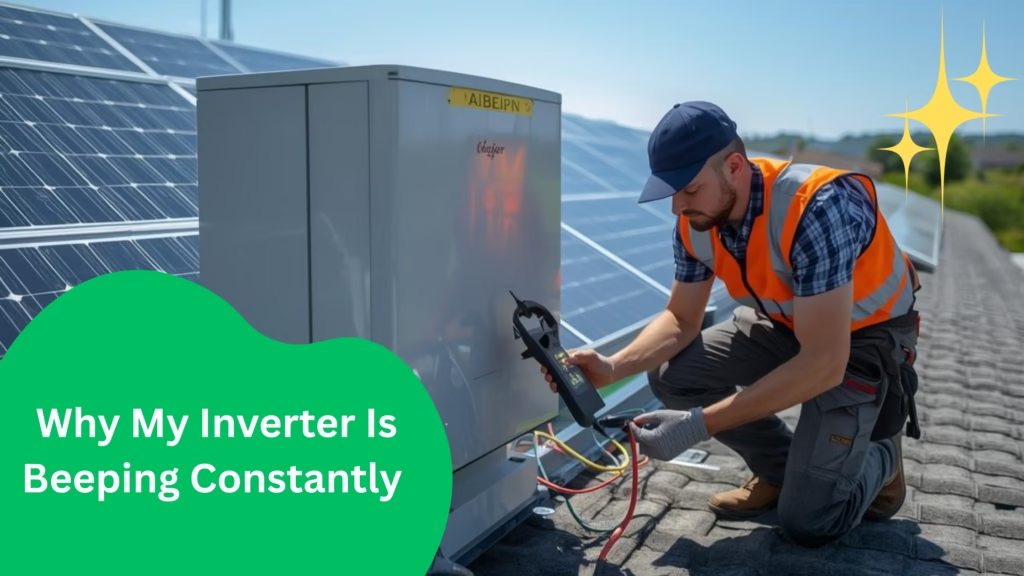
If your inverter keeps beeping constantly, especially at night or during power outages, you are not alone. Thousands of Nigerian households experience this same issue daily, and for many people, the sound becomes a normal part of life. Unfortunately, inverter beeping is not something you should ignore. It is not just noise. It is your inverter communicating that something is wrong with your power backup system.
In Nigeria, where electricity supply is unstable and many homes depend on solar inverter systems, inverter alarms have become one of the most common complaints from homeowners. Some people mute the alarm. Others switch off the inverter completely at night. A few ignore it until the system suddenly shuts down or batteries fail. All these responses usually lead to higher costs in the long run.
This article explains in clear, simple language why your inverter is beeping constantly, why the problem is very common in Nigeria, how much it can cost you if ignored, and what permanent solutions actually work. The explanations are practical and based on real-life Nigerian inverter usage, not textbook theory.
Understanding What Inverter Beeping Really Means
An inverter does not beep randomly. Every beep is a warning signal programmed into the system to protect itself and its batteries. When an inverter beeps continuously, it is telling you that one or more operating conditions are outside the safe range. The most common of these conditions is low battery voltage, but it is not the only one.
During the day, solar panels help charge batteries and support loads. At night, the inverter depends entirely on stored battery energy. This is when problems become obvious. If the batteries are weak, undersized, poorly connected, or overloaded, the inverter senses danger and triggers an alarm.
In simple terms, inverter beeping is like a car engine warning light. You may still be able to drive for some time, but ignoring the warning almost always leads to breakdown and expensive repairs.
Why Inverter Beeping Is Extremely Common in Nigerian Homes
Nigeria has a unique power environment that makes inverter alarms more frequent than in many other countries. Long power outages at night mean inverters run for extended hours without charging. Many households run appliances such as fans, TVs, routers, freezers, and sometimes air conditioners overnight. Heat also plays a role, as high temperatures reduce battery efficiency and lifespan.
Another major issue is system sizing. Many inverter systems in Nigeria are sold based on affordability, not actual power needs. Installers often under-size batteries to reduce initial cost, knowing that problems may only show up later. When the system finally struggles at night, the inverter starts beeping.
The Most Common Reason Your Inverter Is Beeping Constantly
The number one reason an inverter beeps constantly is low battery voltage. When battery voltage drops below the inverter’s safe threshold, the alarm activates. This is meant to warn you before the inverter shuts down completely.
Low voltage can happen even when batteries appear charged during the day. At night, once the load increases and there is no solar input, voltage drops rapidly if the battery capacity is insufficient or the batteries are aging.
Battery Capacity and Why It Matters More Than Inverter Size
Many Nigerians focus on inverter size, such as 3kVA or 5kVA, while ignoring battery capacity. This is a common mistake. The inverter controls how much load you can connect, but the batteries determine how long the system can run.
A powerful inverter connected to small batteries will still beep and shut down quickly. Battery capacity must match both the inverter size and the expected night-time load.
To illustrate this clearly, the table below shows how battery setup affects night performance.
| Inverter Size | Battery Type | Battery Capacity | Typical Night Usage | Likely Result |
| 3kVA | Tubular | 2 × 200Ah | Fans, TV, router | Beeping likely |
| 3kVA | Lithium | 1 × 5kWh | Fans, TV, freezer | Stable |
| 5kVA | Tubular | 4 × 200Ah | Fans, TV, freezer | Quiet |
| 5kVA | Tubular | 4 × 200Ah | AC overnight | Constant beeping |
| 5kVA | Lithium | 2 × 5kWh | AC, fans, TV | Stable |
This table alone explains why many homes experience inverter alarms even with “big” inverters.
Excessive Night-Time Load and Hidden Power Consumption
Another major cause of inverter beeping is excessive load at night. Some appliances draw more power than people realize. Freezers cycle on and off all night. Routers and decoders run continuously. Fans may seem harmless, but multiple fans combined with other devices add up quickly.
Air conditioners are the biggest problem. Many Nigerian homes attempt to run ACs overnight on inverter systems that were never designed for that purpose. Even if the inverter supports the load, the batteries usually cannot sustain it for long. Once voltage drops, the inverter alarm starts.
Aging Batteries and Nigeria’s Climate Factor
Battery age plays a huge role in inverter beeping. In Nigeria’s climate, lead-acid batteries degrade faster than expected. Heat accelerates chemical breakdown inside the battery. Dust, poor ventilation, and frequent deep discharge shorten lifespan even more.
A battery that is two to three years old may show full charge during the day but lose voltage rapidly at night. This is why many homeowners experience inverter alarms suddenly after months of “normal” operation.
Replacing weak batteries early often stops inverter beeping immediately.
Poor Battery Connections and Voltage Drop
Sometimes the problem is not the battery itself but the connection. Loose terminals, corroded battery lugs, or undersized cables cause voltage drop. The inverter senses this drop and assumes the battery is empty, even when it is not.
In Nigeria, many installations use thin cables to reduce cost. This works initially but causes problems as load increases. Voltage drop becomes severe at night when batteries work harder, triggering constant alarms.
Incorrect Inverter Settings and Battery Type Selection
Modern inverters allow users to select battery type, voltage cut-off, and alarm sensitivity. If these settings are wrong, the inverter may beep unnecessarily.
For example, using lithium batteries while the inverter is set to tubular or AGM mode can cause incorrect voltage readings. Similarly, setting alarm thresholds too high leads to frequent alarms even when batteries are still safe.
Correct configuration is essential, yet many installations are left on factory defaults.
How Inverter Beeping Increases Your Electricity and Energy Costs
Ignoring inverter alarms is expensive. When batteries are repeatedly discharged too deeply, their lifespan reduces significantly. In Nigeria, the cost of replacing inverter batteries is high and continues to rise due to inflation and exchange rates.
The table below shows estimated battery replacement costs in Nigeria.
| Battery Type | Typical Capacity | Estimated Cost (₦) | Average Lifespan |
| Tubular | 200Ah | 180,000 – 250,000 | 2–3 years |
| AGM | 200Ah | 200,000 – 300,000 | 2–3 years |
| Lithium | 5kWh | 1,200,000 – 2,000,000 | 8–10 years |
When batteries fail early, homeowners often resort to generators or increased public electricity usage. Fuel costs, generator maintenance, and appliance damage add to the hidden cost of inverter beeping.
Real Nigerian Case Study 1: Two-Bedroom Flat in Lagos
A two-bedroom flat in Lagos installed a 3.5kVA inverter with two 200Ah tubular batteries. During the day, the system worked perfectly. At night, the inverter beeped continuously and shut down after three hours.
The homeowner initially muted the alarm. Within six months, both batteries failed completely. After upgrading to four 200Ah batteries, the beeping stopped and battery lifespan improved significantly.
Real Nigerian Case Study 2: Duplex Running AC Overnight in Abuja
A duplex in Abuja installed a 5kVA inverter with four tubular batteries and attempted to run two AC units overnight. The inverter beeped every night and shut down before morning.
After consultation, the homeowner switched to lithium batteries and reduced night AC usage. The system now runs quietly through the night without alarms.
How to Stop Your Inverter from Beeping Constantly
The solution to inverter beeping depends on identifying the root cause. Reducing night load, upgrading battery capacity, correcting inverter settings, and improving cable quality all play a role.
In most Nigerian homes, the permanent fix involves either adding more batteries or upgrading to lithium batteries. While this increases initial cost, it reduces long-term expenses and eliminates constant alarms.
Tubular Batteries vs Lithium Batteries for Night Use
Tubular batteries are cheaper upfront and widely used in Nigeria, but they do not tolerate deep discharge well. Lithium batteries cost more initially but offer deeper discharge, stable voltage, longer lifespan, and quieter operation.
For homes that require overnight power, lithium batteries often provide better value over time, despite higher purchase price.
When Inverter Beeping Is a Serious Danger Signal
There are situations where inverter beeping should not be ignored under any circumstances. If batteries heat up excessively, swell, or drain within one or two hours, there is a risk of system failure or even fire.
In such cases, the inverter alarm is performing its protective role and immediate action is required.
Frequently Asked Questions (FAQs)
Why does my inverter beep constantly even when there is light?
Your inverter may still beep even when there is public power if the batteries are weak, incorrectly connected, or not charging properly. In some cases, the inverter prioritizes battery protection and sounds an alarm when it detects abnormal voltage, faulty charging, or incorrect settings, even though electricity is available.
Is inverter beeping normal?
Occasional inverter beeping is normal when the system is warning about low battery or overload. However, continuous or frequent beeping is not normal and usually indicates a problem such as undersized batteries, excessive load, aging batteries, or poor installation.
Can inverter beeping damage my batteries?
Yes, constant inverter beeping often means the batteries are being deeply discharged. Repeated deep discharge significantly shortens battery lifespan and increases replacement costs, especially for tubular and AGM batteries commonly used in Nigeria.
Can inverter beeping damage home appliances?
Inverter beeping itself does not damage appliances, but it often indicates unstable voltage or overload conditions. Over time, unstable power can reduce the lifespan of sensitive electronics such as TVs, decoders, routers, and refrigerators.
Why does my inverter beep only at night?
During the day, solar panels help support loads and charge batteries. At night, the inverter relies completely on stored battery energy. If the batteries are weak or the night-time load is too high, voltage drops quickly and the inverter starts beeping.
Does inverter beeping mean my batteries are bad?
Not always, but it is a strong warning sign. Inverter beeping can mean the batteries are undersized, aging, poorly connected, or being overloaded. A battery test is usually needed to confirm whether replacement is required.
How long should inverter batteries last in Nigeria?
In Nigeria’s climate, tubular and AGM batteries typically last between two and three years if properly maintained. Lithium batteries last much longer, often between eight and ten years, because they handle deep discharge and heat better.
How much does it cost to replace inverter batteries in Nigeria?
Battery replacement costs vary by type and capacity. Tubular batteries can cost from about ₦180,000 to ₦250,000 per unit, while lithium batteries can cost over ₦1,200,000 depending on size. Frequent inverter beeping often leads to earlier battery replacement.
Is lithium battery better for stopping inverter beeping?
Yes, lithium batteries are far better at handling night-time loads. They provide stable voltage, deeper discharge capability, and longer lifespan, which significantly reduces inverter alarms compared to lead-acid batteries.
Can I turn off or mute the inverter alarm?
Most inverters allow the alarm to be muted, but this is not recommended. The alarm is a safety feature designed to protect the batteries and inverter. Turning it off may lead to battery damage or sudden system shutdown without warning.
How many batteries do I need to stop inverter beeping at night?
The number of batteries required depends on your inverter size and night-time load. Homes running only fans, lights, and TV may need fewer batteries, while homes running freezers or air conditioners need significantly more capacity or lithium batteries.
Does inverter size affect beeping?
Inverter size affects how much load you can connect, but battery capacity determines how long the system runs. Even a large inverter will beep if connected to small or weak batteries.
Why does my inverter beep when I turn on the freezer?
Freezers draw high startup current. If the batteries cannot supply this surge, voltage drops instantly and the inverter alarm activates. This usually indicates insufficient battery capacity or aging batteries.
Can poor wiring cause inverter beeping?
Yes. Undersized cables, loose terminals, and corroded battery connections cause voltage drop. The inverter interprets this as low battery voltage and triggers continuous alarms.
Should I call an installer when my inverter keeps beeping?
If basic checks like load reduction and battery inspection do not stop the beeping, it is advisable to contact a qualified solar inverter installer. Persistent alarms often indicate deeper system design or battery issues.
Is inverter beeping more common during the rainy season?
Yes. Reduced sunlight, higher humidity, and increased power usage during the rainy season can prevent batteries from charging fully during the day, leading to night-time inverter alarms.
Can solar panels solve inverter beeping completely?
Solar panels help during the day, but they do not eliminate inverter beeping if battery capacity is inadequate. Proper battery sizing is the most important factor for quiet night-time operation.
Is inverter beeping a sign I need to upgrade my system?
In many cases, yes. Continuous inverter beeping usually means the system was designed for lighter usage than what is currently required. Upgrading batteries or switching to lithium often resolves the issue permanently.
Final Thoughts: Why Fixing Inverter Beeping Is Worth It
Inverter beeping is not just an inconvenience. It is a signal that your solar energy system is under stress. Ignoring it leads to higher costs, shorter battery lifespan, and unreliable power supply.
A properly sized and well-installed inverter system should run quietly through the night, protect your batteries, and reduce dependence on generators and unstable public power.
If your inverter is beeping constantly, the solution is not to mute the alarm but to fix the underlying problem. Doing so saves money, improves comfort, and ensures your solar inverter system delivers the value it was meant to provide.