
Yes, in many cases, you can buy solar panels and other solar equipment yourself and hire an electrician or solar professional to install the system. In fact, doing so can sometimes give you greater control over the equipment you purchase and may reduce some project costs.
However, there is an important distinction between buying solar panels yourself and designing and installing the entire solar system yourself.
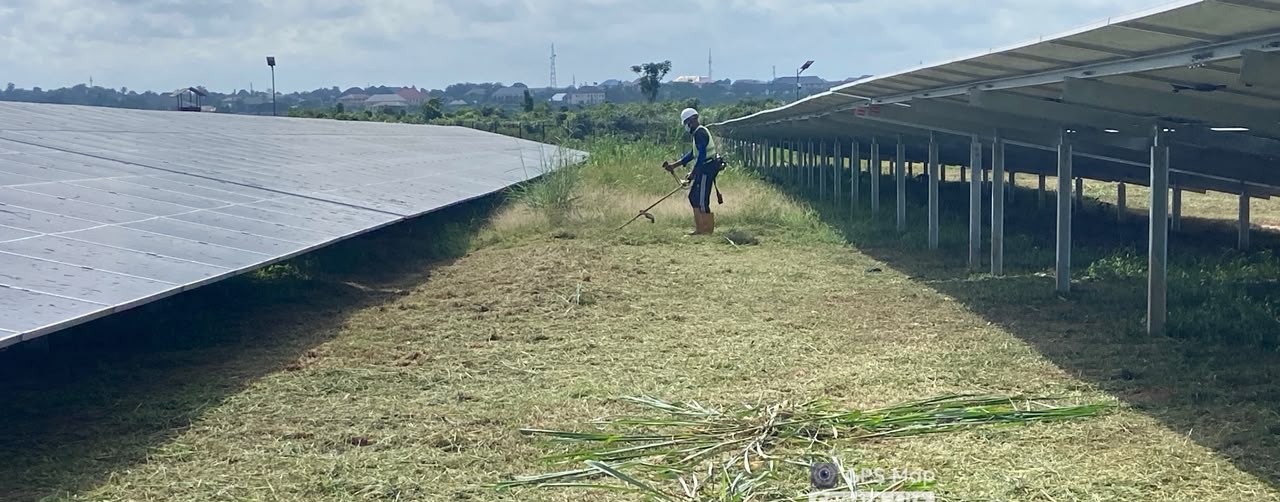
As someone who has worked directly on solar power projects, including the engineering supervision of a large-scale solar hybrid power plant, I have seen how seemingly small decisions about equipment selection, system sizing, installation quality, protection, cable sizing and compatibility can determine whether a solar system performs reliably or becomes a source of recurring problems.
So, if you are considering buying your own solar panels and hiring an electrician to install them, the answer is yes—but you need to know exactly what you are buying and who should install it.
Why Would Someone Buy Solar Equipment Themselves?
There are several reasons a homeowner might prefer to purchase solar equipment independently.
The first is cost control.
When you ask a solar company to supply and install an entire system, the quoted price usually includes equipment, transportation, design, installation, engineering, project management, overhead and profit. Buying some or all of the equipment yourself can potentially reduce the contractor’s markup.
It can also give you greater control over the quality and brand of equipment being installed.
For example, instead of simply accepting whatever inverter or solar panels an installer recommends, you can research different manufacturers, compare specifications, check warranties and make your own purchasing decision.
There is another advantage that is often overlooked: transparency.
A homeowner who understands the equipment being purchased is in a better position to ask questions such as:
- What is the actual capacity of the inverter?
- How many panels can it accommodate?
- What is the maximum PV input voltage?
- What is the maximum PV input current?
- What battery voltage does it require?
- Is the battery compatible with the inverter?
- What protection devices are required?
- What type and size of cables are needed?
- Can the system be expanded later?
These questions can prevent expensive mistakes.
But Buying the Panels Is Not the Same as Designing the System
This is where many people get into trouble.
A solar system is not simply a collection of solar panels connected to an inverter.
A properly designed system involves the interaction of several components, including:
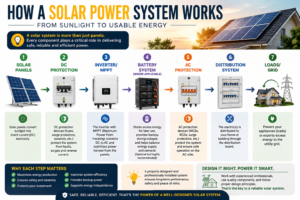
The components must be correctly sized and compatible.
For example, buying a 5 kW inverter does not automatically mean you should purchase five kilowatts of solar panels. The appropriate PV capacity depends on the inverter’s specifications, MPPT voltage range, maximum PV input current, desired energy production, installation conditions and the overall system design.
The same principle applies to batteries.
A battery with a particular voltage, capacity and communication protocol may not be suitable for every inverter.
This is why I strongly recommend that homeowners design the system before buying the equipment, rather than buying equipment first and trying to make everything work afterward.
Can a Homeowner Buy the Solar Panels and Hire an Electrician?
Yes.
But I would recommend taking it a step further.
Instead of simply asking a general electrician to install everything, make sure the person you hire has demonstrable experience with solar PV systems.
Solar installation involves electrical work, but solar PV systems have characteristics that are different from conventional household electrical installations.
For example, a solar installer needs to understand:
- PV string configuration
- DC voltage and current
- MPPT operating ranges
- DC isolators
- Surge protection
- Earthing and bonding
- Inverter configuration
- Battery integration
- Cable sizing
- Voltage drop
- Protection coordination
- Solar mounting systems
- Commissioning and testing
- Electrical safety procedures
A good house electrician may be excellent at wiring a building but may have limited experience designing or commissioning a solar PV system.
General Electrician vs. Solar Electrician
Choosing the right installer is one of the most important decisions when installing a solar power system. While a general electrician may have strong electrical skills, solar installations require additional knowledge of PV systems, inverters, batteries, protection devices, and solar-specific safety requirements.
| Area | General Electrician | Solar Electrician / Qualified Solar Installer |
| Main area of expertise | Conventional electrical installations | Solar PV and renewable energy systems |
| Building wiring | ✅ Experienced | ✅ Experienced |
| Lighting and sockets | ✅ Experienced | ✅ Experienced |
| Distribution boards | ✅ Experienced | ✅ Experienced |
| Generators | Often experienced | Usually experienced |
| Solar panels (PV) | May have limited experience | ✅ Should have practical experience |
| PV string design | May not be familiar | ✅ Should understand |
| Solar inverter installation | May have limited experience | ✅ Should understand inverter selection and installation |
| Battery systems | May have limited experience | ✅ Should understand battery integration and safety |
| DC protection | May have limited experience | ✅ Should understand DC isolators, fuses, SPDs, etc. |
| Solar system sizing | Usually outside their core expertise | ✅ Should understand system sizing |
| PV cable selection and termination | General electrical knowledge | ✅ Solar-specific knowledge required |
| Solar troubleshooting | May be limited | ✅ Should be able to diagnose PV/inverter faults |
| Experience with different inverter brands | Varies | Should have relevant brand experience |
| Previous solar installations | May or may not have | Should be able to provide evidence |
| Best suited for | Conventional electrical work and wiring | Solar PV and battery installations |
Does this mean you cannot use a general electrician?
No. A competent general electrician can install a solar system, particularly if they have received appropriate solar training and have substantial practical experience.
The important thing is not the job title but the person’s actual competence and experience.
Before hiring an installer, ask:
| Question to Ask | What You Should Look For |
| Have you installed solar systems before? | Specific examples of completed projects |
| What size systems have you installed? | Experience with systems similar to yours |
| Which inverter brands have you worked with? | Familiarity with your specific inverter or similar models |
| Have you installed battery systems? | Practical battery installation experience if applicable |
| Can you show me previous installations? | Photos, references or verifiable projects |
| How do you protect the DC side of the system? | Knowledge of DC isolators, fuses and surge protection |
| How do you size the cables? | Understanding of current, voltage drop and installation conditions |
| How would you connect the inverter to my distribution board? | Understanding of AC protection and proper integration |
| How do you handle earthing and bonding? | Knowledge of solar-specific earthing requirements |
| How do you troubleshoot a system that is not producing enough power? | A systematic approach to PV, inverter and battery diagnostics |
The goal is simple: don’t choose an installer merely because they are an electrician. Choose someone who can demonstrate that they understand how solar systems work and how to install them safely and correctly.
What Can You Buy Yourself?
Depending on the project and your level of knowledge, you may be able to purchase most of the major equipment yourself.
This can include:
- Solar panels
- Hybrid or grid-tied inverter
- Batteries
- Mounting structures
- DC cables
- AC cables
- Connectors
- DC isolators
- Surge protection devices
- Distribution boards
- Earthing materials
- Monitoring equipment
- Other balance-of-system components
However, I would not recommend purchasing these components independently without first having the system properly designed.
The cheapest component is not necessarily the best component.
In solar engineering, compatibility and performance are more important than simply looking for the lowest price.
Don’t Buy Solar Panels Based Only on Wattage
One of the most common mistakes is choosing panels based solely on their advertised wattage.
A homeowner might see a 550 W panel and think:
“This panel produces more power, so it must be better.”
Not necessarily.
Panel voltage, current, dimensions, efficiency, temperature characteristics, mechanical specifications and compatibility with the inverter all matter.
Suppose you want to build a 5 kW solar array. You cannot simply buy nine 550 W panels and assume the system will automatically work correctly.
The number of panels in a string and the number of strings must be designed around the inverter’s PV input specifications.
The open-circuit voltage (Voc) of the string must remain within the inverter’s maximum allowable PV voltage, including consideration of temperature effects.
Similarly, the short-circuit current (Isc) and operating current must be compatible with the inverter’s MPPT inputs.
This is one of the reasons professional system design is so important.
What About the Inverter?
The inverter is arguably one of the most important components in the system.
When selecting one, you need to consider much more than its headline power rating.
Important specifications include:
- Rated AC output power
- Maximum PV input power
- Maximum PV voltage
- MPPT voltage range
- Maximum PV input current
- Number of MPPTs
- Battery voltage
- Battery compatibility
- Grid compatibility
- Generator compatibility
- Surge capacity
- Protection features
- Communication capabilities
- Efficiency
- Warranty and after-sales support
For example, if you intend to install a battery system, you need to make sure the inverter and battery are compatible.
Some systems require specific communication protocols between the battery management system and inverter.
Simply matching the battery’s nominal voltage to the inverter does not necessarily guarantee compatibility.
Battery Selection Is Even More Critical
If your solar system includes batteries, don’t treat battery selection as an afterthought.
Battery capacity is normally expressed in kWh, but the usable energy may be lower than the nominal capacity depending on the battery technology and recommended depth of discharge.
You should consider:
Battery capacity + usable capacity + maximum charge/discharge current + inverter compatibility + expected load + required backup duration.
For example, a household with a 5 kW peak load does not necessarily need a 5 kWh battery.
If the homeowner wants the battery to support the load for several hours, the required storage capacity could be substantially higher.
This is why the system should be designed around the actual energy consumption profile, not simply the size of the inverter.
What About Mounting Structures?
Solar panels also need to be properly mounted.
The mounting structure must account for:
- Roof type
- Roof condition
- Wind loading
- Panel dimensions
- Panel orientation
- Tilt angle
- Structural integrity
- Corrosion protection
- Drainage
- Maintenance access
A technically perfect electrical system can still become problematic if the panels are poorly mounted.
I have seen enough solar projects to know that installation quality matters just as much as equipment quality.
Where Can You Actually Save Money?
If your objective is to reduce the cost of your solar installation, there are smarter ways to do it than simply choosing the cheapest installer.
One option is to purchase the major equipment yourself after getting the system properly designed.
You can then obtain separate quotations for installation.
You may also compare prices from several reputable suppliers.
However, remember that the lowest equipment price is not necessarily the lowest total cost of ownership.
A cheap inverter with poor after-sales support can become significantly more expensive if it fails and replacement parts are difficult to obtain.
The same applies to batteries, panels and other components.
The Hidden Cost of Cheap Installation
This is one of the biggest lessons I have learned from working on solar projects.
Installation quality matters.
A system may have excellent solar panels and a high-quality inverter, but poor installation can still result in:
- Excessive voltage drop
- Overheating cables
- Loose connections
- Nuisance tripping
- Poor grounding
- DC faults
- Water ingress
- Damaged equipment
- Reduced system performance
- Safety hazards
- Premature equipment failure
This is why I would rather see a homeowner spend a little more on a competent installer than save money on an installation that creates problems later.
Should You Install the System Yourself?
For a small plug-and-play solar product, some homeowners may be able to handle limited tasks.
But once you are dealing with a substantial rooftop or ground-mounted PV system, high DC voltages, batteries, grid connections or generator integration, professional installation becomes much more important.
Solar panels can generate electricity whenever they receive sufficient light.
That means the DC side of a PV system can remain energized even when the grid is disconnected.
This is one reason solar installation should not be treated like an ordinary DIY home-improvement project.
Work involving high-voltage DC circuits, AC distribution, grid connection, protection systems and battery systems should be handled by appropriately qualified professionals.
What Should You Never Buy Before Getting Professional Advice?
There are several components I would not recommend purchasing blindly.
These include the:
Inverter, battery, protection devices and major DC equipment.
You can certainly research them yourself, but get the system design checked before placing the order.
It is frustrating to discover that you purchased an inverter that cannot accept the PV configuration you planned, or a battery that is incompatible with the inverter.
Returning large solar equipment can also be expensive and complicated.
What About Equipment Warranties?
Warranty is another reason to think carefully before buying equipment yourself.
Some manufacturers provide separate warranties for different components.
You may have:
- Product warranty
- Performance warranty
- Inverter warranty
- Battery warranty
- Installation warranty
You should understand who is responsible if something goes wrong.
If you buy the equipment yourself and hire someone else for installation, you may have to deal directly with the manufacturer for equipment-related problems and the installer for workmanship-related problems.
That can be more complicated than having a single company responsible for the complete system.
A Real-World Lesson From Large Solar Projects
Working on a utility-scale solar hybrid project has reinforced one important principle for me:
Solar is a system, not a collection of individual products.
On a large project, you cannot simply install a high-capacity inverter, connect some panels and expect everything to work.
The PV modules, inverter systems, transformers, switchgear, protection systems, battery energy storage system, distribution network, control systems and loads all have to work together.
The same principle applies to residential systems—just on a smaller scale.
A homeowner may be installing a 3 kW, 5 kW or 10 kW system instead of a megawatt-scale plant, but the fundamental engineering principle remains the same:
Every component must be correctly selected, correctly installed and correctly commissioned.
A Better Approach: Buy the Equipment Yourself, But Get the Design Reviewed
If you are technically minded and want to control your equipment purchases, there is a middle ground that I often consider more sensible.
Step 1: Determine your energy requirements
Start by understanding what you actually want the solar system to power.
List your major appliances and their power ratings.
Then estimate how many hours each one operates.
This gives you a better picture of your daily energy consumption.
Step 2: Determine your required backup
Do you want solar mainly to reduce electricity bills?
Do you want backup during power outages?
Do you want to run heavy appliances?
Do you want to operate independently from the grid?
These objectives will influence the system design.
Step 3: Get the system professionally designed
Before purchasing equipment, have a competent solar professional calculate the required:
- PV capacity
- Inverter capacity
- Battery capacity
- Number of panels
- String configuration
- Cable sizes
- Protection devices
- Mounting requirements
Step 4: Compare equipment
Once you know the required specifications, you can compare different brands and suppliers.
This puts you in a much stronger position because you are no longer shopping blindly.
Step 5: Verify compatibility
Before paying for anything, confirm that all major components will work together.
Step 6: Hire an experienced installer
Get at least two or three quotations if possible.
Don’t compare only the price.
Compare the installer’s experience, workmanship, testing procedures, warranty and after-sales support.
Step 7: Commission and test the system
The installation should be properly tested and commissioned before you start relying on it.
So, Should You Buy Your Own Solar Panels?
Yes, you can.
But my professional recommendation is that you should not approach it as:
“I’ll buy some panels and find an electrician to connect everything.”
A better approach is:
“I’ll have the system properly designed, purchase compatible equipment from reputable suppliers, and hire a competent solar professional to install, test and commission it.”
That approach gives you more control over your budget while reducing the risk of expensive technical mistakes.
When Buying Your Own Equipment Makes Sense
This approach can make sense if:
- You understand basic solar specifications.
- You have access to reputable suppliers.
- You can verify equipment authenticity.
- You have a professionally prepared system design.
- You understand the warranties.
- You have a qualified installer available.
- You want greater control over equipment selection.
- You are comfortable managing separate equipment and installation warranties.
When You Should Hire a Full Solar Company
A complete solar installation company may be the better option if:
- You don’t understand solar system design.
- You don’t know how to size the battery.
- You are unfamiliar with PV string configuration.
- The system is large or technically complex.
- The system will be connected to the utility grid.
- You require generator integration.
- You need permits or utility approvals.
- You want one company to take responsibility for the entire installation.
In these situations, paying for professional design and installation can save you considerable trouble.
Final Verdict
So, can you buy solar panels yourself and hire an electrician to install them?
Yes—but don’t stop at buying the panels.
The most important thing is to have the entire system properly designed before you purchase the equipment.
If you are knowledgeable enough to compare specifications, verify compatibility and work with reputable suppliers, buying the equipment yourself can be a practical way to control costs.
But when it comes to installation, especially systems involving high-voltage DC, batteries, grid connections or large loads, use an appropriately qualified professional with genuine solar experience.
My biggest recommendation is simple:
Save money on procurement if you want, but don’t try to save money by compromising system design, safety or installation quality.
A properly designed and professionally installed solar system should provide reliable energy for many years. A poorly designed system can turn even the best solar panels and inverter into an expensive headache.
The goal shouldn’t simply be to buy the cheapest solar equipment.
The goal should be to build a safe, compatible, reliable and properly performing solar energy system at the best possible total cost.
Frequently Asked Questions
Can I buy solar panels directly from a supplier?
Yes. In many markets, homeowners can purchase solar panels directly from distributors or retailers. However, it is advisable to know the required panel specifications before purchasing.
Can any electrician install solar panels?
Not necessarily. Solar installation involves specialised DC and PV system knowledge. It is better to use an electrician with demonstrable solar installation experience for anything beyond simple systems.
Is it cheaper to buy solar equipment myself?
It can be, because you may reduce supplier or contractor markups. However, your savings can disappear quickly if you purchase incompatible equipment or pay for corrective work later.
Should I buy the inverter or panels first?
Ideally, neither should be purchased blindly. Have the complete system designed first, then select compatible equipment based on the design.
Can I install solar panels myself?
Some small solar products may be suitable for limited DIY installation, but larger PV systems, battery systems and grid-connected installations should be handled by appropriately qualified professionals.
What is more important: solar panel quality or installation quality?
Both matter. High-quality equipment cannot compensate for poor installation, and excellent workmanship cannot make incompatible or poor-quality equipment perform properly.
How do I choose a solar installer?
Look for someone with demonstrable experience installing systems similar to yours. Ask about previous projects, equipment brands, testing procedures, warranties, commissioning and after-sales support.
Can I buy a complete solar kit online?
You can, but don’t assume that a kit is automatically suitable for your home. Check the system capacity, PV input specifications, battery compatibility, protection equipment and installation requirements before purchasing.
What is the safest way to reduce solar installation costs?
A good strategy is to understand your energy requirements, obtain a professional system design, compare equipment prices from reputable suppliers, and then obtain competitive installation quotations from experienced solar professionals