
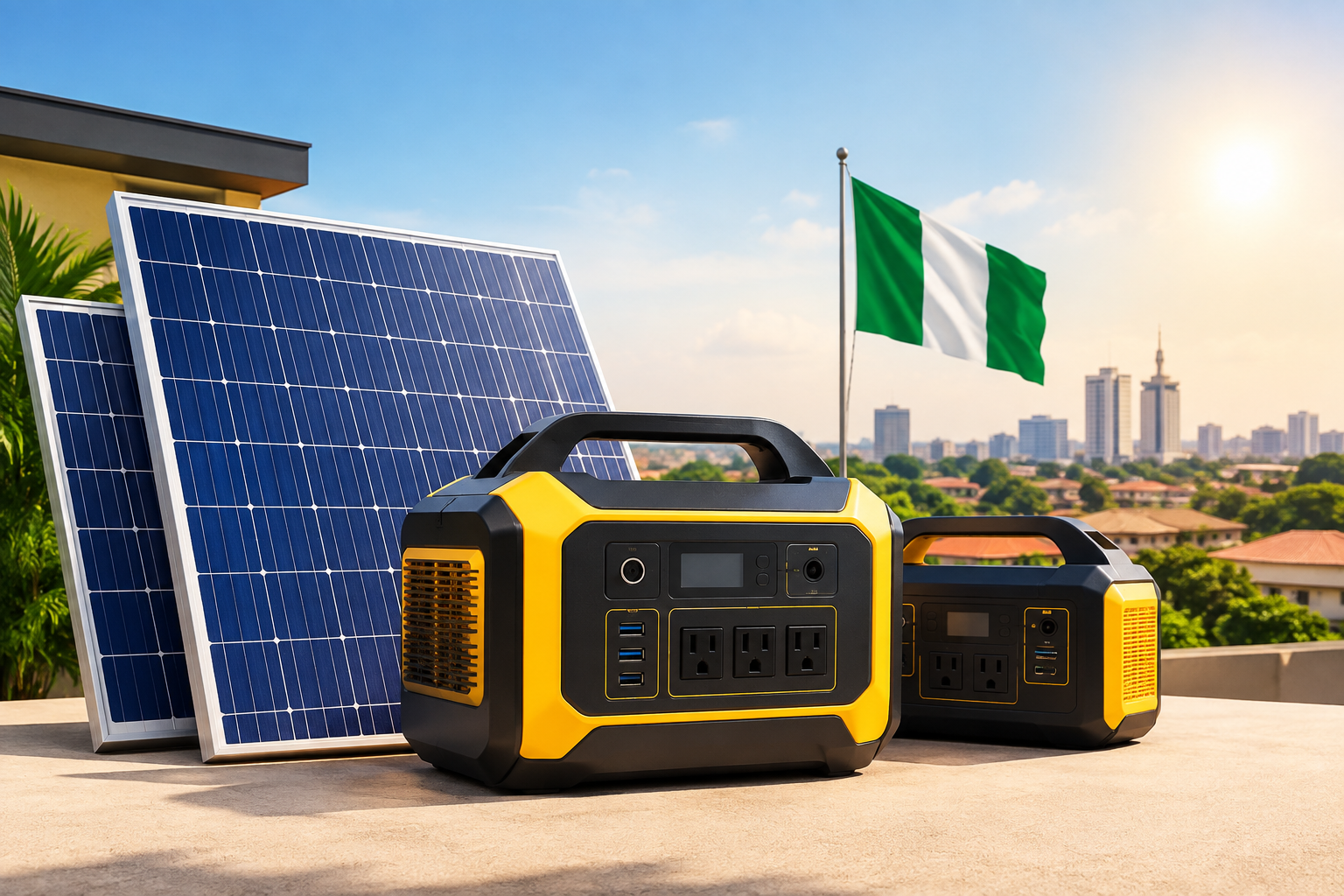
Nigeria still runs on a mix of grid power, fuel generators, and solar. Fuel is expensive. Grid supply is uneven. That is why compact solar generators keep selling.
Qasa sits in the middle of that market. You will see the name on Jumia, in Alaba, on Jiji, and on dozens of Facebook pages. Some of those pages are real dealers. Many are not.
This review is a plain-English look at Qasa solar generators and panels in Nigeria as of late 2026 going into 2027: what the brand actually is, which models exist, what they can power, what they cost, and who should buy them.
What Qasa Is (And What It Is Not)
@teesolarinverter Replying to @legendary4316 difference between qasa solar generator & cola solar solar generator #teesolarinverters #solarinverter #inverter #solarinnigeria #powerstation #darlingteephones #solarpowernigeria #solargenerator #qasa #lithiumbattery #colasolar
Qasa is a consumer electronics and home-appliance brand from Qlink Group. The group started as a Taiwan-linked company that registered in Nigeria and later launched Qasa as a more affordable line for African homes. The name is meant to stand for quality and service assurance.
That background matters because Qasa is not a specialist solar company like a roof-panel installer that designs full 5kW home systems. It is an appliance brand that also sells:
- small solar panels (often 10W to 50W)
- portable solar kits with bulbs, radio, and USB ports
- plug-and-play “solar generators” that combine inverter, battery, charger, and UPS in one box
- AC/DC fans and some solar freezers
So treat Qasa as a starter or backup brand, not as a full-house solar installer.
The Two Product Families People Actually Buy
1. Small solar panels and portable kits
These are the products with the most real-world sales.
Common panels
- 20W and 30W monocrystalline panels (often 12V/15V or 18V)
- 50W panels for slightly bigger fans or small kits
Common portable kits
- SPP-006 5-in-1: LiFePO4 pack, foldable 20W panel, LED bulbs, mini fan
- SPP-007 4-in-1: panel, bulbs, FM/MP3/Bluetooth speaker
- SPP-220 / SPP-330: compact lithium power stations for phones, lights, and small electronics
These kits are popular because they are cheap, easy to move, and useful during blackouts. They are not meant to run a fridge all night.
Typical street and online prices in 2026:
| Product | What it is for | Typical price range |
|---|---|---|
| 20W panel | Rechargeable fan, small light | ₦23,000 – ₦35,000 |
| 30W 18V panel | Fan + small kit charging | ₦23,000 – ₦35,000 |
| 4-in-1 / 5-in-1 portable kit | Lights, phones, radio, mini fan | ₦48,000 – ₦95,000 |
| Compact 200W-class station | Laptop, lights, small TV in short bursts | ₦165,000 – ₦220,000 |
The 30W panel is one of Qasa’s better-reviewed items. Many buyers use it only to charge a solar fan and are satisfied.
2. Solar power generators (SPG / QPG series)
This is the line people mean when they search “Qasa solar generator.”
Important warning first: the model name often sounds bigger than the real output.
A unit labelled SPG-500VA is usually a 300W inverter, not a 500W inverter. VA and watts are not the same. If a seller says “500 watts” because the box says 500VA, ask for the inverter watt rating in writing.
Main models you will see
SPG-500 Eco
- About 300W
- Modified sine wave on many listings
- Small battery (around 12V 30Ah class)
- Best with a 50W–80W panel
- Runtime is short: think lights and a fan, not a fridge
- Cheapest “generator” option, often ₦185,000 – ₦250,000
SPG-500VA / QPG-500
- About 300W pure sine wave
- Built-in battery around 70Ah (gel type on older packs)
- Recommended panel: 150W–200W, 18V
- Can run lights, decoder, fan, laptop, small TV
- Some sellers claim a 100-litre fridge for several hours. That only works if the fridge is efficient and already cold. Do not buy this unit if a fridge is your main need.
- Common price: ₦385,000 – ₦500,000 depending on whether a panel is included
SPG-800+ / SPG-800 Li
- About 600W pure sine wave
- Battery may be included or sold separately
- Lithium (LiFePO4 12V 100Ah) versions last longer than old gel packs
- Recommended panel: roughly 300W–450W
- Better for a shop counter, salon clippers, more lights, and a TV at the same time
- Typical price: ₦500,000 – ₦680,000 with battery; more if a decent panel is added
QPG-1000 / SPG-1200 DIY
- Around 1000W class
- Battery and panel often sold separately on DIY versions
- Useful if you already understand solar wiring
- Prices jump toward ₦750,000 – ₦1.1 million depending on battery size
SPG-3000
- About 2500W
- Needs a proper battery bank and a large panel array
- This is no longer a “carry it to the sitting room” product
- Only consider it if you have an installer
What a Qasa Solar Generator Can Realistically Power
Use this as a sanity check, not as a sales pitch.
Good fit
- LED bulbs
- Decoder and small-to-medium TV
- Ceiling or standing fan
- Phones, routers, laptops
- Clippers and small salon tools
- Blender for short bursts
- Medical devices that need clean power, but only on pure sine wave models
Poor fit
- Air conditioner
- Electric cooker or pressing iron
- Big freezer as the only power source
- Whole-house lighting plus fridge plus pumping machine at once
- Anything that needs high surge current on the cheap Eco models
A 300W unit with a 70Ah battery is a room backup, not a house plant. If a seller promises “24/7 full house power” from an SPG-500, walk away.
Charging: Solar, Grid, or Both
Most Qasa generators are hybrid:
- charge from a solar panel in the day
- charge from NEPA/PHCN when the grid is on
- some accept a car charger
That hybrid design is the main reason they sell well in Nigeria. You are not fully off-grid. You are reducing fuel use and surviving long outages.
Charging speed depends on panel size. A 30W panel on a 70Ah battery will feel painfully slow. Match the panel to the battery:
- Eco / small kits: 50W–80W
- SPG-500VA: 150W–200W
- SPG-800 class: 300W and above
Harmattan dust, shade, and wrong tilt all cut output. Wipe the panel. Face it south if you can. Do not hide it under a zinc sheet and expect miracles.
Price for 2026/27
Prices move with the naira and with whether the seller includes a panel and battery. Use ranges, not one “official” figure.
| Setup | Realistic 2026 range |
|---|---|
| 20W–30W panel only | ₦23,000 – ₦35,000 |
| Portable 4-in-1 / 5-in-1 kit | ₦48,000 – ₦95,000 |
| SPG-500 Eco + small panel | ₦185,000 – ₦270,000 |
| SPG-500VA 300W + 70Ah battery | ₦385,000 – ₦500,000 |
| Same unit with 100W–200W panel | ₦450,000 – ₦550,000 |
| SPG-800 class with battery | ₦500,000 – ₦680,000 |
| 1000W-class pack | ₦750,000 – ₦1,100,000 |
Promo pages advertising ₦249,000 for a “full home solar generator” are often unauthorized. The brand itself has warned the public about fake Easy Buy and installment schemes.
Compare the running cost with petrol. A small fuel generator used a few hours a day can burn hundreds of thousands of naira a year in petrol and repairs. A correctly sized Qasa unit can pay for itself if you only needed lights, fans, and TV. It will not beat a proper 3kW–5kW lithium solar system for a full house.
Who Should Buy Qasa in 2026/27
Buy a Qasa kit or small generator if you:
- need lights, fan, phones, and TV during outages
- live in a one-room or two-room space
- run a small stall, barbing salon, or POS point
- want something you can move between rooms
- cannot afford a full hybrid inverter + lithium battery + roof array yet
Skip Qasa and plan a proper solar system if you:
- want a fridge and freezer on solar every night
- have a 3-bedroom house with many fans and TVs
- need an air conditioner
- want 10-year panel performance and a documented installer warranty
A 30W Qasa panel plus a rechargeable fan is a smart small buy. A 300W box sold as “the end of NEPA” is not.
How to Buy Without Getting Scammed
This section matters as much as the product review.
- Buy from a known store, official marketplace shop, or a dealer you can visit.
- Ignore random Facebook and WhatsApp pages offering “easy buy” or “pay small-small” unless you can confirm the seller in person.
- Ask for the exact model code: Eco, 500VA, 800+, lithium or gel.
- Confirm inverter watts, not just VA.
- Confirm whether battery and panel are included.
- Open the carton and match the serial/warranty sticker before you pay the balance.
- Get the warranty card. One year on the unit is typical. Ask what happens if the battery dies in month four.
- If the price is far below the ranges above, assume something is missing or fake.
The company has publicly said it does not appoint random social-media agents for solar-generator promos. Treat that warning as current.
How to Choose the Right Size
Write down every appliance you want to run at the same time. Add their watt ratings. Then add about 20% extra.
Example for a small sitting room:
- 3 LED bulbs: 30W
- Fan: 60W
- 32-inch TV + decoder: 80W
- Phones and router: 20W
Total running load: about 190W.
A 300W pure sine unit can handle that. A 200W portable station will struggle if the TV and fan stay on together.
Then check battery hours. A 12V 70Ah battery stores about 840Wh on paper. After inverter loss and the rule of not draining a gel battery empty, usable energy is much less. Plan for 3–5 hours of mixed light loads, not all night at full load.
If you need all-night fridge power, this product family is the wrong starting point.
Qasa Solar Panels: Are They Worth It?
For small jobs, yes. For a roof, usually no.
The 20W and 30W panels are simple, cheap, and widely used to charge fans and pocket stations. Ratings on those small panels are generally better than ratings on the bigger “solar generator” boxes.
What they are not:
- high-efficiency roof panels
- a substitute for a 400W–550W branded module
- the best choice if you are building a 3kW home array
If your plan is “buy four Qasa 30W panels and power my house,” stop. Buy the correct panel wattage for the inverter instead.
Maintenance That Actually Helps
- Keep the panel clean. Dust in the North and soot in the cities cut output fast.
- Do not leave a gel battery sitting empty for weeks.
- Use LED bulbs only. Old bulbs waste the whole system.
- Avoid running a pressing iron or kettle “just for a minute.”
- Store portable kits indoors. Rain and cheap connectors do not mix.
- If the unit has a cooling fan, give it air. Do not cover it with cloth.
Verdict for 2026/27
Qasa solar generators and panels are useful starter products in Nigeria, not magic boxes.
They make sense when you want quiet backup for lights, fans, phones, and a TV, and when you will charge from both sun and grid. The small panels and 4-in-1 kits are the most honest value. The 300W and 600W boxed generators are fine if you understand the real watt rating and buy from a shop you can return to.
They are a weak choice if you believe one yellow box will replace a fuel generator for a whole house.
Score in plain terms
- Small panels and fan kits: good budget buy
- 300W pure sine boxed unit: fair, if sized correctly
- Eco / modified sine models: only for very light loads
- Full-home solar replacement: no
Buy the model that matches your load. Confirm watts, battery, and panel. Avoid social-media installment strangers. That is the whole review.