
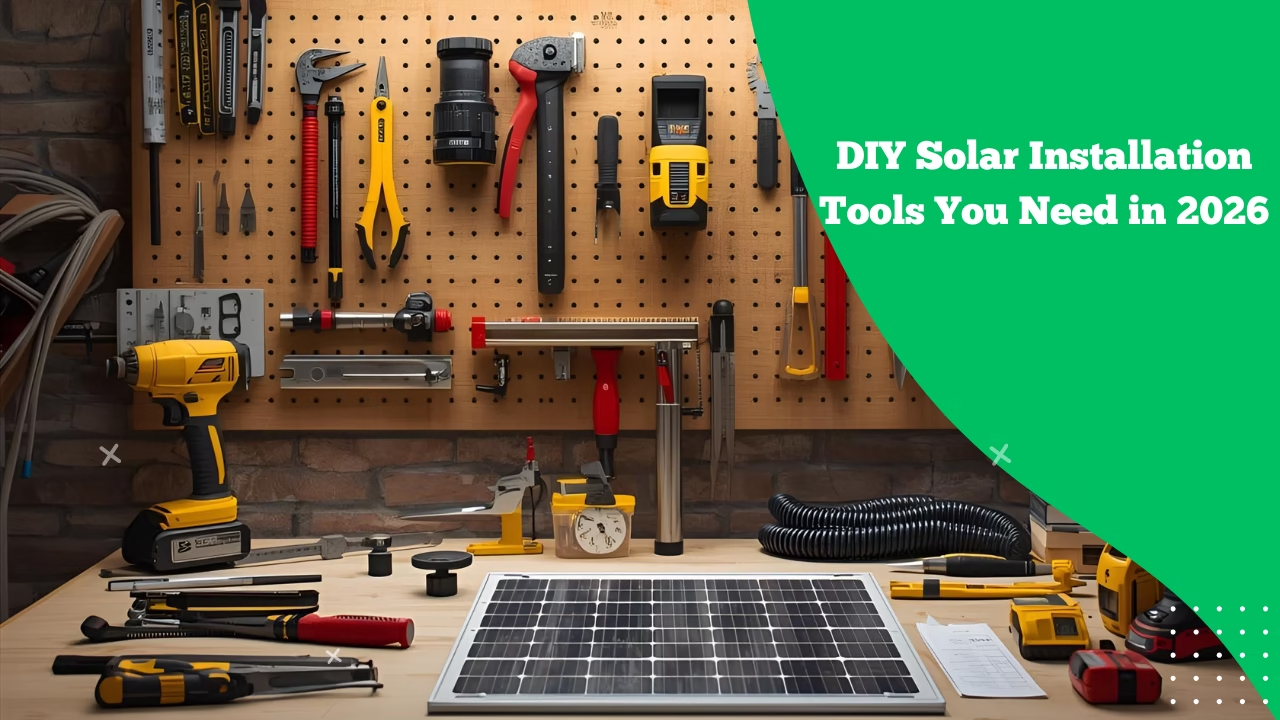
The dream of energy independence is more achievable than ever. With advancements in solar technology and a growing DIY culture, more homeowners are taking solar installation into their own hands. A successful DIY solar project, however, hinges on one critical factor: using the right tools.
A proper toolkit isn’t just about convenience; it’s about safety, precision, and ensuring your system operates at peak efficiency for decades. The tools of the trade are evolving, with smarter, more integrated options becoming the standard.
This comprehensive guide will walk you through every tool you need for a safe and successful DIY solar installation in 2026. We’ll cover everything from essential hand tools to the high-tech gadgets that are changing the game.
Before You Begin, Safety First!
Disclaimer: Working with electricity is inherently dangerous. Installing solar panels involves high DC voltages that can cause severe injury or death. This guide is for informational purposes. It is strongly recommended that you consult with, and have your final electrical connections performed by, a licensed and qualified electrician. Always check local building codes and permit requirements before starting any work.
Your primary safety tools are knowledge and caution. Your secondary tools are the physical gear that protects you:
1000V- Rated Insulated Gloves: Never work with solar panel wiring without these. Check them for punctures before each use.
Safety Glasses: Protect your eyes from metal shavings, falling debris, and bright sunlight.
Hard Hat: Essential when working on a roof or installing mounting hardware overhead.
Harness and Fall Arrest System: Non-negotiable for roof work. Your life is worth far more than the cost of this equipment.
Section 1: The Essential Hand Tools (The Backbone of Your Project)
These are the timeless, physical tools you’ll have in your hands for most of the installation. Don’t cheap out here; quality tools last longer and make the job smoother.
Cordless Impact Driver and Drill Combo
A powerful cordless drill is for making holes, while an impact driver is for driving lag bolts and screws into tough materials like roof rafters and rails. A combo kit is a wise investment.
2026 Recommendation: Look for a brushless motor system (more efficient and durable) and a platform that offers a wide range of other tools (like angle grinders and saws). Brands like Milwaukee, DeWalt, and Makita are industry standards.
High-Quality Socket and Wrench Set
You’ll be tightening large nuts and bolts for racking and grounding hardware. A comprehensive set with both standard and metric sockets, along with ratcheting wrenches, is invaluable.
Key Items: ¼”, ⅜”, and ½” drive ratchets, deep and shallow sockets (7mm to 19mm are common), and a set of combination wrenches.
Cable Cutter and Crimper
Standard wire cutters won’t cleanly slice through thick solar cable. A dedicated, sharp cable cutter provides a clean, square cut essential for proper terminations.
Pro Tip: Invest in a high-quality crimping tool with interchangeable dies for MC4 connectors (the standard solar panel connectors) and lugs for your battery/inverter connections. A bad crimp is a fire hazard.
Multimeter with DC Voltage and Current Clamp
This is your diagnostic lifeline. You must have a way to confirm circuits are de-energized before you touch them.
2026 Standard: A True RMS multimeter with a DC voltage rating of at least 1000V and a DC current clamp. The ability to measure DC amps without breaking the circuit is crucial for testing panel output and system performance.
Wire Strippers
A good pair of automatic wire strippers that can handle the common gauges of solar cable (like 10 AWG and 12 AWG) will save you time and prevent nicking the conductors, which can create weak points.
Fish Tape
Running conduit from your inverter to your main service panel often means navigating through walls. A fish tape is essential for pulling wires through enclosed spaces.
Section 2: The 2026 Tech & Specialized Gear
This is where tool technology has made DIY solar safer and more precise. These items might be a larger upfront investment but are crucial for a professional-grade outcome.
Thermal Imaging Camera
Once a luxury, thermal cameras are becoming more affordable and are a powerful diagnostic tool.
Uses:
Identifying “Hot Spots”: Find loose connections, faulty fuses, or undersized wiring before they cause a failure.
Panel Health: Detect micro-cracks or defective cells in panels that may not be visible to the naked eye but show up as cool or hot spots under load.
2026 Insight: Many modern smartphones can be paired with affordable accessory thermal cameras, making this technology highly accessible.
Solar Irradiance Meter
How do you know if your chosen roof location gets enough sun? Guessing is not an option. A solar irradiance meter measures the exact solar energy (in Watts per square meter) hitting a specific spot at a specific time.
DIY Benefit: Allows you to take real-world measurements on your property at different times of day and year, validating your system’s design assumptions.
Bluetooth-Enabled Multimeter and Clamp Meter
Why risk leaning over a live electrical box to read a display? Modern meters can stream voltage, current, and resistance data directly to your smartphone, allowing you to monitor circuits from a safe distance.
Label Maker
A professional-looking installation is a well-documented one. A label maker is critical for identifying all circuits, disconnects, and breakers according to the National Electrical Code (NEC). This is not just for looks; it’s a vital safety feature for you and any future technician.
Section 3: Tools for Mounting and Racking
This phase is all about structural integrity. The tools here ensure your array stays put through wind, rain, and snow.
Torque Wrench: Critical for properly tightening all racking bolts and especially the lag bolts that secure the mounts to your roof trusses. Overtightening can strip the wood, while under tightening is a structural risk. Follow the racking manufacturer’s torque specifications exactly.
Magnetic Level: Keeping your rails perfectly level and straight is fundamental for a clean installation and proper panel alignment.
Angle Grinder: For cutting rail lengths to size if your layout requires it. Always use a cutting wheel designed for metal and wear full face protection.
Caulking Gun: A high-duty caulking gun for applying roof sealant (like butyl tape or flashing cement) around all roof penetrations to prevent leaks.
Comparison: Core Tool Kits for Different Budgets
| Tool Category | Basic/Starter Kit | Recommended Pro-Sumer Kit | The “Future-Proof” Kit |
| Power Tools | Reliable Corded Drill/Driver | Brushless Cordless Combo Kit | Full Brushless Cordless Ecosystem (Drill, Impact, Grinder, Saw) |
| Measurement | Basic Digital Multimeter (Cat III 1000V) | True RMS Multimeter with DC Clamp | Bluetooth Multimeter + Thermal Camera |
| Cutting/Crimping | Manual Cable Cutter & Basic Crimper | Ratcheting Crimper with Dies + Auto Wire Stripper | Hydraulic Crimping Tool + Professional Cable Cutters |
| Site Analysis | Smartphone App (approximate) | Dedicated Solar Irradiance Meter | Irradiance Meter + Anemometer for wind data |
| Best For | Small, simple ground-mount systems | Most residential rooftop installations | Large, complex systems; user wanting maximum data and diagnostics |
Section 4: The Digital Toolkit (Free but Priceless)
Your physical tools are useless without the digital tools to plan and design your system.
Google Sunroof / Project Sunroof: A fantastic free starting point to get a preliminary estimate of your roof’s solar potential.
Helioscope / PVWatts Calculator: For more advanced users, PVWatts from NREL (National Renewable Energy Lab) lets you model system performance based on location, tilt, and azimuth.
CAD Software: Simple programs like SketchUp Free can be used to create a scaled model of your roof and panel layout.
Local Permitting Portal: Your city or county’s website is a tool. Use it to understand the permit application process, required forms, and inspection checklists.
Section 5: Optional but Highly Recommended Tools
Battery-Operated Vacuum: Keeping your work area clean, especially on a roof, prevents debris and improves safety.
Tool Belt or Vest: Staying organized while on a ladder or roof saves time and reduces the risk of dropping tools.
Laser Distance Measurer: For quickly and accurately measuring roof dimensions and conduit runs.
Conclusion
Building your own solar array is a rewarding project that can save you thousands of dollars. By equipping yourself with the right tools for the job—from the fundamental wrench to the advanced thermal camera—you are not just buying gadgets; you are investing in the safety, efficiency, and longevity of your energy system.
Start with the essentials, prioritize safety gear above all else, and consider renting specialized tools like a torque wrench or thermal camera if your budget is tight. Plan meticulously with your digital tools, and don’t hesitate to call in a professional electrician for the final connection to the grid. With this 2026 toolkit, you’ll be well on your way to harnessing the power of the sun.
FAQ: DIY Solar Installation Tools
Q1: What is the single most important tool for DIY solar safety?
A: Without a doubt, a multimeter rated for at least 1000V DC. Verifying that wires are de-energized before you handle them is the most critical safety step. Pair this with 1000V-rated insulated gloves for complete protection.
Q2: Can I use my standard household drill for the entire installation?
A: While possible for some drilling, it’s not recommended. Driving dozens of long lag bolts into roof rafters will quickly burn out a standard drill. An impact driver is specifically designed for this high-torque application and is a much better, faster, and safer tool for the job.
Q3: I’m on a tight budget. Where can I save on tools?
A: Focus your budget on safety-critical tools (multimeter, gloves, harness) and quality power tools. You can often rent larger, specialized tools like torque wrenches and pipe benders from home improvement stores. For diagnostic tools like a thermal camera, see if you can borrow one from a tech-savvy friend or use a smartphone-compatible model to reduce cost.
Q4: Are there any specific tools needed for a ground-mount system vs. a roof-mount?
A: Yes. A ground-mount system typically requires more excavation and concrete work. You might need:
Post hole digger (manual or powered)
Mixing equipment for concrete (a rented mixer or a sturdy wheelbarrow and hoe)
Laser level for ensuring all posts are set at the correct height over a long distance.
Q5: What tool-related mistakes do most DIYers make?
A: The two most common mistakes are:
Overtightening Connections: Using an impact driver without a torque wrench can strip threads and damage components, especially on rail splices and module clamps.
Poor Crimps: Using the wrong crimping die or a non-ratcheting tool can create a weak connection that overheats and fails, posing a serious fire risk. Always use the correct tool for MC4 connectors and lugs.
Q6: Do I need a special license or permit to buy these tools?
A: No, there is no license required to purchase any of the tools listed. However, you will almost certainly need an electrical permit from your local building department to install a grid-tied solar system, and it will likely require a final inspection by a certified official.