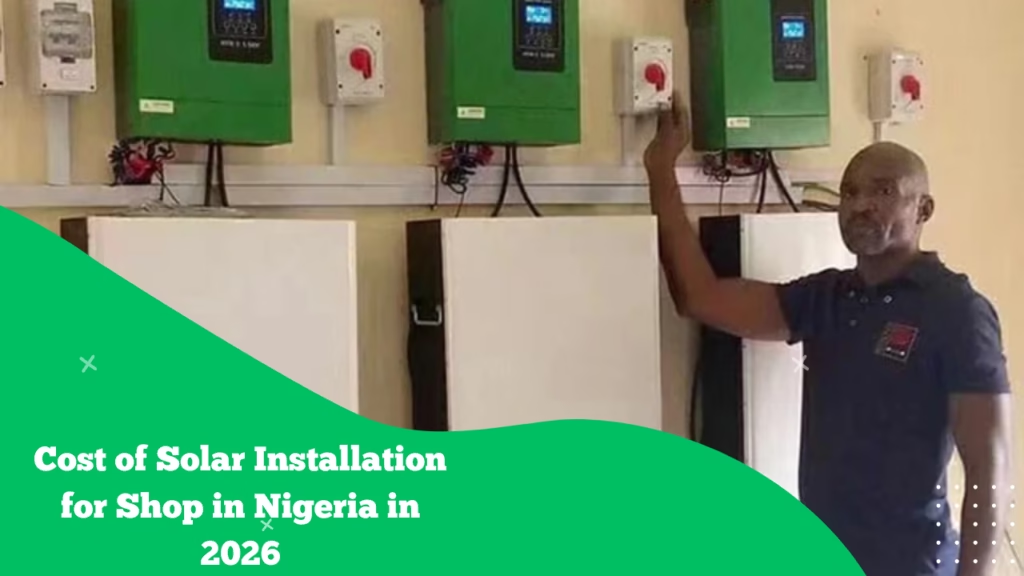

Running a shop in Nigeria without a dependable power supply is becoming increasingly unsustainable. Frequent power outages interrupt business operations, reduce sales, damage valuable equipment, and drive up expenses through constant generator fueling and maintenance. For many shop owners, solar power has evolved from an optional backup solution into an essential investment that keeps their businesses running efficiently and profitably.
This article explains, in practical terms, the cost of solar installation for a shop in Nigeria, what determines pricing, the right system sizes for different shop types, and how to avoid expensive mistakes. It is written for AdSense compliance, high-CPC commercial SEO, and ready-to-publish WordPress formatting.
Table of Contents
- Why Shops in Nigeria Are Switching to Solar Power
- What Determines the Cost of Solar Installation for a Shop
- Typical Appliances Used in Nigerian Shops
- Daily Energy Consumption for Shops (With Table)
- Types of Solar Systems for Shops in Nigeria
- Recommended Solar System Sizes for Shops
- Solar Installation Cost Breakdown for Small Shops
- Solar Installation Cost for Medium & High-Load Shops
- Solar Panel Prices for Commercial Use in Nigeria
- Solar Inverter Prices for Shops
- Battery Options and Cost Implications
- Installation, Wiring, and Protection Costs
- Generator vs Solar for Shops: Cost Comparison
- Payback Period and Return on Investment (ROI)
- Common Mistakes That Increase Solar Costs
- How to Reduce Solar Installation Cost for Your Shop
- Is Solar Power Worth It for Shops in Nigeria?
- FAQs – Solar Installation for Shops in Nigeria
-
Why Shops in Nigeria Are Switching to Solar Power
Electricity is directly tied to revenue for most retail and service shops. When power fails:
- POS terminals stop working
- Refrigeration shuts down
- Lighting and visibility drop
- Customers leave
Generators temporarily solve the problem but introduce new costs:
- Daily fuel expenses
- Frequent servicing
- Noise and fumes
- Equipment wear
Solar power solves these structural issues by providing predictable energy at a fixed upfront cost.
-
What Determines the Cost of Solar Installation for a Shop?
The cost of solar installation is not based on shop size in square meters. It is based on energy demand.
Key cost drivers:
- Type of appliances
- Total wattage load
- Number of operating hours
- Night-time vs daytime usage
- Battery capacity requirement
- System type (hybrid or off-grid)
Two shops next to each other can have completely different solar costs.
-
Typical Appliances Used in Nigerian Shops
Different shop categories have distinct power needs.
Common appliances include:
- LED lighting
- Ceiling or standing fans
- POS systems
- CCTV cameras
- Refrigerators or freezers
- Beverage chillers
- Laptops and printers
- Small pumping systems
Cold storage and refrigeration are the biggest energy drivers.
-
Daily Energy Consumption for Shops
Table 1: Typical Small Retail Shop Energy Profile
| Appliance | Qty | Power (W) | Hours/Day | Daily Energy (Wh) |
| LED lights | 10 | 10 | 10 | 1,000 |
| Fans | 3 | 75 | 10 | 2,250 |
| POS & router | 1 | 60 | 10 | 600 |
| Refrigerator | 1 | 150 | 24 | 3,600 |
| Freezer | 1 | 250 | 24 | 6,000 |
| CCTV | 1 | 40 | 24 | 960 |
| Estimated Total | 14–15 kWh/day |
This load profile guides system sizing and battery design.
-
Types of Solar Systems for Shops in Nigeria
Hybrid Solar System (Most Practical)
- Uses solar + batteries + grid
- Smaller battery size required
- Lower upfront cost
- Ideal for urban shops
Off-Grid Solar System
- No grid connection
- Larger battery bank required
- Higher cost
- Suitable for remote locations
Grid-tied systems are rarely recommended for shops due to frequent outages.
-
Recommended Solar System Sizes for Shops
Table 2: Solar System Size Guide for Shops
| Shop Type | Inverter Size | Battery Capacity |
| Small shop (no freezer) | 3–4 kVA | 5–7 kWh |
| Retail shop + freezer | 5–6 kVA | 10 kWh |
| Supermarket / cold room | 8–10 kVA | 15–20 kWh |
Undersizing causes inverter tripping and short battery life.
-
Solar Installation Cost for Small Shops in Nigeria
3–4 kVA Hybrid Solar System Cost
| Component | Specification | Cost Range (₦) |
| Solar panels | 4–6 × 550W | 850k – 1.2M |
| Hybrid inverter | 3–4 kVA | 700k – 1.1M |
| Lithium battery | 5–7 kWh | 1.4M – 2.1M |
| Mounting & BOS | — | 200k – 350k |
| Installation & labor | — | 200k – 350k |
| Total Cost | ₦3.3M – ₦5.0M |
-
Cost of Solar Installation for Medium & High-Load Shops
5–6 kVA Hybrid System
| Component | Cost Range (₦) |
| Total installation | ₦4.8M – ₦6.8M |
8–10 kVA Hybrid System (Supermarkets, pharmacies)
| Component | Cost Range (₦) |
| Total installation | ₦7.5M – ₦12.5M |
-
Solar Panel Prices for Shops in Nigeria
| Panel Rating | Average Price (₦) |
| 450 W | 180k – 220k |
| 550 W | 210k – 260k |
| 600 W | 250k – 320k |
Commercial installations favor high-wattage panels to reduce roof space usage.
-
Solar Inverter Prices for Shops
| Inverter Type | Price Range (₦) | Use Case |
| Basic inverter | 300k – 500k | Not recommended |
| MPPT hybrid | 700k – 2.8M | Standard |
| Parallel hybrid | 2.5M – 4.5M | Large shops |
MPPT hybrid inverters are essential for commercial reliability.
-
Battery Options and Cost Implications
| Battery Type | Lifespan | Cost Impact |
| Tubular lead-acid | 2–3 years | Cheap upfront |
| Gel battery | 3–4 years | Moderate |
| Lithium (LiFePO₄) | 8–12 years | Best ROI |
Lithium batteries reduce downtime and replacement cycles.
-
Installation, Wiring, and Protection Costs
Proper installation includes:
- DC/AC breakers
- Surge protection devices
- Earthing system
- Fire safety disconnects
These protect expensive equipment and typically consume 10–15% of project cost.
-
Generator vs Solar for Shops: Cost Comparison
| Expense | Generator | Solar |
| Monthly fuel | ₦30k–₦80k | ₦0 |
| Noise & fumes | High | None |
| Maintenance | Frequent | Minimal |
| 5-year cost | ₦2M+ | One-time |
Solar stabilizes operating costs and improves customer experience.
-
Payback Period and Return on Investment (ROI)
Most shop owners recover their investment within:
- 2–4 years for high-energy shops
- 3–5 years for low-to-medium shops
After payback, solar delivers near-zero energy costs.
-
Common Mistakes That Increase Solar Costs
- Buying cheap inverters
- Undersizing batteries
- Ignoring refrigeration startup loads
- Poor cable sizing
- No surge protection
Most failures are design-related, not equipment defects.
-
How to Reduce Solar Installation Cost for Your Shop
- Use inverter refrigerators and freezers
- Reduce overnight loads
- Choose hybrid over off-grid systems
- Install lithium batteries from the start
- Hire experienced installers
-
Is Solar Power Worth It for Shops in Nigeria?
Yes — when it is approached as business infrastructure rather than a short-term expense. For most shops in Nigeria, solar power solves three persistent operational problems at once: unstable grid supply, unpredictable fuel costs, and equipment damage caused by power fluctuations.
From a financial perspective, generators create recurring and uncontrollable expenses. Fuel prices fluctuate, servicing is frequent, and downtime directly reduces daily sales. A properly designed solar system replaces these variable costs with a one-time, predictable investment. In many retail environments, the savings from fuel and generator maintenance alone recover the system cost within a few years.
Operationally, solar offers consistency. Shops stay open during outages, refrigeration remains uninterrupted, POS systems function continuously, and sensitive electronics are protected by stable voltage. This reliability directly improves customer experience and revenue continuity.
The key distinction is system quality. Cheap solar installations often fail early due to undersized batteries, weak inverters, and poor electrical protection. These systems behave no better than generators over time. In contrast, professionally engineered systems—using correctly sized inverters, adequate battery storage, and proper protection—operate quietly and reliably for decades with minimal maintenance.
Bottom line: Solar power is worth it for shops in Nigeria only when it is designed as a long-term energy asset. Done properly, it stabilizes operating costs, protects equipment, and ensures uninterrupted trading hours well into the future.
-
FAQs – Solar Installation for Shops in Nigeria
How much does it cost to install solar power for a shop in Nigeria?
The cost of solar installation for a shop typically falls between ₦3.3 million and ₦12.5 million. Pricing depends on the shop’s energy load, operating hours, type of equipment used (especially refrigeration), and the size of the battery bank required for night-time operation.
Can a solar system reliably power refrigerators and freezers?
Yes. Solar systems can run refrigerators and freezers continuously when the inverter is correctly sized and battery storage is sufficient. Cold storage is one of the highest energy loads in shops and must be properly accounted for during system design.
Is solar power a better option than generators for shops?
Yes. Solar power is quieter, cleaner, and significantly cheaper over the long term. Unlike generators, it eliminates recurring fuel costs, reduces maintenance, and provides stable power that protects shop equipment and supports uninterrupted business operations.
Can a shop’s solar system be expanded in the future?
Yes, expansion is possible—but only if it was planned from the start. The inverter must support parallel or modular expansion, and space must be available for additional panels and batteries. Systems installed without scalability often require partial or full replacement.
How long do solar power systems last in commercial settings?
Quality solar panels typically last 25 years or more. Lithium batteries generally last 8 to 12 years, while well-maintained hybrid inverters can operate reliably for 8–10 years before major replacement is needed.