Nigeria’s solar industry is growing fast—but training is where many people get stuck. Good courses can be expensive, and the internet is full of “free training” ads that end up collecting fees.
This guide focuses on legitimate free (or fully-funded) solar energy training opportunities in Nigeria, especially those supported by government programs and credible NGOs/development partners. You’ll also learn how to apply, what documents you’ll need, what skills you’ll gain, and how to avoid scams.
Important note: “Free” can mean different things. Some programs are 100% tuition-free, while others are grant-funded but may require transport, accommodation, or basic tools. Always confirm details from the official source before committing.
What “Free Solar Training” Usually Includes in Nigeria
A credible free solar training program often provides most (or all) of these:
Training tuition covered (no classroom fees)
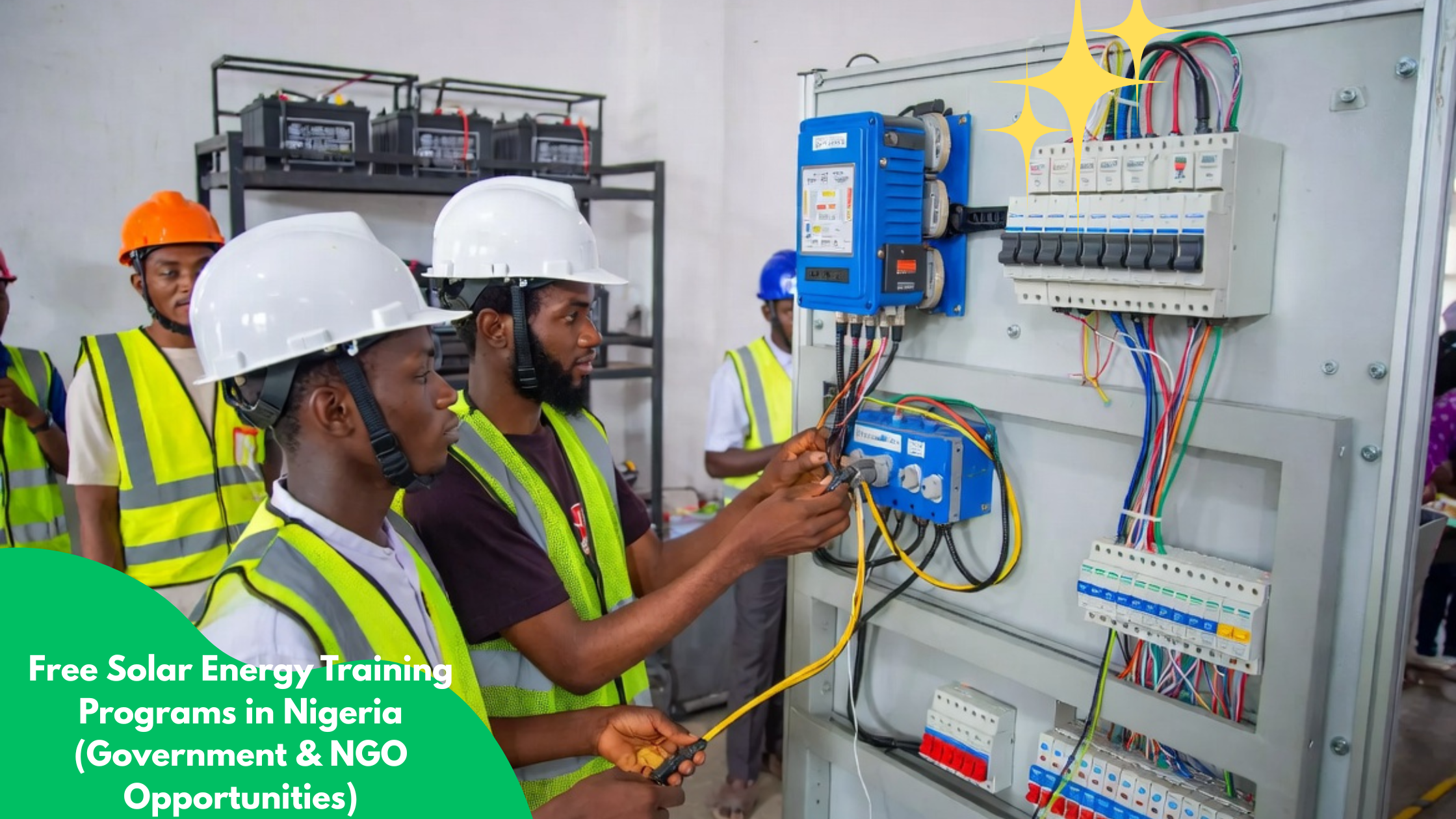
Practical sessions (tools + training rigs)
Certification or assessment (sometimes separate)
Starter kits or internship placement (not always guaranteed)
Stipend support in some government programs
For example, the Federal Ministry of Education’s TVET initiative portal explicitly promotes fully funded training, and lists Solar PV Installation & Maintenance among eligible trades.
Quick Comparison: Government vs NGO Solar Training
| Category | Government-backed programs | NGO/Development partner programs |
| Typical target | Youth, TVET learners, public-sector capacity building | Youth/women inclusion, vulnerable communities, green jobs |
| Cost | Often tuition-free; may include stipends | Usually tuition-free; may be location-specific |
| Certification | TVET/skills certification routes are common | Certificates vary; some align to industry standards |
| Where to find updates | Official portals + agency news pages | NGO websites + press releases + partner announcements |
Government & Public-Sector Opportunities You Can Watch
1) FG TVET Initiative (Solar PV Installation & Maintenance pathway)
The Federal Government’s TVET initiative portal promotes tuition-free training, and publicly lists Solar PV Installation & Maintenance as one of the skill areas.
What this can mean for you:
If you meet the selection criteria and your training center is approved, your tuition may be covered.
Some cohorts have been associated with stipend support, reported in Nigerian media (amounts can change by cohort and policy).
How to use this opportunity:
Monitor the TVET portal for current calls, eligible centers, and application instructions.
Prepare basic documents early (ID, photos, education/trade background).
Be ready for screening and placement into a center.
Pro tip: Government programs often roll out in waves. If applications are closed today, save the portal and check weekly.
2) Rural Electrification Agency (REA) renewable energy training
REA has publicly announced renewable energy training programs tied to its broader electrification work—an example is an 8-week training program described on REA’s site/news page.
Why this matters:
REA is central to Nigeria’s electrification ecosystem, so REA-linked training can create strong pathways into mini-grid, solar hybrid, or SHS value chains depending on the cohort and location.
How to position yourself:
Follow REA news updates and partner announcements.
If you’ve worked around energy projects (even as a site assistant/technician), highlight safety, cabling discipline, and field readiness—those matter in REA-type programs.
3) NBTE Curriculum Pathway (for formal technical qualification alignment)
If you want a credible long-term route, Nigeria’s National Board for Technical Education (NBTE) has a published National Technical Certificate curriculum that explicitly covers Electrical and Solar PV Installation and Maintenance (2025).
This is not necessarily “free training” by itself, but it’s extremely useful because:
It helps you evaluate if a training program is serious (you can compare modules).
It supports your CV with structured competencies (installation, maintenance, safety, testing).
Use it to ask smart questions before joining any “free training” cohort:
Do you cover PV site assessment, cable sizing, protection devices, commissioning, troubleshooting, and maintenance logs?
4) State Government Youth Skills Programs (example: Jigawa)
Some state agencies run targeted solar training as part of youth empowerment.
For instance, Jigawa State’s Economic Empowerment and Youth Employment Agency (YEEA) publishes a Solar Installation, Repair and Maintenance Training Program on its official website.
What to do if you’re not in that state:
Use this as a model. Many states run similar initiatives under different agency names (youth empowerment, skills acquisition, employment bureaus).
Search your state’s official websites and verified social handles—not random blogs.
NGO & Development-Partner Opportunities (Often Fully Sponsored)
5) UNDP solar technician and youth green-skills programs
UNDP Nigeria has published multiple items on solar training outcomes, including:
A press release about graduating 200 youths trained in Renewable Solar Energy Systems (with participation including women and persons living with disabilities).
A story about training 150 young people in solar installation under a project context in Northwest Nigeria.
Why UNDP-linked programs are worth tracking:
They often target inclusion (women, PWDs, underserved regions).
They may include entrepreneurship support or link trainees to partner ecosystems.
How to increase your chances:
Emphasize community impact (jobs, reliability, safety).
Show commitment to hands-on work: wiring discipline, PPE, tool handling, documentation.
6) Women Environmental Programme (WEP) – free hands-on solar training call
WEP Nigeria published a call for applications for a free hands-on training focused on installation and maintenance of solar panels.
Why this matters:
It’s a clear example of a credible NGO providing a structured, skills-focused opportunity.
If you’re building a women-focused or inclusion-focused angle for solar workforce development, this is a strong model to cite and follow.
7) UN/partner procurement notices that fund training (what to look for)
Sometimes, donors publish procurement notices to hire training providers, which signals upcoming cohorts.
For example, UNGM has published an RFP related to vocational training on renewable energy for participants.
How you can use this:
You may not apply directly as a trainee, but it tells you that funded training is being planned.
Track the implementing partners that win such projects—those partners often announce trainee applications later.
Table: Legit Places to Find Free Solar Training Announcements
| Source | What you’ll find | Trust signal |
| Federal TVET portal | funded trade training (incl. Solar PV) | Official government portal listing Solar PV |
| REA news pages | renewable energy training cohorts | Official REA announcements |
| UNDP Nigeria site | youth solar training cohorts & results | Official UNDP publications |
| WEP Nigeria website | calls for applications (free solar training) | NGO call page |
| State agency sites | state-level solar skills programs | Official state portals |
What You’ll Learn in a Solid Solar PV Training (Curriculum Checklist)
Use this checklist to judge quality before you enroll:
Solar fundamentals: modules, strings, MPPT concepts, irradiation basics
Load assessment: energy audit, peak vs surge, daily kWh estimation
System sizing: array sizing, inverter sizing, battery sizing (DoD, autonomy)
Electrical safety: earthing, breakers, DC isolators, fusing, PPE, LOTO
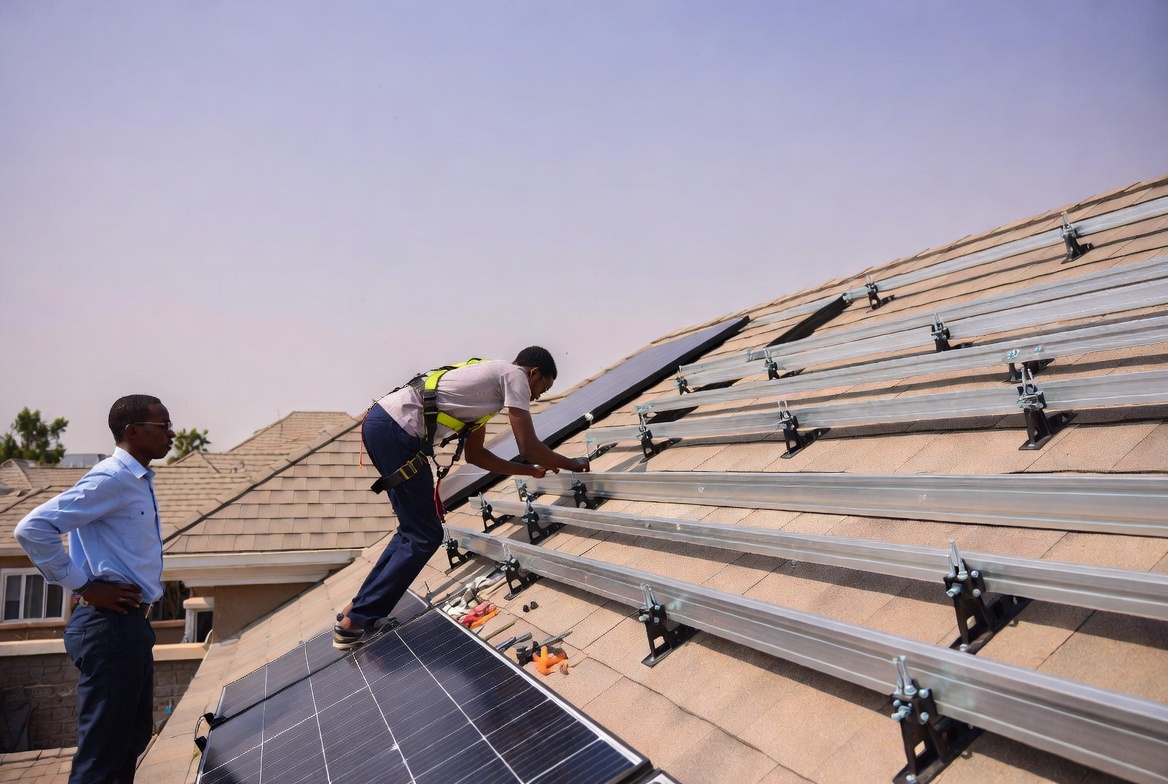
Installation practice: mounting, cable routing, crimping, labeling, trunking
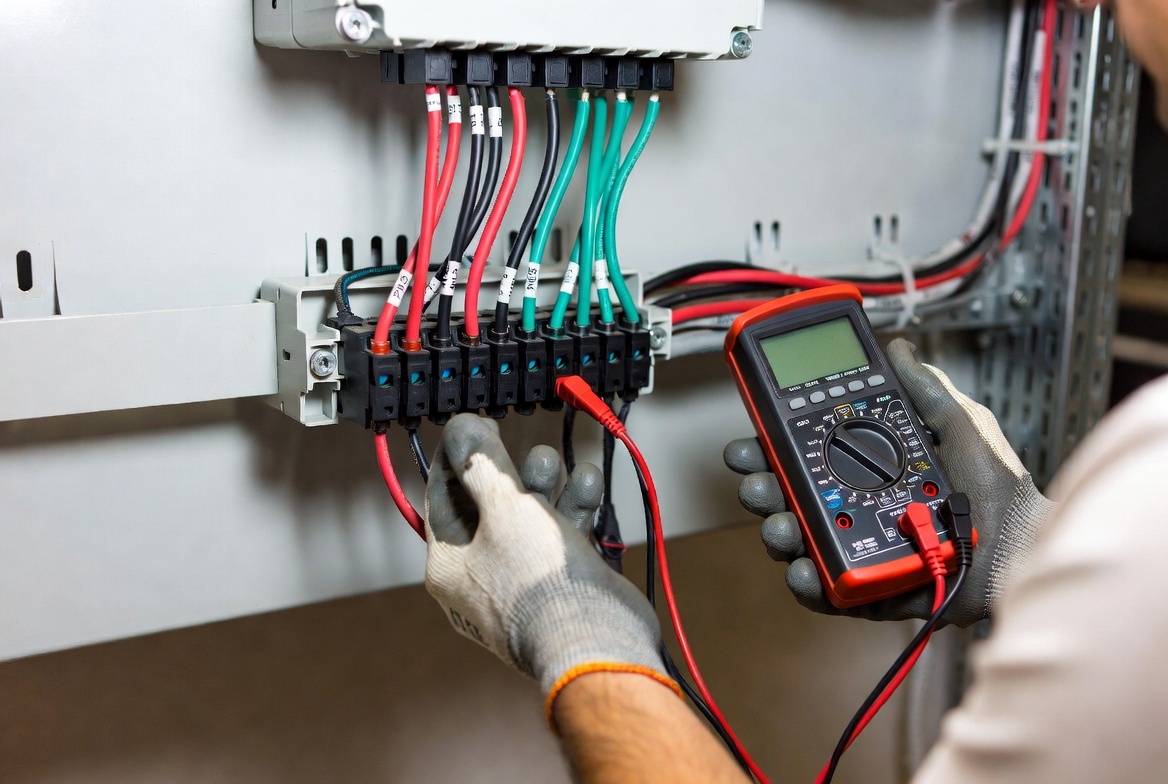
Commissioning: polarity checks, insulation resistance (where applicable), functional tests
Maintenance: cleaning, torque checks, battery health checks, logbooks
Troubleshooting: low yield diagnosis, BMS issues, inverter alarms, shading faults
Documentation: as-built drawings, handover checklist, user orientation
If a “free training” doesn’t teach protection devices, commissioning, and troubleshooting, it’s usually not industry-ready.
Simple Chart: Your Path from Beginner to Paid Solar Work
Beginner
|
v
Free/Supported Training (Gov/NGO)
|
v
Hands-on Practice + Portfolio (photos, checklists, mini-projects)
|
v
Internship / Field Assistant Role
|
v
Solar Installer / O&M Technician
|
v
Specialize: Design | O&M | Mini-grid | Sales-Engineering | QA/QC
How to Apply (Step-by-Step)
Step 1: Choose the right “track”
If your goal is employment fast, pick installer/O&M-focused cohorts.
If your goal is long-term credentials, combine training with a recognized technical pathway and keep learning (NBTE-aligned competencies help you here).
Step 2: Prepare your documents
Common requirements:
Valid ID (NIN slip, voter’s card, or national ID)
Passport photograph
Proof of residency/state (for state programs)
Education/trade background (optional but helpful)
A short statement of purpose (why you want solar)
Step 3: Build a strong application profile (even if you’re a beginner)
Selection teams often favor people who look “field-ready”:
Safety mindset (PPE awareness)
Basic electrical knowledge (even household wiring experience)
Reliability (availability for full training duration)
Community impact interest (especially for NGO cohorts)
Step 4: Verify the program is legit (anti-scam checklist)
Before you submit personal details:
Confirm the announcement exists on an official site (government/NGO page), not just WhatsApp.
Watch out for “processing fees” sent to personal accounts.
Ask: who issues the certificate, where is the training venue, and what exactly is covered?
If travel is required, request a written training schedule and contact details.
Table: Starter Toolkit You Should Aim to Own (Even if Training is Free)
| Tool | Why it matters | Budget approach |
| Multimeter | testing, troubleshooting, commissioning | start with a basic reliable unit |
| DC-rated crimper + lugs | safe terminations reduce fire risk | borrow first, buy later |
| Cable cutter/stripper | clean ends, correct stripping | avoid using knives for stripping |
| Insulation tape + heatshrink | cable finishing and protection | keep sizes for small/medium cables |
| PPE (gloves, goggles) | reduces injury risk | don’t compromise here |
Table: Portfolio Evidence That Helps You Get Jobs After Training
| Evidence | What to capture | Why it convinces employers |
| Site photos | mounting, trunking, labeling | shows workmanship |
| Commissioning checklist | polarity checks, breaker ratings | shows safety discipline |
| Load assessment sheet | kWh/day, surge notes | shows design thinking |
| Maintenance log | cleaning schedule, alarms resolved | shows O&M readiness |
FAQs
What are the best free solar training programs in Nigeria right now?
The most reliable opportunities usually come from government TVET pathways that include Solar PV Installation & Maintenance , REA-backed training cohorts , and UNDP/NGO programs that publish official calls or graduation outcomes .
Is FG TVET solar PV training actually free?
The TVET portal promotes fully funded training and lists Solar PV Installation & Maintenance among supported trades.
However, “free” can still mean you may cover transport or personal tools depending on the center.
Do free solar trainings give certificates?
Many do, but certificate type varies. Use the NBTE solar PV curriculum as a reference for what serious training should cover.
If a program can’t clearly explain its assessment and certification, treat it cautiously.
Can I apply with no electrical background?
Yes. Many youth-focused programs accept beginners, but you’ll need to show commitment and readiness for hands-on work. UNDP cohorts, for example, have trained youths from diverse backgrounds.
How do I avoid fake “free training” scams?
Only trust programs that have verifiable announcements on official portals (government agencies, NGOs, UN pages). For instance, WEP published a direct call for applications for a free hands-on solar training.
Are there state government free solar training programs?
Yes—some states run youth solar training initiatives through official agencies. One example is Jigawa’s YEEA program listed on its official site.
Final Tips to Get Selected and Succeed
Treat your application like a job application. Keep it simple, clear, and honest.
Show you understand safety basics—solar work is electrical work.
After training, don’t just say “I completed a course.” Build a portfolio: photos, checklists, load sheets, and a short write-up of what you installed or maintained.