
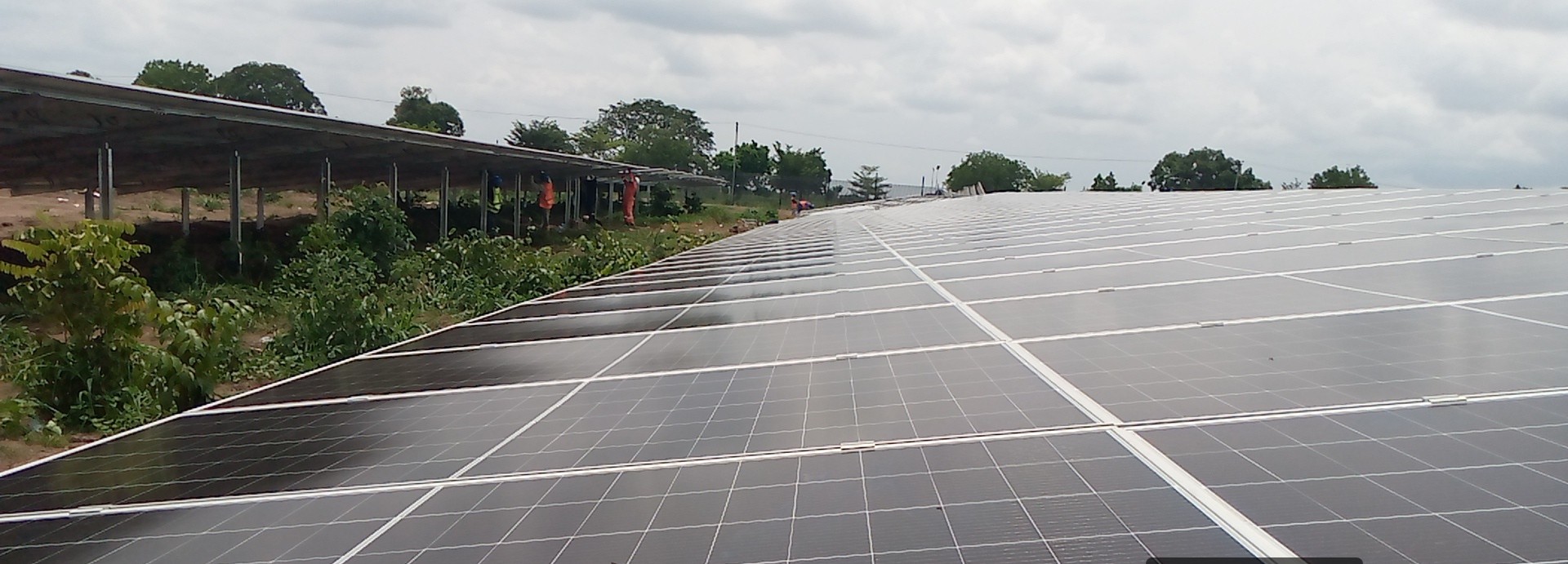
Across Nigeria, a quiet revolution is transforming how electricity is generated, distributed, and consumed. From university campuses powered by utility-scale solar power plants to rural communities gaining electricity through solar mini-grids, renewable energy is no longer a concept of the future—it is rapidly becoming part of everyday life.
This transformation is taking place alongside a much larger global movement. Governments, industries, and investors around the world are committing billions of dollars toward clean energy projects as they work to reduce carbon emissions, improve energy security, and build more sustainable economies. Solar farms, wind power projects, battery energy storage systems (BESS), electric vehicles, smart grids, and energy-efficient technologies are being deployed at an unprecedented pace.
As a result, the renewable energy industry has become one of the fastest-growing employment sectors in the world. The demand for engineers, technicians, project managers, data analysts, researchers, electricians, policy experts, and renewable energy specialists continues to increase every year.
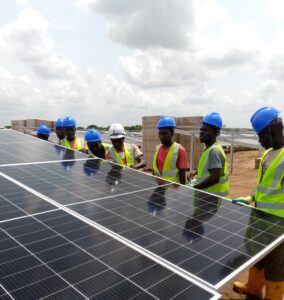
For Nigerian students, this presents an extraordinary opportunity.
Unlike many traditional industries where employment opportunities are becoming increasingly competitive, renewable energy is creating entirely new career pathways. Students who begin acquiring practical renewable energy skills while still in school are positioning themselves ahead of the job market, gaining expertise that employers actively seek.
The future belongs to graduates who combine strong academic knowledge with practical field experience, and nowhere is this combination more valuable than in renewable energy.
Why Renewable Energy Skills Are Becoming Essential
Nigeria faces one of the world’s largest electricity access challenges. Millions of homes, businesses, schools, and healthcare facilities continue to experience unreliable power supply.
Rather than relying solely on conventional electricity generation, Nigeria is increasingly investing in renewable energy solutions capable of delivering cleaner, more reliable, and more sustainable electricity.
Large-scale solar farms are being developed across the country.
Hybrid power plants are combining solar photovoltaic systems with battery energy storage systems and diesel generators to improve reliability.
Universities are becoming cleaner, greener, and more energy independent through solar hybrid projects.
Rural communities are being electrified through mini-grids.
Commercial buildings are adopting rooftop solar systems.
Manufacturing industries are integrating renewable energy into their operations.
This nationwide transition is creating demand for professionals who understand not only how renewable energy works but also how these systems are designed, installed, monitored, operated, and maintained.
Students entering universities today are likely to graduate into an industry that looks very different from the one that existed only a decade ago.
Universities Are Becoming Living Laboratories for Renewable Energy Education
One of the most exciting developments in Nigerian higher education is the growing integration of renewable energy infrastructure into university campuses.
Several institutions now host large solar hybrid power plants that serve thousands of students while simultaneously providing exceptional learning opportunities.
Instead of studying renewable energy only from textbooks, students can observe real engineering systems operating every day.
They can see how thousands of solar panels work together to generate electricity.
They can learn how battery energy storage systems stabilize power supply.
They can understand how advanced inverters convert DC electricity into usable AC power.
They can observe transformers, protection systems, substations, and distribution networks functioning as part of an integrated power system.
Perhaps most importantly, students gain exposure to the practical realities of operating complex renewable energy infrastructure.
This type of experience bridges the gap between theoretical engineering education and industry practice.
For engineering students, science students, technology students, and even students studying environmental management, economics, data science, and public policy, these facilities become living laboratories where classroom concepts become tangible engineering solutions.
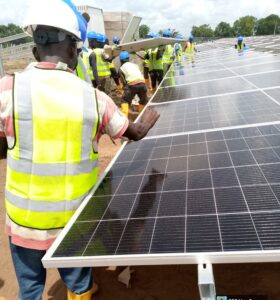
Practical Training Is Becoming the Greatest Competitive Advantage
Employers increasingly look beyond academic transcripts.
Graduates who have participated in renewable energy internships, industrial training programmes, engineering workshops, or field projects often demonstrate stronger technical competence and workplace readiness.
Practical experience develops confidence that cannot be acquired through classroom lectures alone.
Imagine a student who has spent several months working alongside experienced engineers during the construction of a utility-scale solar power plant.
That student witnesses every stage of project development—from surveying and civil works to module installation, cable routing, inverter commissioning, SCADA integration, battery testing, transformer energization, and final system commissioning.
Instead of simply reading about renewable energy technologies, the student learns how engineering decisions are made under real project conditions.
Such exposure creates graduates who understand both engineering theory and practical implementation.
This combination significantly improves employability.
SIWES and Industrial Training Are Powerful Career Accelerators
For many Nigerian students, the Students Industrial Work Experience Scheme (SIWES) represents the first opportunity to work within a professional engineering environment.
Choosing a renewable energy organization for industrial attachment can significantly influence future career prospects.
Students attached to renewable energy companies gain firsthand experience with technologies shaping the future of electricity generation.
Depending on their placement, they may participate in solar PV installation, electrical testing, cable termination, battery installation, inverter configuration, preventive maintenance, equipment inspections, quality assurance, safety procedures, and commissioning activities.
Exposure to multidisciplinary engineering teams also teaches valuable workplace skills such as communication, documentation, teamwork, project planning, and technical reporting.
Many graduates eventually secure permanent employment with organizations where they previously completed internships.
Industrial training therefore becomes more than an academic requirement—it becomes an extended job interview.
Utility-Scale Solar Power Plants Are Exceptional Learning Environments
Few educational experiences compare to working on a utility-scale solar power plant.
These projects bring together professionals from multiple engineering disciplines including electrical engineering, civil engineering, mechanical engineering, instrumentation, environmental management, health and safety, procurement, logistics, quality assurance, and project management.
Students working on such projects observe how thousands of interconnected components operate as one integrated energy system.
They learn how solar arrays are installed and tested.
They understand the role of battery energy storage systems in maintaining grid stability.
They observe transformer installation and commissioning.
They gain exposure to electrical protection systems, relay coordination, SCADA monitoring platforms, distribution networks, switchgear operation, and performance monitoring.
These experiences provide a depth of practical understanding that significantly strengthens academic learning.
Government Programmes Are Expanding Renewable Energy Education
Nigeria’s transition toward clean energy has been strengthened by government initiatives that combine infrastructure development with human capacity building.
Projects implemented under national electrification programmes increasingly include knowledge transfer, technical training, community engagement, and institutional capacity development.
One notable example is the Energizing Education Programme (EEP), which is transforming electricity supply across federal universities by deploying solar hybrid power plants. Beyond improving power reliability for teaching, research, laboratories, hospitals, and hostels, these projects create practical learning environments where students gain exposure to modern renewable energy technologies.
The Rural Electrification Agency (REA) has also played a significant role in expanding renewable energy deployment through solar mini-grids, standalone solar systems, productive-use energy projects, and university electrification initiatives. These programmes provide valuable opportunities for students to observe project implementation, participate in technical training sessions, and understand how renewable energy supports economic and social development.
As more renewable energy projects are commissioned nationwide, they continue to create pathways for students to engage with industry professionals, learn modern engineering practices, and develop skills that align with the country’s growing clean energy sector.
International Development Partners Are Investing in Human Capacity
Nigeria’s renewable energy growth has attracted strong support from international development organizations, multilateral institutions, donor agencies, and development finance partners.
Many renewable energy projects include structured training programmes designed specifically to strengthen local technical capacity.
Students often benefit through internships, scholarships, technical workshops, research collaborations, innovation competitions, mentorship programmes, and specialized certification courses.
These initiatives expose young professionals to international engineering standards while encouraging innovation and local problem-solving.
Many graduates who begin their careers through donor-supported renewable energy programmes later become project engineers, consultants, researchers, entrepreneurs, and industry leaders.
Private Renewable Energy Companies Are Creating Industry-Ready Professionals
Private companies remain among the largest providers of practical renewable energy training in Nigeria.
Engineering firms involved in solar development, battery energy storage systems, smart metering, electrical installation, power consulting, and operations and maintenance regularly provide opportunities for students to learn directly from experienced professionals.
Working alongside industry experts enables students to understand project planning, engineering design, procurement, construction management, quality control, commissioning procedures, performance monitoring, and customer engagement.
These experiences often expose students to technologies that are not yet fully covered in traditional university curricula.
As renewable energy technologies continue evolving, industry-based learning becomes increasingly important.
The Technical Skills That Shape Renewable Energy Careers
Renewable energy education extends far beyond installing solar panels.
Students entering the industry develop expertise across a wide range of interconnected technologies that support modern power systems.
Solar photovoltaic system design enables engineers to determine optimal system sizing, equipment selection, and performance optimization.
Battery energy storage systems introduce students to energy storage technologies, battery management systems, charge-discharge strategies, thermal management, and system integration.
Inverter technologies provide insight into power conversion, synchronization, grid interaction, and system efficiency.
SCADA monitoring systems teach students how modern power plants collect operational data, monitor equipment performance, detect faults, and support remote operations.
Electrical protection systems help future engineers understand fault detection, relay coordination, circuit breakers, grounding systems, and network reliability.
Students also learn preventive maintenance, predictive maintenance, troubleshooting, equipment inspections, energy auditing, commissioning procedures, health and safety management, environmental compliance, documentation, quality assurance, and project management.
These competencies prepare graduates to contribute effectively across the renewable energy value chain.
Why Practical Experience Makes Graduates More Employable
Employers consistently value graduates who can apply knowledge rather than simply recall theoretical concepts.
Practical experience demonstrates initiative, adaptability, problem-solving ability, and professional readiness.
Graduates who have participated in renewable energy internships or engineering training programmes generally require less onboarding because they already understand workplace expectations, safety procedures, technical documentation, and project coordination.
They communicate more effectively with multidisciplinary teams.
They understand engineering drawings.
They appreciate construction schedules.
They recognize equipment used in modern renewable energy facilities.
This practical competence often distinguishes candidates during recruitment.
Renewable Energy Offers Diverse Career Opportunities
One of the greatest strengths of the renewable energy sector is its diversity.
The industry creates opportunities for professionals from engineering, science, business, finance, environmental management, economics, information technology, communications, law, and public policy.
Electrical engineers design power systems.
Mechanical engineers support equipment installation.
Civil engineers oversee infrastructure development.
Technicians install and maintain renewable energy equipment.
Project managers coordinate implementation.
Researchers develop innovative technologies.
Energy analysts evaluate performance.
Entrepreneurs establish installation companies.
Consultants advise governments and industries.
Policy professionals shape national energy strategies.
Health, safety, and environmental specialists ensure projects operate responsibly.
Data analysts optimize plant performance through operational intelligence.
As Nigeria’s clean energy sector expands, demand for these professionals is expected to continue growing.
Renewable Energy Skills Can Lead to Global Careers
Renewable energy knowledge is highly transferable.
Engineers trained in Nigeria frequently work on projects across Africa, Europe, the Middle East, Asia, and North America because renewable energy technologies follow internationally recognized engineering standards.
Experience with solar PV systems, battery energy storage systems, SCADA platforms, electrical protection, commissioning, and operations and maintenance is increasingly valued worldwide.
Students who continuously build technical expertise, pursue professional certifications, and gain practical experience position themselves for international consulting opportunities, multinational engineering firms, research institutions, and global clean energy organizations.
The renewable energy industry has become truly global.
The Future Belongs to Students Who Start Preparing Today
The renewable energy revolution is not a distant vision—it is unfolding across Nigeria right now.
Every new solar power plant, every hybrid energy project, every battery storage installation, every smart grid deployment, and every rural electrification initiative creates new opportunities for learning and professional growth.
Students who embrace renewable energy education today will be better prepared for tomorrow’s workforce.
By combining university education with renewable energy internships, engineering training, industrial attachments, research opportunities, utility-scale solar power plant experience, and professional certification, Nigerian graduates can build careers that are technically rewarding, financially attractive, and socially impactful.
The clean energy transition is reshaping the future of work, and Nigeria’s young people have an unprecedented opportunity to be at the center of that transformation. Those who invest in practical skills, continuous learning, and real-world experience will not only secure meaningful employment but will also help power communities, strengthen the nation’s energy security, drive innovation, and contribute to a more sustainable future.
Renewable energy is more than an industry—it is a movement that is creating green jobs, inspiring innovation, and empowering the next generation of Nigerian professionals. For students willing to seize the opportunity, the journey can begin today, and the possibilities are limitless.