
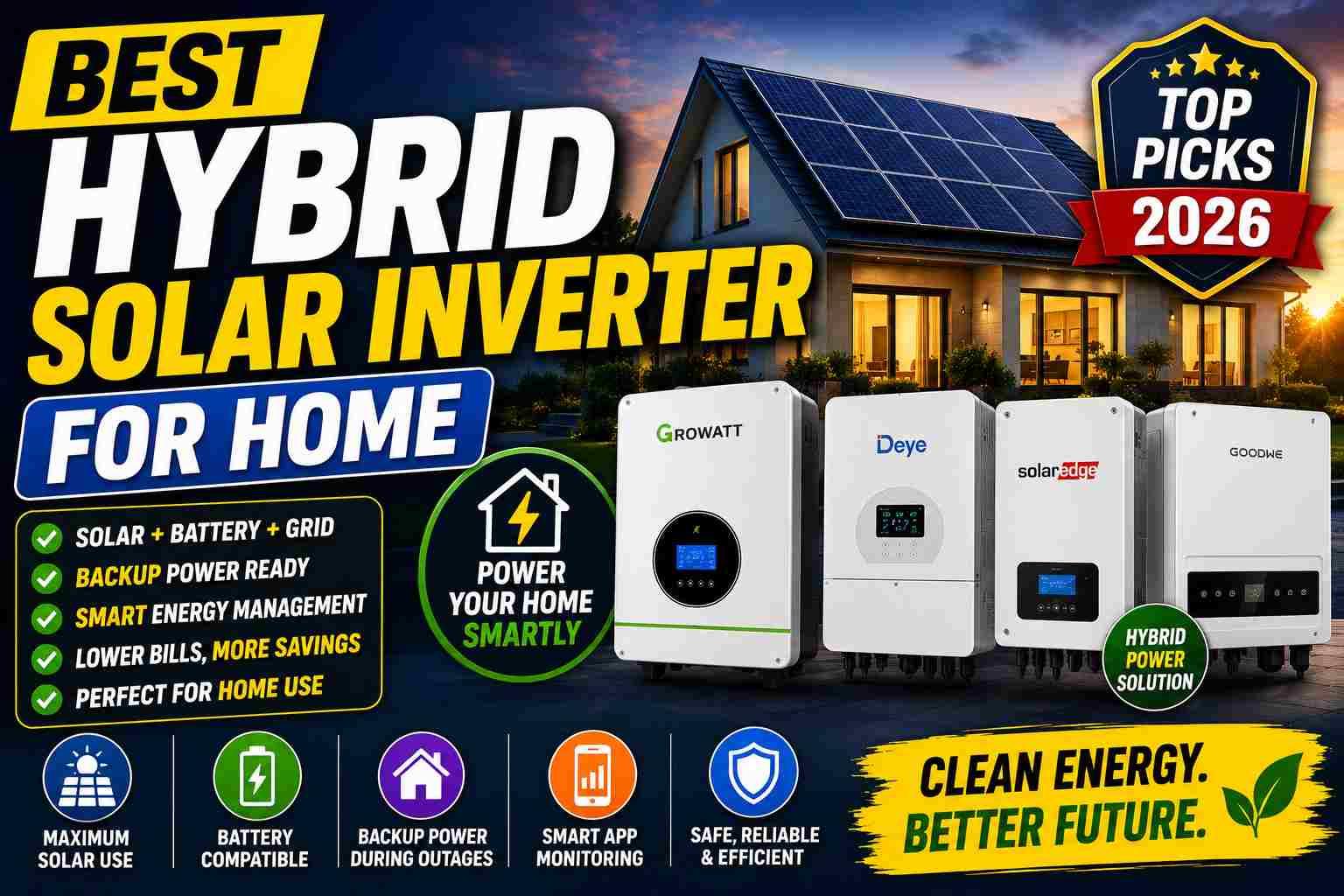
As more homeowners invest in solar energy and battery storage, hybrid solar inverters have become one of the most popular choices for residential solar systems. Unlike traditional inverters, a hybrid inverter can manage electricity from your solar panels, battery storage, and the utility grid—all from a single device.
If you’re planning to reduce electricity bills, prepare for power outages, or future-proof your home, investing in the best hybrid solar inverter is a smart decision.
In this guide, we’ll explain how hybrid solar inverters work, their benefits, the best brands in 2026, key features to look for, and how to choose the right model for your home.
What Is a Hybrid Solar Inverter?
A hybrid solar inverter is an advanced inverter that combines the functions of a standard solar inverter and a battery inverter.
It can:
- Convert DC electricity from solar panels into AC power
- Charge and manage solar batteries
- Supply electricity to your home
- Export excess power to the utility grid
- Automatically switch to battery backup during power outages (on supported systems)
Instead of installing separate devices, a hybrid inverter integrates everything into one system.
How Does a Hybrid Solar Inverter Work?
During the day:
- Solar panels generate electricity.
- Your home uses the solar power first.
- Extra electricity charges the battery.
- Remaining excess energy can be exported to the grid (if net metering is available).
At night or during cloudy weather:
- The battery supplies stored electricity.
- If the battery is empty, power is drawn from the utility grid.
This intelligent energy management helps maximize solar savings.
Benefits of a Hybrid Solar Inverter
Lower Electricity Bills
By storing unused solar energy, you can use less electricity from the grid, reducing monthly utility costs.
Battery Ready
One of the biggest advantages is battery compatibility. Even if you don’t install batteries immediately, many hybrid inverters allow easy upgrades later.
Backup Power
Many hybrid systems provide backup electricity during grid outages, keeping essential appliances running.
Better Energy Independence
Generating and storing your own electricity reduces reliance on the utility grid.
Smart Energy Management
Modern hybrid inverters include features such as:
- Wi-Fi monitoring
- Mobile apps
- Real-time energy tracking
- Remote diagnostics
- Automatic software updates
Also Read: Best Hybrid Solar Inverter for Home (2026): Top Picks, Buying Guide
Hybrid Solar Inverter vs String Inverter
| Feature | Hybrid Inverter | String Inverter |
|---|---|---|
| Battery Support | Yes | Usually No |
| Backup Power | Yes (supported models) | No |
| Smart Monitoring | Advanced | Basic |
| Future Expansion | Easy | Limited |
| Initial Cost | Higher | Lower |
For homeowners considering battery storage, hybrid inverters offer greater flexibility.
Top Hybrid Solar Inverter Brands in 2026
Several manufacturers consistently receive positive reviews for residential hybrid inverters.
1. SolarEdge
Best for:
- High efficiency
- Smart monitoring
- Battery integration
- Premium residential systems
2. Growatt
Best for:
- Budget-conscious homeowners
- Reliable performance
- Easy installation
3. Deye
Best for:
- Whole-home backup
- Hybrid functionality
- Off-grid compatibility
4. SMA Solar Technology
Best for:
- Long-term reliability
- German engineering
- Large residential installations
5. Fronius
Known for:
- Excellent efficiency
- Robust monitoring tools
- Strong warranty support
6. GoodWe
Popular for:
- Affordable hybrid solutions
- Residential battery systems
- Smart energy management
Features to Consider Before Buying
Conversion Efficiency
Look for models with 96–99% efficiency to maximize energy output.
Battery Compatibility
Ensure the inverter supports popular battery technologies such as:
- Lithium-ion batteries
- LFP (Lithium Iron Phosphate) batteries
- Lead-acid batteries (where supported)
Backup Power Capability
Not all hybrid inverters provide full-home backup. Verify:
- Backup output capacity
- Automatic transfer time
- Essential load support
Monitoring Features
A good hybrid inverter should include:
- Mobile application
- Wi-Fi connectivity
- Energy reports
- Fault notifications
- Remote firmware updates
Warranty
Choose products offering at least a 10-year warranty. Premium brands may provide extended coverage.
Estimated Cost of Hybrid Solar Inverters
| System Size | Estimated Price (USD) |
|---|---|
| 3–5 kW | $1,800–$3,000 |
| 5–8 kW | $2,500–$4,500 |
| 8–12 kW | $4,000–$7,000 |
Installation costs vary depending on location, labor, and system complexity.
Who Should Buy a Hybrid Solar Inverter?
Hybrid inverters are ideal for homeowners who:
- Plan to install battery storage
- Experience frequent power outages
- Want long-term energy savings
- Intend to expand their solar system in the future
- Prefer smart energy management
Is a Hybrid Solar Inverter Worth It?
For many homeowners, the answer is yes.
Although the initial investment is higher than a standard string inverter, hybrid systems offer:
- Greater flexibility
- Better backup capabilities
- Future battery compatibility
- Improved energy independence
Over time, these advantages can outweigh the higher upfront cost.
Common Mistakes to Avoid
Buying Only Based on Price
Cheaper models may have:
- Lower efficiency
- Shorter warranties
- Limited support
Ignoring Battery Compatibility
If you may add batteries later, verify compatibility before purchasing.
Choosing the Wrong Size
Undersized or oversized inverters reduce system efficiency.
A qualified installer can recommend the correct capacity based on your home’s energy needs.
Overlooking Warranty and Support
Choose brands with:
- Strong customer service
- Local installers
- Readily available replacement parts
Installation Tips
To maximize performance:
- Hire a certified solar installer.
- Mount the inverter in a cool, shaded, and well-ventilated location.
- Keep the firmware updated.
- Schedule periodic inspections.
- Ensure proper electrical protection and grounding.
Professional installation also helps maintain warranty coverage.
Also Read: Best Solar Inverter for Home Use 2026: Complete Buying Guide
Maintenance Requirements
Hybrid solar inverters require minimal maintenance.
Recommended practices include:
- Checking performance through the monitoring app
- Cleaning dust from ventilation openings
- Reviewing error alerts promptly
- Scheduling annual inspections
With proper care, many hybrid inverters provide reliable service for 10–15 years or more.
Frequently Asked Questions (FAQs)
What is the best hybrid solar inverter for home use?
Top options in 2026 include SolarEdge, Growatt, Deye, SMA, Fronius, and GoodWe. The best choice depends on your budget, battery plans, and local installer support.
Can a hybrid inverter work without a battery?
Yes. Most hybrid inverters operate normally with solar panels alone and allow batteries to be added later.
Is a hybrid inverter better than a normal solar inverter?
If you want battery storage, backup power, or future expansion, a hybrid inverter offers more flexibility than a standard string inverter.
How long do hybrid solar inverters last?
Most quality hybrid inverters last between 10 and 15 years, while some premium models may exceed this with proper maintenance.
Do hybrid inverters reduce electricity bills?
Yes. By storing excess solar energy and reducing reliance on grid electricity, hybrid systems can significantly lower monthly energy costs.
Final Verdict
A hybrid solar inverter is one of the best investments for homeowners looking to maximize the benefits of solar energy. It not only converts solar power efficiently but also prepares your home for battery storage, backup power, and smarter energy management.
While models from SolarEdge, Growatt, Deye, SMA, Fronius, and GoodWe are among the leading choices in 2026, the ideal inverter depends on your home’s energy usage, roof design, future expansion plans, and budget.
Conclusion
Hybrid solar inverters represent the future of residential solar systems. They combine efficiency, flexibility, and battery compatibility into one intelligent solution, making them ideal for homeowners seeking long-term savings and greater energy independence.
Before purchasing:
- Compare efficiency ratings.
- Check battery compatibility.
- Review warranty coverage.
- Work with a trusted installer.
- Plan for future energy needs.
Choosing the right hybrid solar inverter today can provide reliable, clean energy and peace of mind for many years to come.